Leafs vs Leaves can be confusing at first glance, but the rule is actually straightforward. When referring to multiple parts of a plant or tree, the correct plural is always leaves. This simple distinction keeps your writing accurate and natural, whether you’re describing a garden, a forest, or autumn foliage.
On the other hand, leafs appears in special cases, like proper names. A famous example is the Toronto Maple Leafs, where the spelling is fixed for tradition and branding. It can also be used as a verb to mean flipping through pages, such as “She leafs through a magazine.”
In everyday English, knowing when to use Leafs vs Leaves matters. Using leaves for plants and leafs for names or actions ensures your sentences are clear, polished, and easy to understand, avoiding common grammar pitfalls.
Understanding How the Plural of Leaf Works
The word “leaf” follows a slightly different pattern when you make it plural. Instead of simply adding an “s,” it changes to leaves when talking about more than one plant part. This same spelling shift happens in words such as “shelf” becoming “shelves” or “thief” becoming “thieves.” Knowing the plural of leaf helps keep your writing accurate and natural.
English includes several plural forms that do not follow a single rule. The choice between leafs vs leaves often causes confusion, but the meaning usually clears it up. When you are referring to foliage on plants or trees, leaves is the correct option. For example, you might say, “The garden paths were covered with dry leaves,” or “New leaves appear in spring.” Using the right form makes your sentences clearer and more polished.
Why the Word “Leafs” Still Shows Up
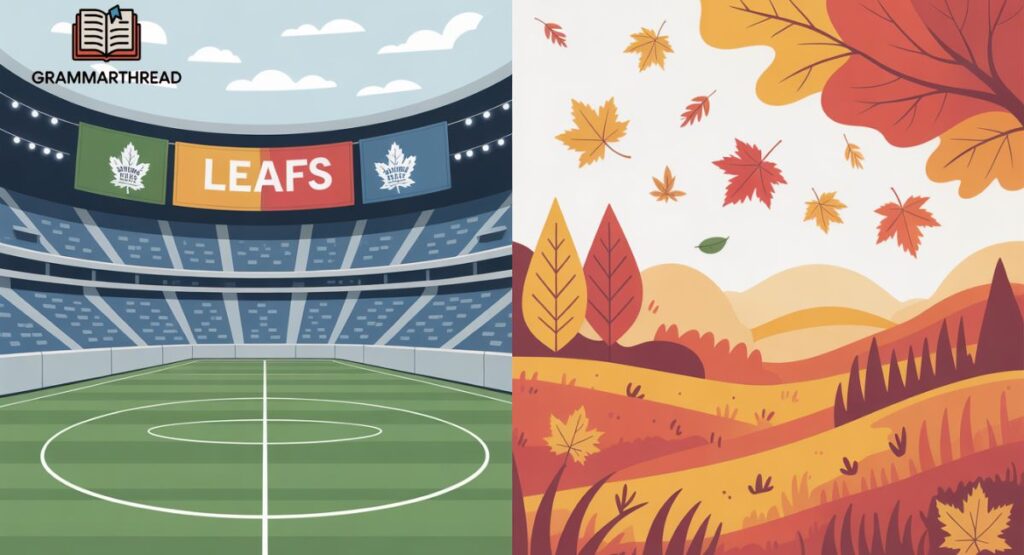
You might notice the spelling leafs in English, but it is not connected to plants or trees. It often appears in official names, especially sports teams or organizations, where the wording is treated as a proper title. This is a common point of confusion in the leafs vs leaves discussion. Once a name is established, its spelling stays the same regardless of grammar rules.
The word leafs is also correct when used as a verb. In this form, it describes the action of flipping through pages. For example, someone might leafs through a brochure at a store or leafs a notebook while searching for notes. When referring to plant growth, leaves is always the right choice. When talking about actions or fixed names, leafs is acceptable and correct.
Proper Noun “Leafs” and How It Is Used
Names like the Toronto Maple Leafs show how leafs can appear as part of a proper noun. In these cases, normal grammar rules do not apply. The spelling stays unchanged because it represents branding, history, and recognition. This distinction is often mentioned in discussions about leafs vs leaves and helps explain why both forms exist.
You may see other organizations or businesses use leafs in a similar way. When the word is part of an official name, it remains fixed and should not be corrected. For natural objects such as trees or plants, leaves is always the correct plural. For titles and names, leafs is kept as it is to preserve identity.
Common Mistakes When Using Leafs vs Leaves
A frequent error is using leafs when describing trees, flowers, or other plants. This form does not fit natural objects. The correct plural is leaves when you mean parts of a plant. Writing leafs in this context can make your sentence feel awkward or incorrect to native readers.
People often mix things up because Leafs vs Leaves follow separate usage rules. When talking about nature, leaves is always the right choice. The spelling leafs works only for specific names or when the word is used as a verb. Keeping this difference in mind helps your writing sound clear and confident.
Examples That Make Leafs vs Leaves Easy to Understand
The word leaves is used when referring to plants or trees. For instance, you might say, “After autumn, the ground was covered with fallen leaves.” This shows the correct plural form for nature and sounds natural to native speakers. Remember, in the leafs vs leaves choice, nature always points to leaves.
The word leafs appears only in specific situations. One example is a proper name, such as, “The Maple Leafs celebrated a big win last night.” It is also used as a verb to describe flipping pages, as in, “She leafs through a magazine while waiting.” These uses follow different rules than plant-related meanings.
| Sentence Context | Correct Form | Explanation |
| The garden was full of green ______. | leaves | Refers to multiple plant parts |
| The ______ played their final game tonight. | Leafs | Refers to a team name |
| He ______ through the manual quickly. | leafed | Verb form meaning turned pages |
Common Idioms That Use Leaves
English features several idioms that include the word leaves. For example, “turn over a new leaf” is used when someone wants to start fresh or change old habits. Another common phrase is “take a leaf from someone’s book,” meaning to follow a good example or imitate a positive action. These expressions are widely recognized in everyday conversation.
In all these idioms, the plural form leaves is always correct. The spelling leafs never appears in such phrases. This highlights that when it comes to familiar sayings or figurative speech, leaves is the standard choice. Using the correct form keeps your language natural and easily understood.
Tips to Avoid Confusing Leafs and Leaves
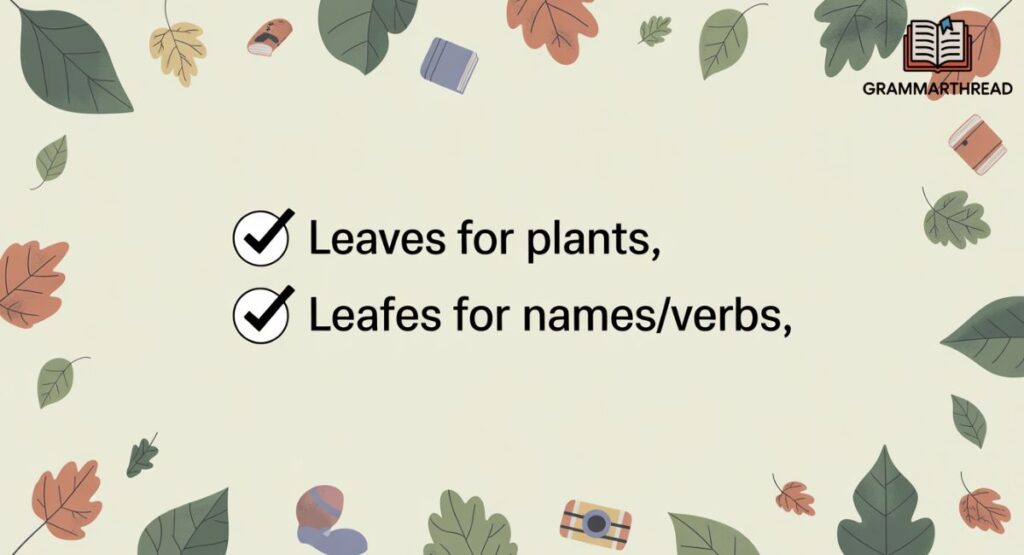
A simple way to remember the difference between Leafs vs Leaves is by focusing on context. When referring to trees, plants, or foliage, leaves is always correct. For team names, brands, or when the word is used as a verb, leafs is the right choice. Understanding the meaning makes it easier to pick the correct form every time.
Looking at real-life examples can help reduce errors with Leafs vs Leaves. Articles about sports teams usually use Leafs, while gardening or nature books stick to leaves. Practicing both forms in context helps make the usage feel natural and automatic.
- Use leaves when describing plants or trees…
- Write Leafs only for official team names or brand titles…
- Remember, leafs can also describe flipping through pages…
- Check nature books for leaves and sports coverage for Leafs…
- Practice each form regularly to avoid mixing them up…
How the Word “Leaf” Evolved in English Grammar
The word “leaf” has changed in English over time, especially in how its plural is formed. Originally, Old English used forms like lēaf and lēafas, which gradually evolved into the modern leaf and leaves we use today. Understanding this history helps explain why English has irregular plurals like leaves instead of a simple leafs.
Over the centuries, writers and speakers influenced how leaf and leaves were standardized. Meanwhile, leafs emerged in limited contexts, such as team names or as a verb for flipping pages. This shows that the spelling and usage of leaf have been shaped by both grammar rules and cultural practices.
- Leaf originally had singular and plural forms in Old English that influenced today’s usage…
- Leaves became the standard plural for plants and trees…
- Leafs appeared later in specialized cases, like proper nouns or verbs…
- Historical texts reveal how context shaped the modern forms…
- Knowing this evolution makes using leafs vs leaves easier and more accurate…
Frequently Asked Questions
What is the difference between Leafs vs Leaves?
Leaves is the plural of leaf when talking about plants, while leafs appears in names or as a verb meaning flipping pages.
When should I use leaves instead of leafs?
Use leaves for trees, plants, and natural foliage to keep your grammar correct.
Can leafs ever refer to plants?
No, leafs is not used for plants; it only appears in proper names or as a verb.
Why do some team names use leafs?
Proper nouns like the Toronto Maple Leafs keep the spelling leafs for branding and tradition.
How do you spell the plural of leaf?
The plural is spelled leaves for plant parts and foliage.
Is leafs a verb in English?
Yes, leafs can mean flipping or turning pages in a book or magazine.
Can I say “leafs” in a sentence about autumn?
No, you should say leaves, as in “The tree shed its leaves in autumn.”
Are there other words like leaf with irregular plurals?
Yes, words like knife → knives and wolf → wolves follow a similar pattern.
Conclusion
Mastering the difference between Leafs vs Leaves makes your writing more accurate and easy to read. For anything related to plants or trees, always use leaves. The form leafs is reserved for proper names, like sports teams, or as a verb when flipping pages.
Knowing the history, meaning, and correct usage helps you avoid common mistakes. With a little practice, choosing the right word becomes second nature. Pay attention to context, read examples in books and articles, and soon using leaves for nature and leafs for special cases will feel completely natural. Try spotting both forms next time you read or write it’s a simple way to strengthen your English skills.
Read Next: Input or Imput: Which Is Correct? (With Examples)

Welcome to GrammarThread. I am Julian Mercer, an AI-powered SEO and content writer with 4 years of experience. I help websites rank higher, grow traffic, and look amazing. My goal is to make SEO and website design simple and effective for everyone. Let’s achieve more together!