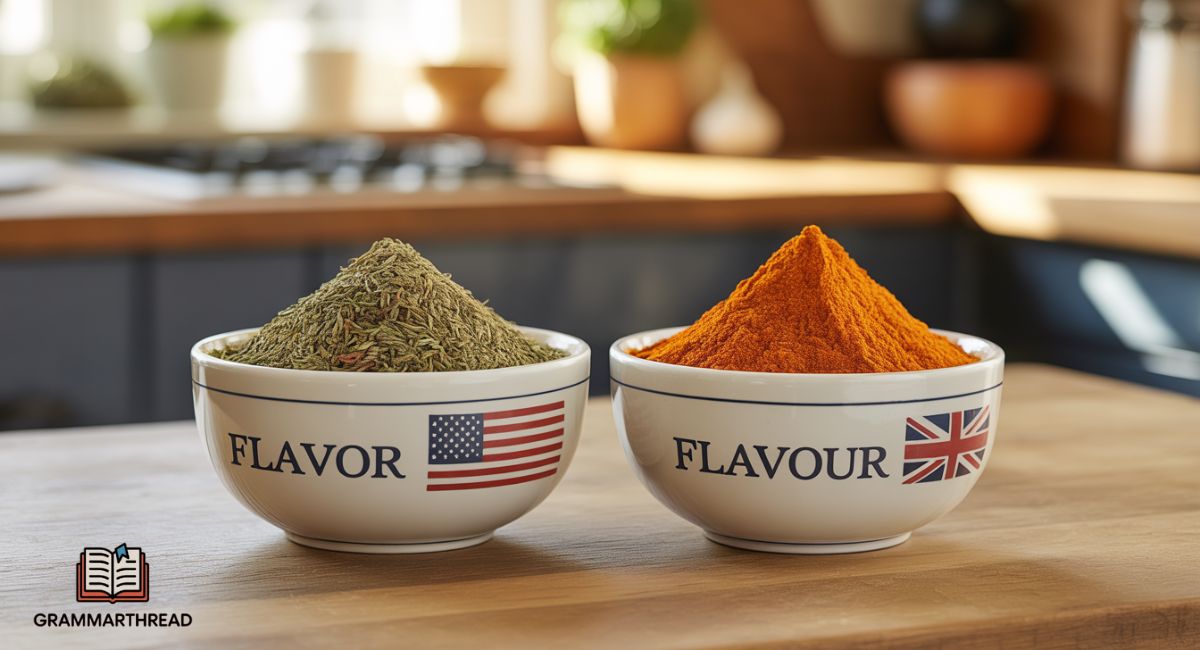
Flavor vs Flavour often sparks confusion, especially when reading recipes, menus, or food blogs from different countries. Both words talk about the same thing, how something tastes and smells, but their spelling depends on where the English is coming from. In everyday writing, flavor is standard in American English, while flavour is preferred in British English and many other regions.
This difference matters more than people think. Using the right spelling helps your message feel natural to the reader and builds trust in your writing. Whether you are describing a homemade dish, reviewing a restaurant, or sharing a recipe online, consistency makes your content easier and more enjoyable to read. Both terms connect to ideas like taste, aroma, and seasoning, so choosing correctly improves clarity and communication.
Why Does This Spelling Difference Exist?
The spelling confusion between flavor and flavour comes from how English evolved in different parts of the world. Americans write flavor, while British writers stick with flavour, which reflects older spelling patterns passed down through generations.
This split happened centuries ago when language reformers in America simplified certain words, but Britain maintained its traditional spellings. Understanding which version to use ensures your writing looks natural and appropriate for your audience.
Spelling Conventions
Spelling conventions are the agreed-upon rules that guide how we write words in different English varieties. American English tends toward streamlined spellings like flavor, while British English preserves the older flavour spelling.
These standards matter because they create consistency and clarity in communication. When you follow the right spelling conventions for flavor vs flavour and similar words, your writing feels authentic to readers familiar with that style.
Regional Usage
Regional usage refers to the spelling preferences specific to different English-speaking countries. Americans naturally write flavor in recipes and product descriptions, while British writers use flavour in their cookbooks and restaurant menus.
Understanding these regional patterns helps you connect better with your readers. Choosing between flavor and flavour based on your audience’s location shows attention to detail and cultural awareness, making your content more relatable and trustworthy.
What Do “Flavor” and “Flavour” Actually Mean?
Both flavor and flavour describe the sensory experience we get from food its taste, smell, and overall character. These words capture what makes dishes delicious and memorable, whether you’re biting into something sweet, savory, or spicy.
Writers rely on these terms to communicate culinary experiences effectively. When you pair flavor or flavour with words like spice, fragrance, and zest, your descriptions become vivid and relatable to any reader.
Definitions
- Flavor and flavour refer to the combined taste and scent profile of what we eat.
- They capture the distinctive taste of ingredients like berries, cheese, and beverages.
- They express the scent that rises from meals during preparation.
- Cooks and food writers use flavor or flavour to communicate their culinary creations accurately.
- These terms bring life to food writing and help readers imagine the eating experience.
“Flavor” vs “Flavour”: What Sets Them Apart?
The words flavor and flavour carry identical meanings but appear differently depending on where you’re writing. Americans spell it flavor, while British writers use flavour in their cookbooks, restaurant descriptions, and culinary articles.
This spelling choice matters for credibility and readability. Selecting the appropriate version of flavor or flavour demonstrates linguistic awareness and helps your content resonate with the right audience. Readers connect more naturally with writing that matches their regional expectations.
Example Scenario
A food writer creates content for a New York-based cooking website. She chooses flavor when describing how spices and herbs enhance the dish’s overall taste profile, keeping her writing consistent with American standards.
A restaurant reviewer posts on a London food platform. He opts for flavour when discussing the richness, complexity, and aromatic notes of the cuisine, ensuring his content feels authentic to British readers.
How Spelling Affects Communication
Choosing between flavor or flavour appropriately ensures your message comes across clearly to your intended readers. Proper spelling strengthens communication and makes culinary writing more accessible, whether you’re crafting recipes, restaurant reviews, or food narratives.
Switching between flavor and flavour inconsistently within the same piece creates unnecessary confusion. Maintaining uniform spelling throughout your content, along with consistent sensory language, keeps your writing polished and builds trust with your audience.
Example in Context
- A restaurant owner posts on an American food platform: “This signature flavor brings out the smokiness and depth of the barbecue.”
- A UK pastry chef shares on a British recipe site: “This unique flavour gives the pudding its comforting warmth and sweetness.”
- A global culinary guide includes regional variations: “The flavor profile here is vibrant,” alongside “The flavour profile here is vibrant.”
Examples Using “Flavor”
- The sauce delivers a bold flavor with hints of garlic and citrus.
- Bakers combine ingredients thoughtfully to develop a distinctive flavor in their pastries.
- Ripe berries bring vibrant natural flavor to breakfast bowls and juices.
Examples Using “Flavour”
- The tart showcases a delicate flavour from ripe stone fruits.
- UK cooks rely on garden-fresh herbs to enhance the flavour of their stews.
- A well-balanced flavour transforms a simple meal into something memorable for diners.
Synonyms and Similar Terms to “Flavor” or “Flavour”
Writers often turn to synonyms when describing flavor or flavour in more varied ways. Words such as taste, scent, tang, and spice add depth and color to culinary writing.
Incorporating alternative expressions for flavor or flavour keeps your content engaging. Terms like extract, enhancement, and character give readers a richer sense of how food tastes and smells.
Synonyms for “Flavor” or “Flavour”
| Term | Meaning |
| Savor | A pleasing taste or smell that creates sensory satisfaction. |
| Zest | A sharp or tangy taste quality, commonly from citrus peels. |
| Aroma | The characteristic scent of food that contributes to its overall taste experience. |
| Infusion | The method of drawing out taste from ingredients, commonly in beverages and stocks. |
| Seasoning | Additions used to amplify and refine the taste of prepared foods. |
Similar Terms for “Flavor” or “Flavour”
Food writers rely on related expressions to convey flavor or flavour with more precision. Words like taste, fragrance, spice, and essence create vivid and accessible culinary descriptions.
Choosing terms like flavoring or enhancement shows readers exactly how dishes appeal to the senses. These alternatives make food writing lively, relatable, and engaging for all audiences.
The Historical Roots of “Flavor” and “Flavour”

The term flavor traces back to the Latin flāvor, which originally meant “a blowing or breathing.” This etymology reflects the deep connection between how we taste food and perceive its scent.
The spelling flavour arrived through Old French as flaveur. British English preserved this form over time. Both versions describe the sensory qualities of taste, smell, and character in culinary contexts.
Origins of “Flavor”
The American spelling flavor derives from the Latin flāvor, signifying “a breath” or “an exhalation.” This root highlights how our experience of food combines both taste and scent.
Adopting flavor allows writers to convey how components work together to define a dish’s identity. Culinary professionals rely on it to communicate taste profiles, aromatic qualities, and ingredient balance in their instructions and descriptions.
Origins of “Flavour”
The British spelling flavour evolved from the Old French flaveur as it entered Middle English. This form demonstrates how British English maintained historical spelling conventions for describing taste, fragrance, and culinary essence.
Choosing flavour enables food writers to articulate the sensory experience of eating with precision. Culinary experts use it to detail the spicing, scent, and distinctive character of their creations in written recipes and dining guides.
Wrapping Up: “Flavor vs Flavour”
Both flavor and flavour convey identical meanings but reflect different spelling traditions. Americans write flavor, while British English maintains flavour when describing taste, scent, and culinary character.
Selecting the right spelling strengthens your writing. Using flavor or flavour with consistency ensures your food descriptions resonate with readers and demonstrates attention to regional conventions in your culinary content.
Key Takeaways
Choose flavor for American audiences and flavour for British readers. Maintaining consistent spelling throughout your content helps convey taste, aroma, and essence clearly in food writing.
Writers can incorporate related terms and alternatives to enrich their descriptions. Proper application of flavor, flavour, and associated vocabulary enhances the quality and readability of culinary communication.
Here are the Key Takeaways presented in 5 straightforward points:
- Write flavor when addressing American readers and flavour for British audiences.
- Maintain uniform spelling throughout your entire piece.
- Both flavor and flavour capture the taste, scent, and character of food.
- Enhance your writing with related terms like spice, tang, and fragrance.
- Accurate spelling ensures your recipes and food descriptions connect effectively with readers.
Style Guide Tip: Picking “Flavor” or “Flavour” for Your Readers
Knowing your audience determines whether you should use flavor or flavour in your writing. American readers expect flavor, while British audiences are accustomed to seeing flavour in their culinary content and everyday reading.
Professional style guides provide clear direction on this choice. Following these standards ensures your food writing feels natural and appropriate, helping you build credibility and connect authentically with your target readers.
Choosing Based on Audience
When writing for American publications, websites, or cookbooks, always use flavor. This spelling aligns with reader expectations and maintains consistency with other American English conventions throughout your content.
For British platforms, food blogs, or UK-based publications, stick with flavour. This choice respects regional spelling traditions and ensures your writing appears polished and professionally edited to British readers.
Style Guide Recommendations
Major style guides offer specific guidance on regional spelling choices. The AP Stylebook and Chicago Manual of Style recommend flavor for American publications, while The Guardian Style Guide and Oxford Style Manual prefer flavour for British content.
Following established style guide rules removes guesswork from your writing decisions. When you align with recognized standards, your culinary descriptions gain authority and your content feels more trustworthy to readers familiar with those conventions.
Quick Reference for Writers
- Identify where your primary audience is located before you start writing.
- Check if your publication follows a specific style guide with regional preferences.
- Use flavor consistently throughout American-focused content.
- Apply flavour uniformly across British-oriented materials.
- Avoid mixing both spellings within the same article or recipe
Frequently Asked Questions
What is the difference between flavor and flavour?
Flavor is the American English spelling, while flavour is the British English version. Both mean the same thing taste or aroma.
Which countries use flavor vs flavour?
Flavor is common in the United States, while flavour is used in the United Kingdom, Canada, Australia, and other English-speaking countries.
Can I use flavor and flavour interchangeably?
Yes, they mean the same, but stick to one spelling based on your audience to maintain consistency.
Is flavor or flavour correct in recipes?
Both are correct; use flavor for American recipes and flavour for British-style recipes.
Does the meaning change between flavor and flavour?
No, the meaning stays the same they both describe taste, aroma, or essence of food.
How do I remember the spelling difference?
Think of flavor as American English (shorter spelling) and flavour as British English (includes the “u”).
Should I use flavor or flavour in blogs?
Use the spelling that matches your readers’ region to make your content feel natural and professional.
Is flavour considered old-fashioned?
Not at all; it’s just the British spelling and still widely used in the UK and other countries.
Conclusion
Understanding flavor vs flavour is simple once you know the rules. Flavor is used in American English, while flavour is the British spelling, but both describe the taste, aroma, and essence of food. Choosing one spelling and using it consistently makes your writing clearer and more professional.
Accurate use of terms like seasoning, aroma, and flavor helps readers follow recipes easily and enjoy your food descriptions. Next time you write about cooking or share a recipe, pay attention to which version fits your audience. A small detail like this can make your content more engaging and trustworthy, so start practicing it today.
Read Next: Learn the Difference Between Oversight vs Oversite

Welcome to GrammarThread. I am Julian Mercer, an AI-powered SEO and content writer with 4 years of experience. I help websites rank higher, grow traffic, and look amazing. My goal is to make SEO and website design simple and effective for everyone. Let’s achieve more together!