Losing someone is never easy, and sometimes finding the right words feels impossible. You might want to comfort a friend or family member but struggle with how to say I’m sorry for your loss without sounding awkward or repetitive. Many of us wonder, how do you say sorry for your loss in a way that truly feels heartfelt. It’s frustrating when “I’m sorry” just doesn’t seem enough, and you need another way to say sorry for your loss.
In this post, we’ll share thoughtful and genuine ideas for ways to say I’m sorry for your loss. You’ll learn how to tell someone sorry for their loss in a way that feels meaningful, compassionate, and personal. Whether you’re sending a message, writing a card, or speaking in person, this guide offers practical examples of another way to say sorry for your loss so you can express comfort and care with confidence.
Why Saying “I’m Sorry for Your Loss” Isn’t Always Enough

When someone experiences the death of a loved one, the phrase “I’m sorry for your loss” is often the first words we think to say. It expresses sympathy, but it can feel brief or impersonal, especially to those who are deeply grieving.
Words like condolence messages, heartfelt sympathy, and offering comfort help show that you truly care beyond a simple phrase. The phrase has been a standard expression of sympathy for decades, often used in person, in cards, or in messages.
While it’s polite and widely accepted, modern communication, like texting, emails, and social media, has made it clear that grieving individuals often need more than just a generic statement. They may value messages that offer support during grief, presence and care, or thoughtful sympathy that acknowledges their unique pain.
Tips to go beyond “I’m sorry for your loss”:
- Personalize your message with the deceased’s name or a shared memory.
- Offer specific support, like checking in or helping with daily tasks.
- Use short sympathy messages that feel heartfelt and direct, rather than long, generic notes.
Example:
- Texting a friend: “I’m thinking of you during this difficult time. I remember how much your dad loved gardening. He’ll be missed. I’m here if you need to talk.”
- Writing a card: “Deepest sympathies on your loss. May the cherished memories you shared bring you peace and comfort.”
By understanding that saying “I’m sorry for your loss” isn’t always enough, you can offer condolences that feel personal, meaningful, and genuinely supportive. Using condolence card messages, emotional support, and compassionate words shows that your care goes beyond the standard phrase.
The Importance of Thoughtful Condolence Messages
A simple “I’m sorry for your loss” is polite, but thoughtful condolence messages can make a meaningful difference. Personalized words show that you acknowledge the pain of the grieving person and genuinely care about their well-being.
Using phrases like support during grief, heartfelt sympathy, or compassionate words helps convey comfort and solace beyond the standard expression. Thoughtful messages can be shared through text, cards, emails, or social media.
They let the person know you’re present during a difficult time and can include memories, encouragement, or offers of help. This approach validates emotions, provides emotional support, and fosters a human connection after loss.
Even short messages that reflect empathy, like “holding you close in my heart” or “sending love and strength,” can bring peace and comfort to those mourning.
30 Alternatives to Saying “Sorry for Your Loss”

Sometimes the standard phrase doesn’t feel enough, so it’s helpful to have alternatives that express care, empathy, and support. Here are 30 ways to convey your condolences thoughtfully:
- I’m thinking of you during this difficult time.
- My deepest sympathies.
- Holding you close in my heart.
- Wishing you peace and comfort.
- Sending love and strength.
- Sharing in your sorrow.
- I’m here if you need to talk.
- My heart goes out to you.
- Thinking of [name of deceased] and you.
- Remembering the good times we shared.
- You’re in my thoughts and prayers.
- I hope cherished memories bring you comfort.
- I’m keeping you in my heart.
- I’m here for anything you need.
- May you find strength in love and family.
- I wish I could take some of your pain away.
- My condolences to you and your family.
- I’m deeply sorry for your loss.
- [Name] will always be remembered fondly.
- I’m sending you a hug through this message.
- May the love around you help you through this.
- I hope you feel the support of those around you.
- My thoughts are with you during this time of grief.
- I’m thinking of you and sending comfort.
- May [name’s] memory bring you peace.
- I share in your sadness.
- Wishing you strength and peace in the days ahead.
- I’m here to help in any way you need.
- My heart is with you.
- [Name] will be remembered with love.
Gentle Expressions of Sympathy
Sometimes, simple words can carry deep meaning when expressed gently. Using gentle expressions of sympathy helps communicate care without overwhelming the grieving person. Phrases like “holding you close in my heart” or “sending love and strength” convey compassion and comfort.
You can also offer short, heartfelt messages that feel natural, such as “thinking of you during this difficult time” or “may cherished memories bring you peace.” These gentle expressions combine heartfelt sympathy, condolence messages, and emotional support to create a meaningful connection with someone mourning a loss.
Acknowledging Their Pain
Acknowledging grief shows empathy and validates emotions, which is often more comforting than simply saying “I’m sorry for your loss.” Using words like “I can’t imagine how hard this must be” or “your pain is completely understandable” demonstrates that you recognize the depth of their loss.
It’s important to remember that grief is personal and unique. By acknowledging their pain, you provide comfort and solace and show that you’re present for grieving friends and family. Simple statements of understanding can create a safe space for the bereaved to express their feelings without judgment.
Offering Support Beyond Words
Sometimes, actions speak louder than words. Offering support beyond messages of sympathy can make a lasting difference. This might include practical help, like running errands, bringing meals, or simply being available to listen.
Pairing thoughtful words with supportive actions reinforces your care. Phrases like “I’m here for you anytime” or “please let me know how I can help” provide emotional support while showing presence and care. Even small gestures paired with meaningful messages can give grieving individuals comfort and a sense of connection.
Sharing a Memory or Tribute
One of the most meaningful ways to express condolences is by sharing a memory or tribute of the person who has passed. Mentioning a cherished moment, a kind deed, or a unique quality shows that their life had an impact and that you remember them fondly.
Using phrases like “I’ll always remember how [name] made everyone laugh” or “I’ll treasure the time we spent together” combines heartfelt sympathy with personalized messages.
This approach goes beyond the standard “I’m sorry for your loss” because it creates a connection through shared experiences. Whether in conversation, a card, or a text, reflecting on memories provides comfort and solace and reminds the grieving person that their loved one’s life is being honored.
Spiritual and Reflective Comfort
For some, spiritual or reflective comfort can bring peace during times of grief. Messages that include thoughts of hope, remembrance, or faith can help the bereaved feel supported.
Phrases like “may their spirit live on in your heart” or “wishing you peace through cherished memories” blend spiritual comfort with emotional support.
You don’t need to be religious to offer this kind of comfort. Simple reflective statements, like “may you find strength in love and memories”, help the person process their loss while feeling validated. This method reinforces that your sympathy is thoughtful, caring, and considerate of their emotional and spiritual needs.
Short & Simple Messages for Sympathy Cards

Sometimes, brief words carry the most meaning, especially in a card or quick message. Short and simple sympathy messages allow you to express compassion without overwhelming the reader. Examples include:
- “Thinking of you during this difficult time.”
- “My deepest sympathies for your loss.”
- “Wishing you comfort and peace.”
- “Holding you close in my heart.”
These concise statements combine condolence card messages, heartfelt sympathy, and emotional support in a way that feels personal yet easy to read. Even a short, carefully chosen phrase can communicate care and presence, showing that you acknowledge their grief.
Condolences for Specific Relationships
Grief feels different depending on your relationship with the person who passed. Personalizing your words makes your message more meaningful. Below are examples for different relationships, along with sample messages you can use or adapt.
Condolences for a Parent
Losing a parent is deeply emotional, and acknowledging the bond they shared shows empathy. Use heartfelt messages that honor both the parent and the grief of your friend.
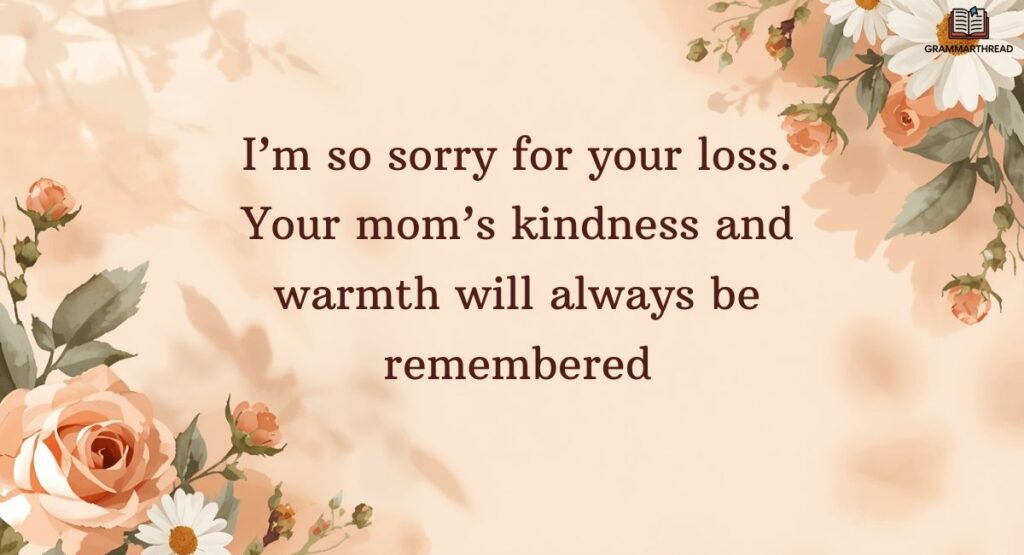
- “I’m so sorry for your loss. Your mom’s kindness and warmth will always be remembered.”
- “Thinking of you during this difficult time. Your dad touched so many lives with his generosity.”
- “My heart goes out to you. May the love and memories you shared bring you comfort.”
Condolences for a Spouse or Partner
The loss of a spouse is profoundly personal. Messages should reflect compassion and recognition of the deep connection they shared.
- “I’m deeply sorry for your loss. I know how much [name] meant to you and how much they will be missed.”
- “Sending you love and strength during this difficult time. May cherished memories bring you peace.”
- “My heart is with you. I hope you feel the support of those who care about you.”
Condolences for a Friend

When a friend loses someone, your support can be comforting. Keep messages simple, genuine, and empathetic.
- “I’m so sorry for your loss. I’m here if you need someone to talk to.”
- “Thinking of you and sending comfort. Your loved one will be remembered fondly.”
- “I can’t imagine how hard this must be. I’m here for you whenever you need support.”
Condolences for a Coworker or Acquaintance
For coworkers or acquaintances, messages should remain professional yet caring. Keep them concise and sincere.
- “I’m sorry for your loss. My thoughts are with you during this difficult time.”
- “Sending you strength and comfort as you navigate this loss.”
- “Thinking of you and wishing you peace and support during this time.”
Condolences for the Loss of a Pet
Pets are family too. Messages should acknowledge the emotional bond and provide empathy.
- “I’m so sorry for the loss of your beloved [pet’s name]. They brought so much joy and love into your life.”
- “Sending you comfort and love during this difficult time. [Pet’s name] will be missed.”
- “Thinking of you as you grieve. May your memories of [pet’s name] bring you peace.”
Is “Sorry for Your Loss” Ever Appropriate?
While “Sorry for your loss” is often overused, it is still appropriate in many situations, especially when you need a quick, polite way to express sympathy. It works well in initial messages, brief encounters, or when you don’t know the person well.
However, pairing it with a personalized message, memory, or offer of support can make it far more meaningful.
For instance: “I’m sorry for your loss. I remember how much your dad loved gardening; he truly touched everyone around him.” This combines condolence messages, emotional support, and acknowledging grief while keeping the expression simple and thoughtful.
How to Respond When Someone Says “Sorry for Your Loss”

Responding to condolences can feel challenging, but a simple, heartfelt reply is usually enough. You can thank them, share a short memory, or express how much their support means. For example:
- “Thank you, your words mean a lot to me during this time.”
- “I appreciate your support and kindness—it helps more than you know.”
- “Thank you for remembering [name]; it brings comfort to my family.”
These responses validate the sympathy messages, presence, care, and support during grief offered by others. Even brief replies can strengthen human connection and provide mutual comfort during mourning.
Choosing the Right Words for Every Situation
Selecting the right words when offering condolences can make your message feel thoughtful and supportive. Consider your relationship with the bereaved, the nature of the loss, and the medium you’re using, text, card, social media, or in-person conversation. Using phrases like heartfelt sympathy, emotional support, and presence and care ensures your message resonates and feels genuine.
Tips for choosing the right words:
- Personalize your message with the deceased’s name or a shared memory.
- Keep your tone compassionate and sincere, even if the message is short.
- Avoid clichés that may feel impersonal or dismissive.
- Use simple, empathetic language like “Thinking of you during this difficult time” or “Sending love and strength.”
Example:
- “I’m deeply sorry for your loss. I remember how much joy [name] brought to everyone around them. I’m here if you need anything.”
Common Mistakes to Avoid in Condolences
Even well-intentioned messages can fall flat if certain mistakes are made. Being aware of these helps ensure your sympathy feels supportive rather than awkward or hurtful.
Common mistakes:
- Using overly generic phrases without personalization.
- Comparing their grief to your own experiences (“I know how you feel”).
- Offering unsolicited advice or trying to “fix” their grief.
- Overloading long messages may overwhelm the bereaved.
- Ignoring the specific relationship or context of the loss.
Do instead: Keep messages concise, empathetic, and personalized, using phrases like thoughtful sympathy, compassionate words, and acknowledging pain.
Condolence Messages for Social Media
Social media has become a common way to express sympathy, but it’s important to keep your messages respectful, concise, and heartfelt. Unlike personal texts or cards, your message may be visible to friends, family, and acquaintances, so choose words that convey genuine care while maintaining sensitivity.
Using condolence messages, thoughtful sympathy, emotional support, and presence and care can help your message feel meaningful online.
- “Deepest sympathies to you and your family during this difficult time. Sending love and strength.”
- “Thinking of you and holding you in my heart. [Name] will be dearly remembered.”
- “My heartfelt condolences on your loss. May cherished memories bring you peace.”
- “So sorry for your loss. I hope you feel the love and support of everyone around you.”
- “Wishing you comfort and courage as you navigate this difficult time. [Name] will be remembered fondly.”
These messages are short, empathetic, and easy for grieving friends or family to read on social media. They allow you to express sympathy without overwhelming, while still offering emotional support, acknowledgment of grief, and comfort and solace.
Condolences for Unexpected Loss
- “I’m so sorry for your loss. I can’t imagine how difficult this sudden loss must be.”
- “My heart goes out to you during this shocking time. Please know I’m here for you.”
- “I’m thinking of you and sending love and strength. [Name] will be remembered fondly.”
- “No words can fully express my sorrow. I’m here to support you however you need.”
Condolence Messages for Young Children or Teenagers

- “I’m so sorry for your loss. [Name] loved you very much and will always be in your heart.”
- “It’s okay to feel sad. I’m here if you want to talk or just sit together.”
- “Sending you hugs and love during this hard time. You are not alone.”
- “I’ll remember [Name] with you and help keep their memory alive.”
Condolences for Loss of a Community or Group Member
- “We are all deeply saddened by [Name]’s passing. Their contributions touched everyone in our community.”
- “Our thoughts are with the family and friends of [Name] during this difficult time.”
- “May we honor [Name]’s life and legacy together as a community.”
- “Sending comfort and support to everyone affected by this loss. [Name] will be remembered fondly.”
Using Quotes or Poetry in Sympathy Messages

- “‘What we have once enjoyed we can never lose; all that we love deeply becomes a part of us.’ – Helen Keller.”
- “‘Those we love don’t go away, they walk beside us every day.’”
- “May you find comfort in the words: ‘Grief is the price we pay for love.’”
- “‘To live in hearts we leave behind is not to die.’ – Thomas Campbell.”
What Not to Say When Someone Dies
When offering condolences, it’s important to avoid phrases that minimize grief, give unsolicited advice, or compare losses. Instead, focus on listening and expressing support.
Examples of what to avoid:
- “At least they’re in a better place.”
- “I know exactly how you feel.”
- “It was God’s plan.”
- “You need to be strong.”
Better alternatives:
- “I’m so sorry for your loss. I’m here if you need to talk.”
- “Thinking of you during this difficult time.”
- “I can’t imagine how hard this must be. I’m here for you.”
How to Personalize Your Message
Adding personal touches to your message makes it feel genuine and meaningful. Mention the deceased’s name, share a memory, or acknowledge the unique relationship you had.
personalized messages:
- “I’ll always remember how [Name] made everyone laugh. My heart goes out to you.”
- “[Name] was such a kind and caring person. I’m thinking of you and your family.”
- “I know how much [Name] meant to you. May their memory bring you comfort.”
- “Sending you love and strength. I’ll never forget the time we all spent with [Name].”
Tips for Listening Without Trying to Fix Their Grief
Sometimes the most valuable support is simply listening. Avoid trying to solve their grief or offer clichés; let them express their emotions freely.
supportive responses:
- “I’m here to listen whenever you want to talk.”
- “Take all the time you need. I’ll be here for you.”
- “It’s okay to feel whatever you’re feeling. I’m just glad to sit with you.”
- “I can’t fix this, but I’m here to support you in any way you need.”
Closing Thoughts: Why Your Words Matter After Loss
Finding the right words can be hard when someone you care about is grieving. Saying another way to say sorry for your loss helps make your message feel personal. Simple phrases can bring comfort. Knowing how to say im sorry for your loss shows that you care. Even short messages can mean a lot. Many people wonder, how do you say sorry for your loss without sounding distant? Small gestures and thoughtful words can offer real support.
There are many ways to say I’m sorry for your loss that feel genuine. Learning how to tell someone sorry for their loss can make your message heartfelt. Remember, your words matter. Personal, kind, and empathetic messages can bring peace and comfort during tough times.
Read Next: Opposite of Albino: Understanding Melanism, Leucism, and Animal Pigmentation
Frequently Asked Questions
What can you say instead of I’m sorry for your loss
If you are unsure what to say, try Another Way to Say Sorry for Your Loss like sharing a memory or offering support, making your message feel personal and heartfelt.
What is the best condolence message
The best condolence messages combine empathy and presence. Using Another Way to Say Sorry for Your Loss such as heartfelt words or simple comfort shows you truly care about their grief.
How do I politely say I’m sorry for your loss
You can politely express sympathy by writing a short note or text. Another Way to Say Sorry for Your Loss is using kind, personal words that validate their feelings and pain.
How do you say condolences in a unique way
Make your message memorable by recalling shared experiences. Another Way to Say Sorry for Your Loss is offering personalized sympathy phrases that feel genuine and supportive to the grieving person.
How to express sympathy without saying sorry
You can show support through thoughtful words and presence. Another Way to Say Sorry for Your Loss is sending messages of comfort, sharing memories, or offering emotional and practical support.
Is there a better word than condolences
Instead of generic condolences, choose words that feel personal. Another Way to Say Sorry for Your Loss is heartfelt phrases, gentle sympathy, or emotional messages that acknowledge grief sincerely.

Welcome to GrammarThread. I am Julian Mercer, an AI-powered SEO and content writer with 4 years of experience. I help websites rank higher, grow traffic, and look amazing. My goal is to make SEO and website design simple and effective for everyone. Let’s achieve more together!