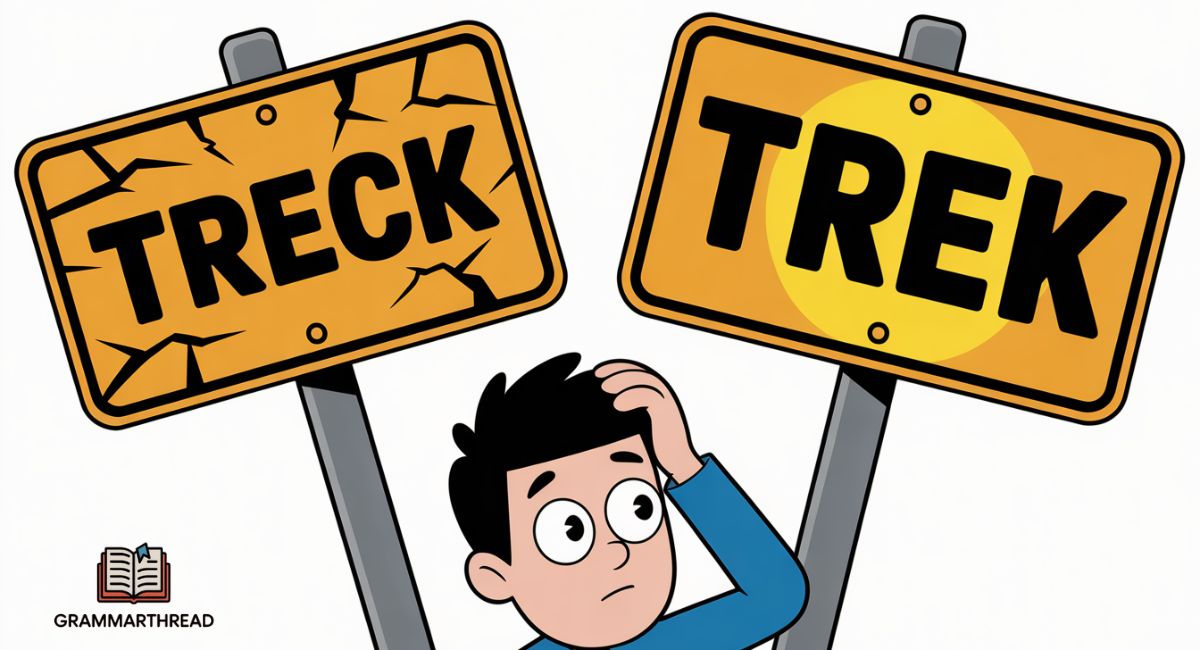
You’re not alone if you’ve ever paused mid-sentence wondering whether it’s treck or trek. A lot of people search Treck or Trek after seeing both spellings online, in blogs, or even in books, and it honestly messes with your confidence. You just want to use the right word and move on, not fall into a spelling rabbit hole every time you write.
In this post, we’ll clear up Treck or Trek once and for all in a simple, no-nonsense way. We’ll look at treck or trek, trek or treck, the real difference in trek vs treck, answer the common question is treck a word, and lock in the correct trek spelling so you never have to second-guess it again. By the end, you’ll know exactly which one to use and why.
Treck or Trek – Quick Answer
“Trek” is the correct spelling for a long journey on foot, especially one that is difficult or adventurous. Many people get confused and type “treck”, but that is generally considered a misspelling.
The word trek comes from Afrikaans and Dutch, originally referring to long journeys made by ox wagons in South Africa. Today, it’s widely used in English to describe hiking trips, adventure travel, or even figurative journeys.
Quick comparison:
| Word | Correct Usage | Notes |
| Trek | ✅ Long journey on foot, hiking, expedition | Standard English; British & American English |
| Treck | ❌ Incorrect spelling | Often a typo, autocorrect mistake, or common misspelling |
Usage Tips:
- Always use trek when writing professionally, casually, or in social media posts.
- Avoid treck, even though autocorrect or informal texts sometimes show it.
- You can pair trek with adjectives like “long,” “difficult,” or “mountain” to describe the journey clearly.
Examples in sentences:
- “We planned a week-long trek through the Himalayas.”
- “Her weekend trek in the forest was exhausting but rewarding.”
By sticking with trek, you ensure correct spelling and clear communication across emails, articles, and everyday English.
The Origin of Treck or Trek
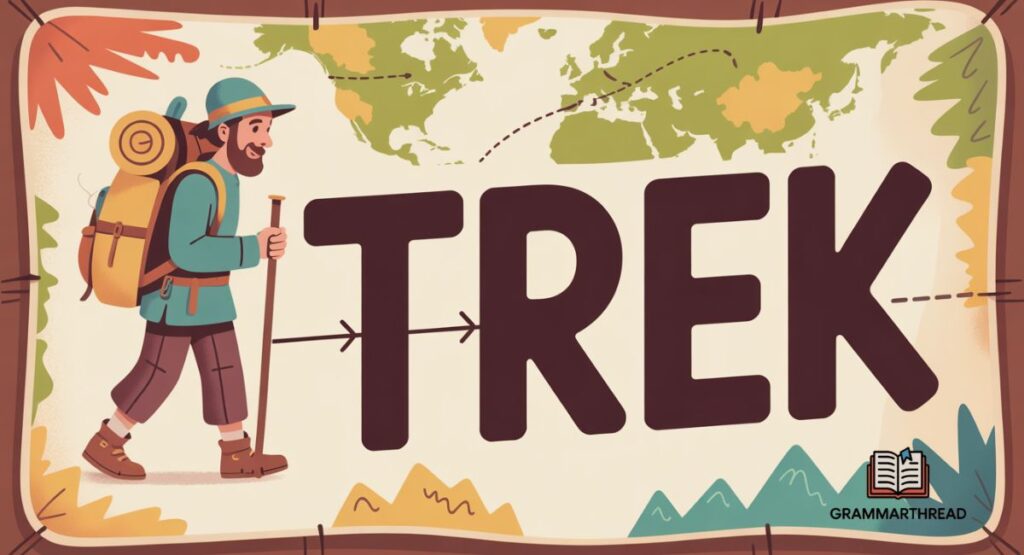
The word trek refers to a long journey on foot, often challenging or adventurous. Many people mistakenly type treck, but the original and correct spelling is trek.
The term comes from Afrikaans and Dutch, where “trek” literally meant a journey or migration, especially by ox wagons across South Africa in the 19th century. Over time, English adopted it to describe hiking trips, expeditions, or any long, arduous journey. Its history shows why trek is linked with adventure and effort, not just casual travel.
British English vs American English Spelling
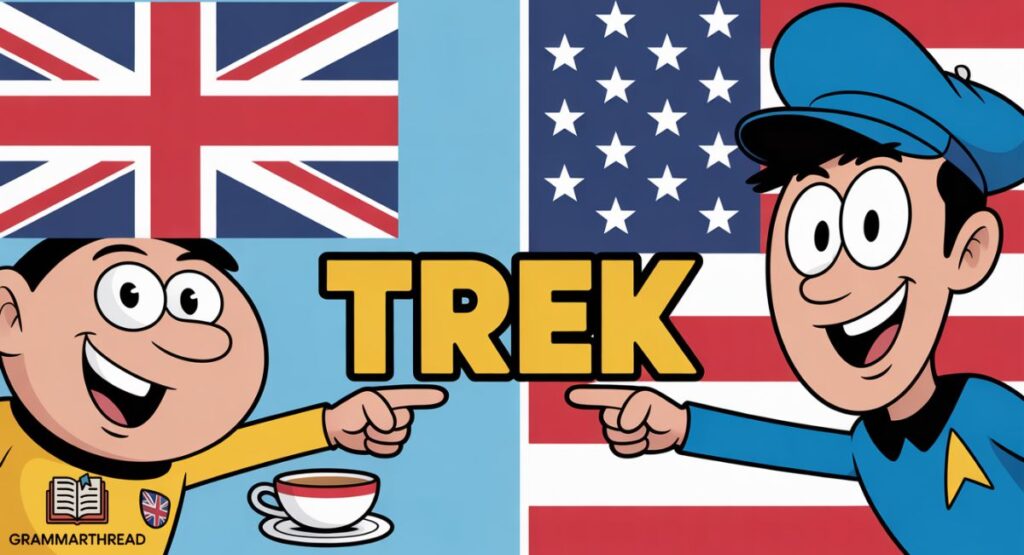
Trek is spelled the same in both British and American English, which makes it simpler than many other words with regional differences.
Key Points:
- British English: Trek – widely accepted in literature, hiking guides, and formal writing.
- American English: Trek – identical spelling; also popular in travel blogs, social media, and casual writing.
- Common error: Treck – considered a typo or misspelling in all English variants.
Usage Tip: Use trek consistently in professional or casual writing, regardless of region.
Which Spelling Should You Use?
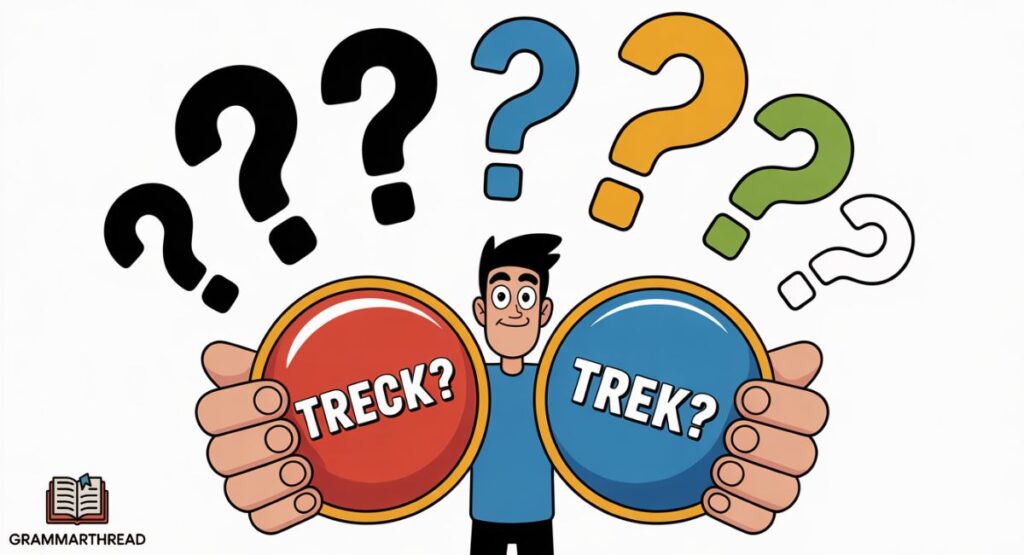
Always choose trek. It is the standard English spelling, recognized by dictionaries, travel guides, and educational materials. Using treck may confuse readers or appear unprofessional.
Quick Do’s & Don’ts:
- ✅ Do write: “We went on a weekend trek in the mountains.”
- ❌ Don’t write: “We went on a weekend treck in the mountains.”
- ✅ Use trek in emails, social media, articles, and hiking or adventure contexts.
- ✅ Pair with descriptive words: “difficult trek,” “long trek,” or “mountain trek” to make sentences clear.
Example in context:
- “After months of planning, our team finally completed the 5-day trek across the national park.”
- “She documented her trek on Instagram, showing the challenges of hiking through dense forests.”
By sticking to trek, you maintain clarity, correctness, and reader trust, whether writing professionally, casually, or for social media.
Common Mistakes with Treck or Trek
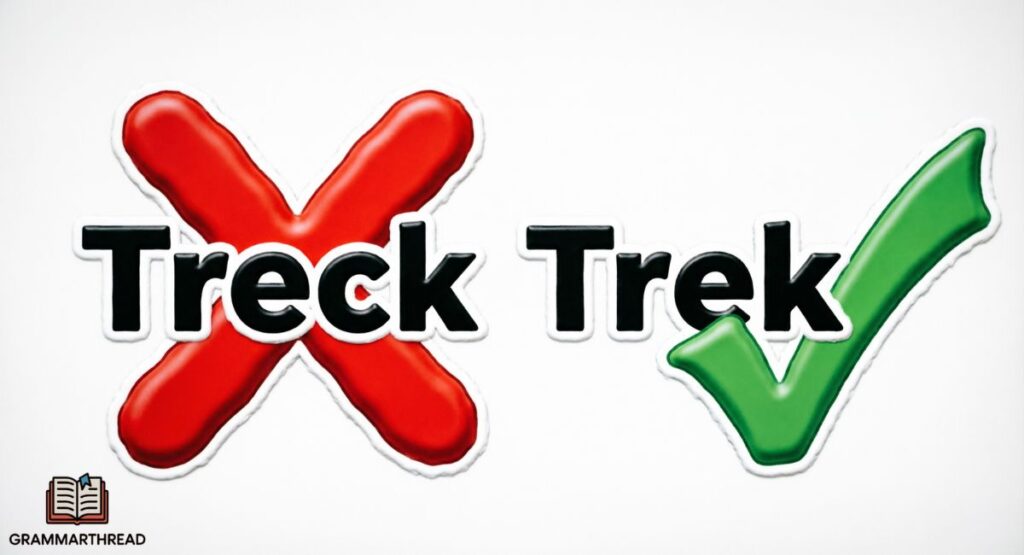
Many people confuse treck and trek, often typing the former by mistake. The main meaning of trek is a long, difficult journey on foot, whether literal or figurative.
Typical mistakes include:
- Typing treck instead of trek – a common autocorrect or typing error.
- Confusing trek with similar words like track, travel, or journey.
- Using trek inconsistently in professional writing, social media posts, or emails.
Quick Tip: Always use trek in formal or casual contexts. It’s the recognized standard in British English, American English, and global English usage.
Treck or Trek in Everyday Examples
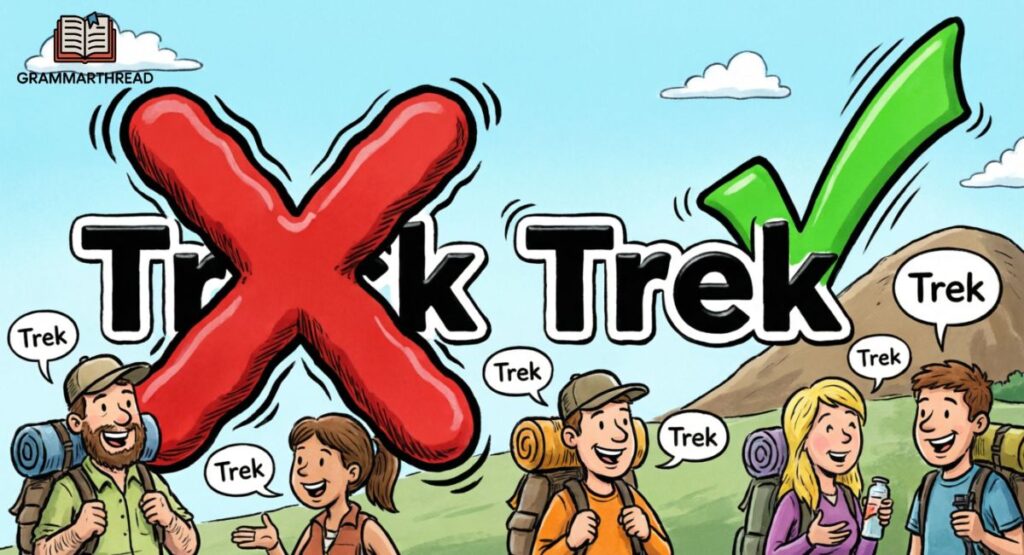
Using trek correctly in sentences makes your writing clear and professional. The interpretation may vary depending on the situation:
- Literal: “Our team completed a five-day trek through the mountains.”
- Figurative / everyday English: “Starting a new business is a tough trek, but worth it.”
Examples in texting or casual writing:
- “Just finished a weekend trek with friends so tiring but fun!”
- “Planning a trek along the coastal trail next month. Can you join?”
Notice how treck rarely appears in modern writing, except as a typo or informal autocorrect mistake.
Treck or Trek – Google Trends & Usage Data
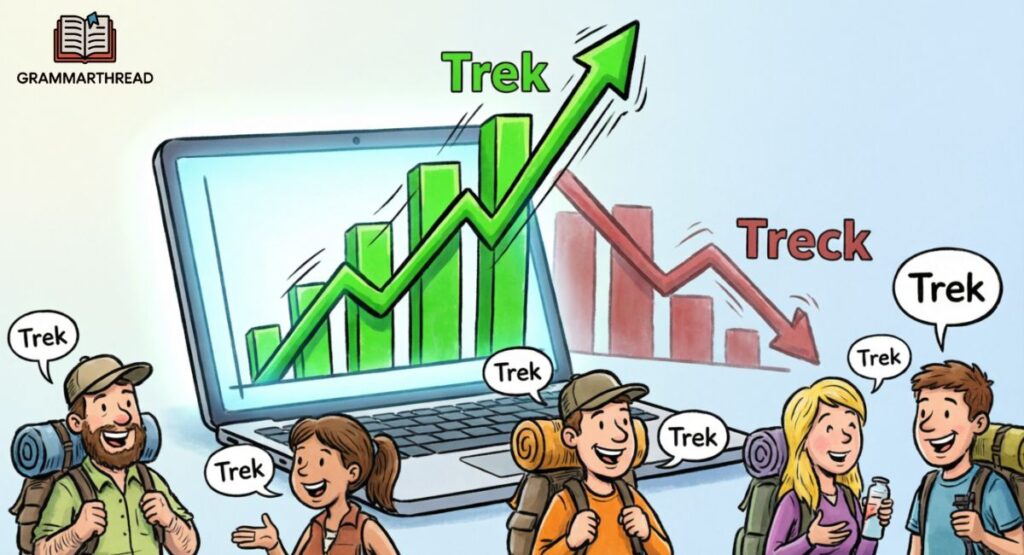
Search data shows trek is overwhelmingly more common than treck across platforms like Google, social media, and travel blogs.
Insights from usage trends:
- Global English: “trek” dominates search queries and article usage.
- British English: Consistent preference for trek in hiking, trekking guides, and professional writing.
- American English: Identical trend; treck is rare and usually flagged as a spelling error.
SEO Tip: If you’re writing for blogs, social media, or travel content, stick to trek to improve search relevance and avoid confusion.
Meaning of Trek (Dictionary Definition)
The dictionary defines trek as a long journey on foot, often over rough or challenging terrain. It can also describe figurative journeys, like challenges or extended efforts.
Key points for clarity:
- Verb: “We will trek across the hills tomorrow.”
- Noun: “The trek was exhausting but rewarding.”
- Related terms: hiking trips, adventure travel, expedition, journey on foot.
Using trek correctly ensures your writing is accurate, understandable, and professional in every context from casual social media posts to formal articles.
Pronunciation of Trek
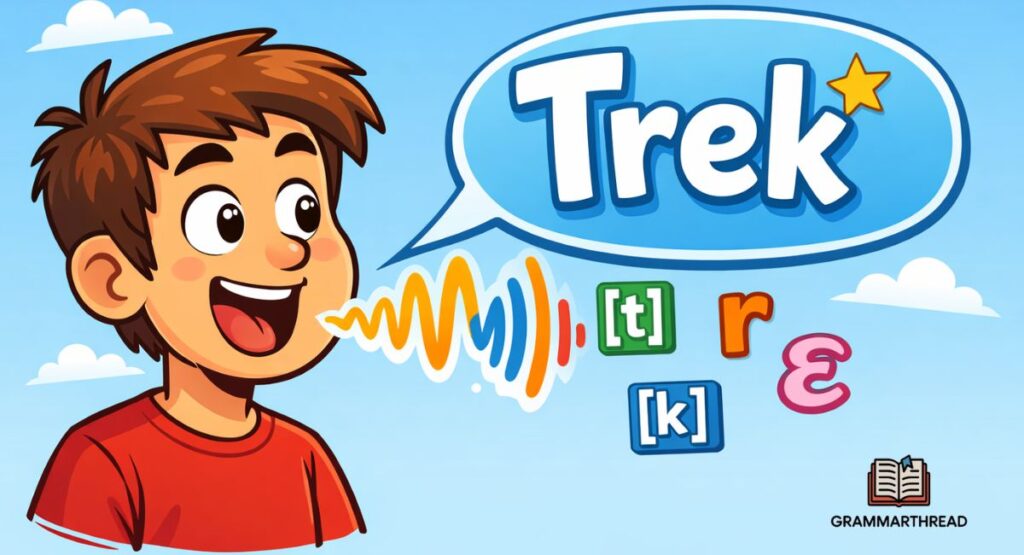
Trek is pronounced as /trɛk/, rhyming with “deck” or “check.” The pronunciation is consistent in both British and American English, making it easy to use in spoken or written communication.
Quick tip: When using it in conversation, emphasize the “e” sound clearly, especially if describing hiking trips, long journeys, or adventure travel. This helps listeners immediately recognize the standard spelling and meaning.
Trek vs Similar Words (Track, Travel, Journey)
Although trek, track, travel, and journey all relate to movement, their meanings differ:
| Word | Meaning | Common Usage |
| Trek | Long, often difficult journey on foot | Hiking, adventure travel, figurative challenges |
| Track | A path, trail, or course | Physical paths, race tracks, monitoring progress |
| Travel | The act of going from one place to another | General movement, tourism, transportation |
| Journey | Any trip or passage | Literal or figurative trips, personal or professional experiences |
Usage tip: Use trek when you want to emphasize the effort, challenge, or adventure of a journey.
Is “Treck” Ever Correct?
In modern English, treck is not considered correct. Most dictionaries, guides, and style manuals mark it as a common misspelling or typing error.
Key points:
- Treck occasionally appears in old texts or informal typing, but it’s not standard English.
- Using trek ensures clarity and professionalism.
- The interpretation may vary depending on the situation, but for all practical writing purposes, trek is always preferred.
Example:
- ❌ “We went on a weekend treck in the hills.”
- ✅ “We went on a weekend trek in the hills.”
Trek as a Verb vs Trek as a Noun
Trek functions both as a noun and a verb, depending on context.
- As a verb: “We will trek through the forest tomorrow.”
- As a noun: “The trek across the mountains took three days.”
Usage tip: Using trek in either form highlights a challenging journey, whether literal or figurative. Pair it with adjectives like “long,” “difficult,” or “adventurous” for clarity.
Frequently Asked Questions
What is the correct spelling, Treck or Trek?
The correct spelling is trek, referring to a long or difficult journey on foot.
Is Treck a word?
No, treck is generally a misspelling; the proper word is trek.
What does the word Trek mean?
Trek means a long journey, often challenging or adventurous, usually on foot.
How do you pronounce Trek?
Trek is pronounced /trɛk/, rhyming with “deck” or “check.”
Can I use Treck in British English?
No, treck is incorrect in both British and American English; always use trek.
What is the origin of the word Trek?
It comes from Afrikaans and Dutch, originally describing long wagon journeys in South Africa.
How is Trek different from Travel?
Trek emphasizes effort or difficulty, while travel is any movement from one place to another.
Is Trek used as a verb or a noun?
Both. Example: “We will trek tomorrow” and “The trek was exhausting.
Conclusion
When it comes to Treck or Trek, the correct spelling is always trek. Many people still get confused and type treck or trek by mistake. The trek vs treck debate often comes up in writing, social media, and emails. If you wonder, is treck a word, the answer is no. Using the right trek spelling shows you write clearly and professionally.
In daily use, remember trek or treck should always be written as trek. Always check your writing for typos. Correct spelling avoids confusion. Whether it’s hiking, adventure travel, or figurative journeys, using trek makes your sentences correct. Understanding treck or trek helps you write confidently.
Read Next: FN Meaning in Text 2026: What “FN” Really Means Online

Welcome to GrammarThread. I am Julian Mercer, an AI-powered SEO and content writer with 4 years of experience. I help websites rank higher, grow traffic, and look amazing. My goal is to make SEO and website design simple and effective for everyone. Let’s achieve more together!