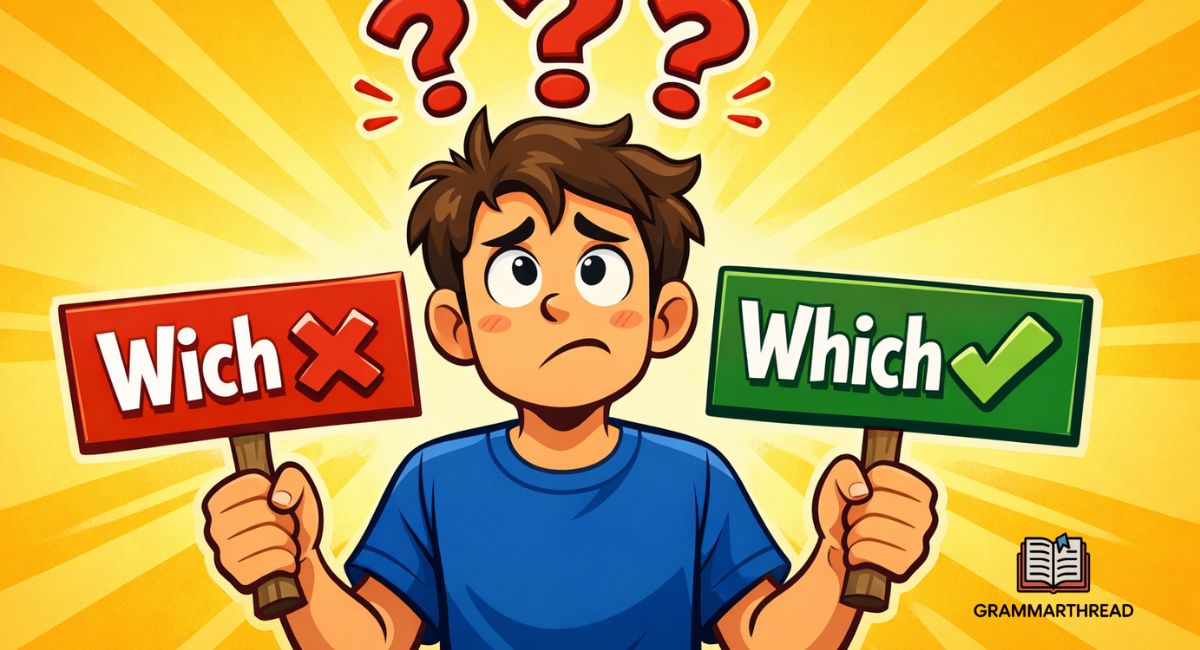
Have you ever stopped while typing and wondered, “Is it Wich or Which?” You are not alone. Many people feel confused about Wich or Which, especially when writing fast or sending an important message. It can be frustrating to second-guess such a small word.
In this post, we will clearly explain wich or which and help you understand which or wich in the simplest way. You will learn the correct spelling, easy tricks to remember it, and real examples you can use every day. By the end, you won’t feel confused about wich or which again.
Wich or Which – Quick Answer
Wich or Which is a common spelling question in English. Most of the time, people want to know the correct spelling of which and when to use it properly in writing.
The difference is simple: “which” is the standard English word used as a relative pronoun or determiner, while “wich” usually appears in place names (like Greenwich or Sandwich) or as a spelling mistake. In modern usage, many people type “wich” by accident, especially in texting, social media, or quick typing, which can lead to confusion.
Quick Tips:
- ✅ Use which when asking a question or referring to something specific: “Which book do you want?”
- ✅ Use wich only in proper nouns or historic names: “I visited Sandwich last summer.”
- ❌ Avoid using wich as a substitute for which in general writing or messages.
Example Sentences:
- Correct: “Which route should we take to the park?”
- Place Name: “Greenwich is famous for its time zone.”
By remembering this simple rule, you can avoid common English spelling errors and ensure your writing looks professional.
The Origin of “Wich or Which”
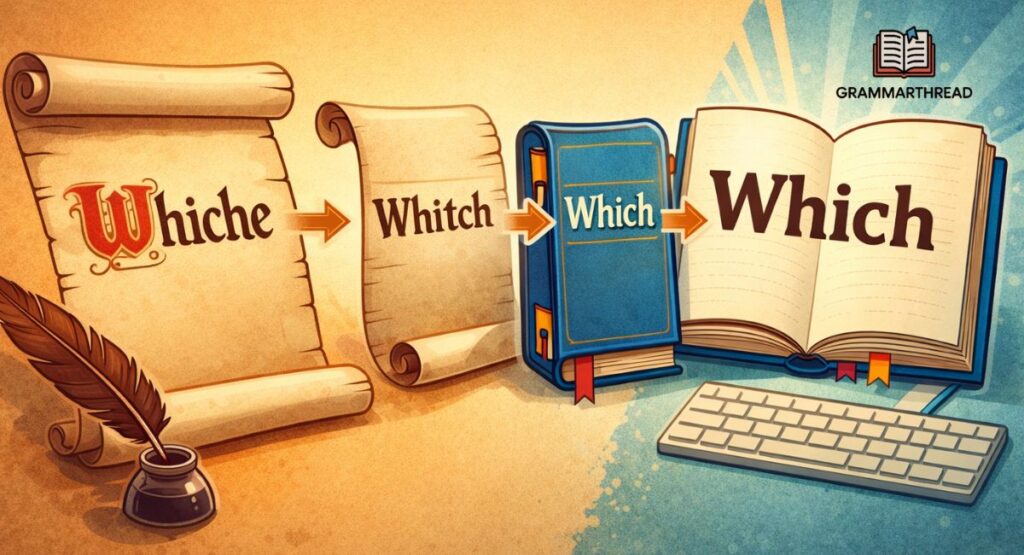
The word which comes from Old English “hwilc,” meaning “what one” or “what kind.” Over time, the spelling evolved into the modern which we use today. On the other hand, wich has a separate history, often appearing in place names in England, like Greenwich or Sandwich, derived from Old English words for “settlement” or “dwelling.”
Understanding this origin helps explain why wich vs which exists and why only which is correct in standard writing. The distinction is subtle but important for proper spelling and grammar.
British English vs American English Spelling
In most cases, which is spelled the same in British and American English. There is no difference between the two forms when using the word as a pronoun or determiner. However, place names ending in -wich remain unchanged across regions, like Norwich, Ipswich, or Sandwich.
The key takeaway: always use which in general writing, questions, and clauses, and reserve wich for historic or geographic contexts. This keeps your writing clear and professional, no matter which English variant you follow.
Which Spelling Should You Use?
When deciding between wich or which, the rule is simple:
- Use which for questions, relative clauses, and choices.
- Use wich only for proper nouns, historic names, or place names.
Quick Examples:
- Correct: “Which movie do you want to watch tonight?”
- Proper noun: “I visited Greenwich during my trip.”
Following this rule helps avoid common English spelling mistakes and prevents confusion in texting, social media, or academic writing.
Common Mistakes with “Wich or Which”
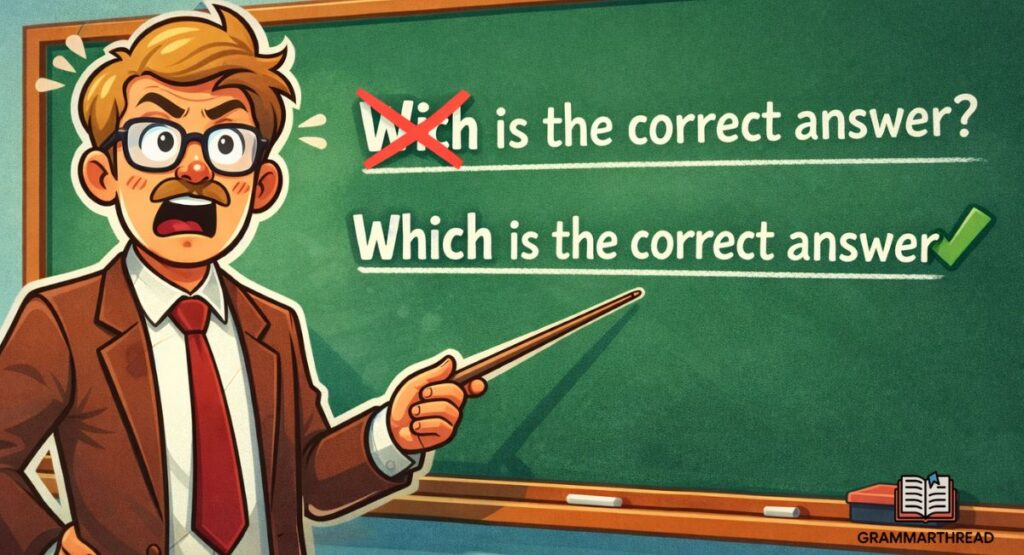
Many people accidentally type wich instead of which when writing quickly. This is one of the most frequent English spelling mistakes in texting, emails, or social media posts. Another common error is confusing which vs that, especially in clauses.
Tips to Avoid Mistakes:
- Always double-check if the word is a question or relative pronoun → use which.
- Remember wich is mostly in place names or historical terms.
- Use spell-check tools to catch typing errors in English before sending messages or submitting documents.
Wich or Which in Everyday Examples
Seeing these words in real life helps clarify usage. Most modern English writing will only include which, while wich appears in proper nouns.
Examples:
- Texting: “Which restaurant should we order from tonight?”
- Place names: “We spent the weekend in Sandwich.”
- Email writing: “Please let me know which files need updating.”
These examples show how which meaning in English changes depending on context and help avoid spelling confusion in English.
Wich or Which – Google Trends & Usage Data
Data from Google Trends shows that searches for “wich vs which spelling” spike during school exams and ESL learning periods. Most people are curious about the difference between wich and which in writing and want quick clarification.
Key insights:
- Search interest peaks in English learning communities.
- Misuse of wich is more common in social media writing.
- People often look for how to spell which correctly or common spelling mistakes in English.
Understanding these trends can help writers, students, and professionals avoid frequent errors and improve clarity.
Comparison Table (Side-by-Side)
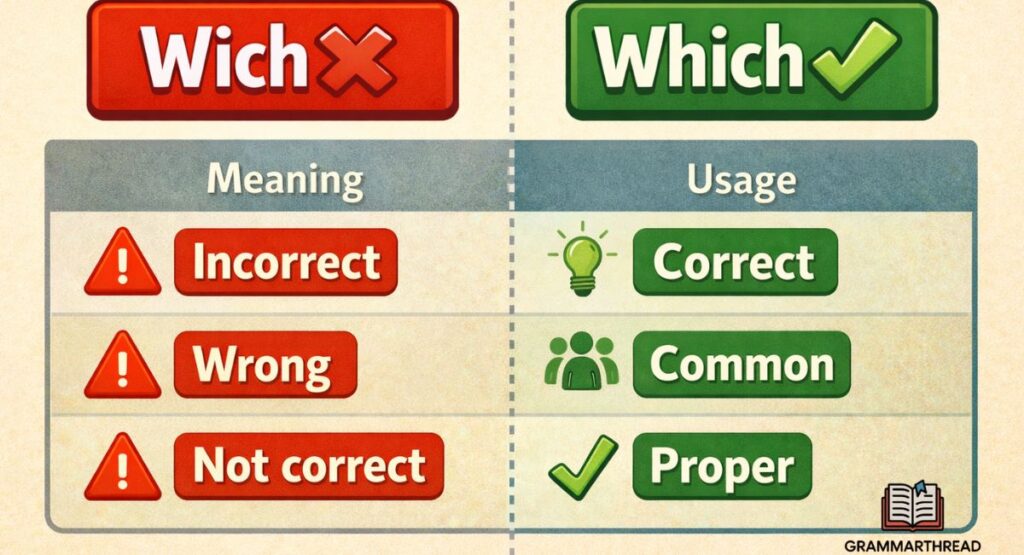
| Feature | Which | Wich |
| Usage | Question word, relative pronoun, determiner | Mostly proper nouns (place names) |
| Example | “Which route should we take?” | “I visited Greenwich last summer.” |
| Common Mistake | Often misspelled as “wich” | Rarely misused, mostly correct in place names |
| Context | General writing, academic writing, texting | Historic names, UK English geography |
This table provides a quick visual guide for remembering when to use which and when wich is correct. It’s especially useful for English learners and anyone proofreading emails, social posts, or essays.
Meaning and Usage of “Which”
The word which is a relative pronoun and determiner used to ask questions or refer to something specific. It helps the reader or listener identify one or more items from a set of options.
Usage Tips:
- Use which in questions: “Which color do you like best?”
- Use which in clauses to give extra information: “The book, which I borrowed yesterday, is excellent.”
- Avoid confusing which vs that in restrictive and non-restrictive clauses — a subtle but important grammar rule.
This makes which meaning in English clear and ensures your writing is accurate and professional.
What Does “Which” Mean?
Simply put, which asks about choices or options. It can also introduce extra information about a noun in a sentence.
Examples:
- “Which dress should I wear tonight?” → asking for a choice.
- “The car, which is red, belongs to my friend.” → giving extra information.
By using which correctly, you avoid common English writing mistakes and make your sentences easier to understand.
What About “Wich”?
Wich is rarely used outside of place names or historic terms. Examples include Greenwich, Sandwich, and Harwich. In modern writing, wich often appears as a typo for which, especially in texting or social media.
Key Points:
- Not used in normal questions or clauses.
- Often causes spelling confusion in English.
- Always double-check spelling if you see wich in general writing.
Is “Wich” Correct?
In short: mostly no. Using wich instead of which in standard writing is a spelling mistake. The only exception is when it appears in proper nouns, historical contexts, or geographic names.
Do’s and Don’ts:
- ✅ Do use wich in “Greenwich” or “Sandwich.”
- ❌ Don’t write wich for questions, choices, or clauses.
- ✅ Use which in all other standard writing, including emails, essays, and social media posts.
Following this rule keeps your writing professional, clear, and grammatically correct.
Spelling Tips to Avoid Mistakes
Spelling which correctly is simple once you remember a few key tips:
- Think “choice or question” → if you’re asking or giving options, always use which.
- Double-check for place names → words ending in -wich like Greenwich or Sandwich are exceptions.
- Use spell-check tools → apps like Grammarly or built-in editors catch most typing mistakes in English.
- Read aloud → if it sounds like “which,” it’s probably the correct spelling.
Following these tips prevents common English writing errors and helps you write confidently.
Examples of Correct Usage
Seeing which in real-life sentences makes it easier to remember. Here are a few examples:
- “Which route should we take to avoid traffic?”
- “I love the book, which explains grammar clearly.”
- “Which of these designs do you prefer for the project?”
Notice that wich would be incorrect in all of these cases, showing how the proper spelling keeps your writing clear and professional.
Questions Using “Which”
Which is often used in questions to ask for a choice from a group or set.
Examples:
- “Which flavor of ice cream do you want?”
- “Which student finished the assignment first?”
- “Which app helps you learn English fastest?”
Using which in questions prevents spelling confusion in English and makes your sentences easy to read and understand.
Clauses Using “Which”
Which can also introduce a clause that gives extra information about a noun. This is called a non-restrictive clause.
Examples:
- “The house, which has a red door, belongs to my aunt.”
- “I bought a laptop, which was on sale yesterday.”
Here, which provides additional details without changing the main meaning of the sentence. Remember, wich should never be used in these clauses.
Choosing Between Options
Which is used when you want to select one or more items from a set. It clarifies choices and helps avoid ambiguity.
Examples:
- “Which route should we take to reach the park fastest?”
- “Which dessert do you prefer, cake or ice cream?”
Remember: wich is never used for choices. Using which correctly prevents common English writing mistakes and keeps your sentences clear in emails, texts, and essays.
Why People Confuse “Wich” and “Which”
Many learners mix up wich vs which because they sound identical. Typos, autocorrect errors, and fast typing on keyboards make it easy to accidentally use wich.
Other reasons include:
- Seeing wich in place names and thinking it’s correct in regular writing.
- Forgetting the Old English origins of “which.”
- Confusing which vs that in clauses.
Understanding these causes helps you avoid spelling confusion in English.
Which Part of Speech Is “Which”? (Grammar Explanation)
Which functions as both a pronoun and a determiner.
- As a pronoun: “Which of these books is yours?” → replaces the noun.
- As a determiner: “Which book do you want?” → modifies the noun directly.
It’s an essential word for forming questions, clauses, and choices, making it critical to English grammar rules.
Which vs That – What’s the Difference?
Which and that are both relative pronouns, but they are used differently:
| Feature | Which | That |
| Clause Type | Non-restrictive (adds extra info) | Restrictive (essential info) |
| Commas | Usually surrounded by commas | No commas |
| Example | “The car, which is red, belongs to John.” | “The car that is red belongs to John.” |
Choosing correctly avoids grammar mistakes in sentences and makes writing professional.
Is “Wich” Ever Acceptable in English?
In modern English, wich is rarely acceptable. The only correct cases are:
- Place names: Greenwich, Sandwich, Harwich.
- Historical references: older English texts may show “wich” in settlements or documents.
Otherwise, using wich instead of which is a spelling error in texting, social media writing, or academic work.
How to Remember the Correct Spelling of “Which”
Here are simple memory tips to never confuse wich and which:
- Think “choice or question” → if it’s asking or giving options, spell which.
- Check for place names → proper nouns may end in -wich.
- Read aloud → “which” always sounds like /wɪtʃ/.
- Use spell-check tools → Grammarly or built-in editors catch most mistakes.
By keeping these tips in mind, you can confidently use which and avoid common English spelling errors, whether in professional writing, social media, or casual texting.
Frequently Asked Questions (FAQs) About Which or Wich
When to use which or wich?
Use which when asking a question or referring to a choice or specific item. Wich is only used in proper nouns like place names, not in regular writing.
How to use wich?
Wich should be used only in place names or historical terms such as Greenwich or Sandwich. Avoid it in normal sentences, as it is usually a spelling mistake.
What do you mean by “which”?
Which is a pronoun or determiner used to ask questions, give options, or add extra information in a sentence. It helps identify a specific item from a group.
Is it which or witch?
Which is for questions and choices, while witch refers to a person with magical powers. They are completely different words with different meanings.
Which means witch?
No, which does not mean witch. “Which” is about choices or clauses, and “witch” is a noun for a magical or supernatural person.
Is “I am not a witch” in English?
Yes, this sentence is correct English. It clearly states someone is not a magical or supernatural person, using the noun witch properly.
Conclusion
Understanding wich or which is easier than it seems. Most of the time, you should use which in questions, clauses, or when giving choices. Wich is mostly for place names or historical words. Using the wrong spelling can confuse readers and look unprofessional. Remember, typing mistakes and autocorrect often make people mix which or wich, so double-check your writing.
Always think about the context before you type. If you are asking a question or giving options, it is which. If it is part of a proper noun, like Greenwich or Sandwich, it is wich. Following this simple rule helps you avoid mistakes. Now you can write confidently knowing when to use wich or which.
Read Next: Treck or Trek – Clear Up the Confusion Once and for All

Welcome to GrammarThread. I am Julian Mercer, an AI-powered SEO and content writer with 4 years of experience. I help websites rank higher, grow traffic, and look amazing. My goal is to make SEO and website design simple and effective for everyone. Let’s achieve more together!