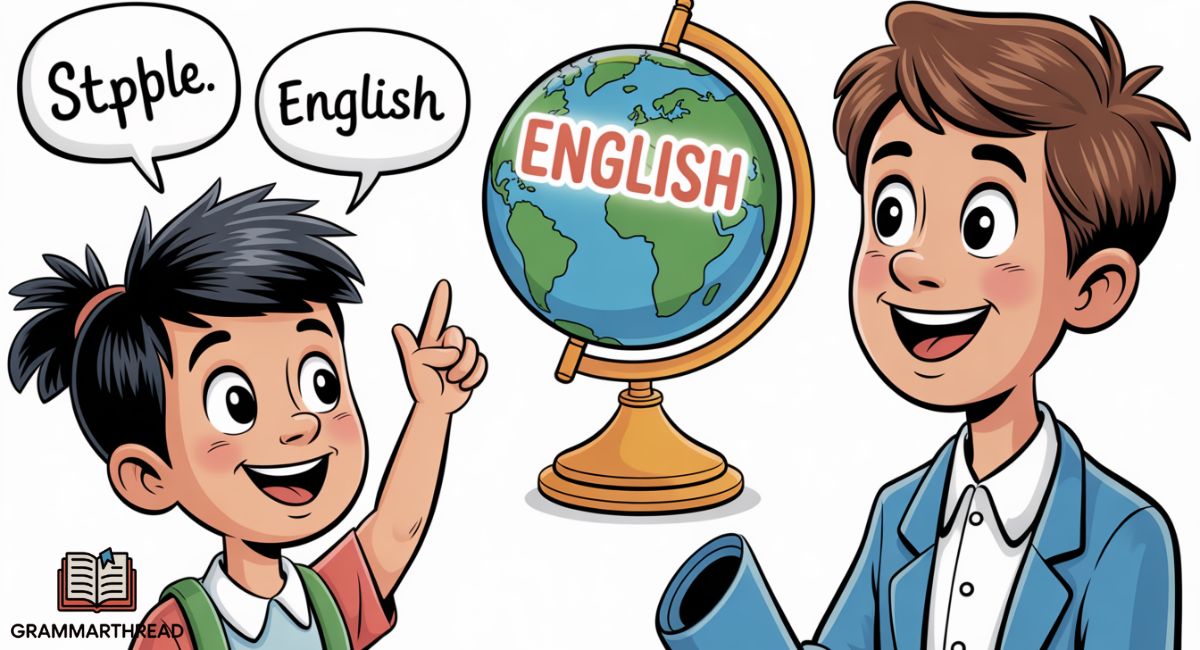
English plays a key role in how we learn, connect, and grow in today’s world. A Dialogue Between Teacher And Student About Importance Of English helps learners understand this role through a simple, realistic conversation. It shows how English supports education, builds confidence, and creates better opportunities in studies, jobs, and daily communication.
Such dialogues reflect real classroom situations where students ask questions and teachers guide them with clear answers. This approach helps learners practice sentence structure, polite expressions, and useful vocabulary in a natural way. Whether you are preparing for exams, improving speaking skills, or learning English for real life use, these dialogues make learning practical, relatable, and easier to remember.
Phrases for Talking About English Importance
When teachers and students talk about the importance of English, certain expressions come up again and again. These phrases help structure meaningful conversations about language learning goals, challenges, and real-world benefits. Understanding these common expressions makes it easier to participate in classroom discussions or explain your motivations for studying English.
Phrases Commonly Used by the Teacher
| Phrase | Meaning |
| “What makes English important to you?” | Inviting the student to share their perspective |
| “English connects people across the globe.” | Highlighting the language’s worldwide reach |
| “It opens doors in college and university.” | Pointing out educational advantages |
| “Speaking well requires consistent effort.” | Stressing the importance of daily practice |
| “Consider following English news sources regularly.” | Offering actionable study suggestions |
Phrases Commonly Used by the Student
| Phrase | Meaning |
| “I need to get better at speaking English.” | Stating a specific learning objective |
| “I feel nervous when I have to talk.” | Sharing feelings of hesitation or anxiety |
| “Can English help me find better work?” | Inquiring about professional advantages |
| “What’s the fastest way to improve?” | Seeking effective learning strategies |
| “I use English shows for listening practice.” | Describing a personal study technique |
Bonus Vocabulary
- Communication – Sharing thoughts and information through language or gestures
- Fluency – The ability to speak a language naturally without pausing often
- Pronunciation – How you say words and sounds in a language
- Global – Related to the entire world or international connections
- Confidence – Believing in your ability to communicate effectively
- Career – The professional path or work you pursue over many years
- Practice – Repeating activities regularly to build skill and comfort
Dialogue Between Teacher And Student About Importance Of English
Conversation Between Teacher and Student on the Use of English in Careers
Teacher: Good morning. What’s your view on why English matters?
Student: I believe it helps when looking for quality employment.
Teacher: That’s right. English serves as a primary language in numerous professions, particularly those with international reach.
Student: Does that mean fluency could let me work overseas as well?
Teacher: Absolutely, and it also opens positions in organizations operating across borders.
Student: I’m determined to strengthen my spoken English skills.
Teacher: That’s an excellent aim. Consider conversing with peers or following English broadcasts regularly.
Student: I watch films in English with captions. Does that work?
Teacher: That’s quite beneficial. Just make sure you speak the sentences out loud afterward.
Student: Appreciate it, sir. I’ll practice that more consistently.
Teacher: Wonderful. Stay committed, and you’ll notice progress.
Teacher Encouraging Student to Speak English With Confidence
Teacher: I’ve observed you’re often silent during English lessons. Everything okay?
Student: I feel anxious. I worry about making errors.
Teacher: Errors are how we learn. Even people born speaking English make them.
Student: Is that true? I assumed I needed to be flawless.
Teacher: Nobody begins at perfection. Just aim to get slightly better every day.
Student: My goal is to speak with ease someday.
Teacher: You definitely will. Simply continue speaking, reading, and listening to the language.
Student: Would joining the school’s English club be helpful?
Teacher: Definitely! It’s an enjoyable environment to develop your skills.
Student: I’ll sign up before the week ends. Thanks so much!
Teacher: My pleasure. I’m impressed by your dedication.
Discussing English as a Global Language
Teacher: Are you aware how many nations recognize English officially?
Student: I’m unsure. Around 20, perhaps?
Teacher: In fact, more than 50 nations have official status for it, and countless others use it routinely.
Student: That’s incredible! I had no idea.
Teacher: It’s also the dominant language in research, innovation, and online platforms.
Student: So mastering English benefits every area of study?
Teacher: Precisely. It bridges communication gaps worldwide.
Student: That explains why most websites appear in English.
Teacher: Right, and numerous smartphone applications default to English initially.
Student: I should focus on strengthening my reading and composition skills as well.
Teacher: Smart thinking. It’ll support you across all your courses.
Student Asking for English Learning Tips
Student: Sir, what’s the quickest way to advance my English?
Teacher: Begin with manageable targets. Such as mastering 5 fresh vocabulary items daily.
Student: The problem is I can’t retain the new terms I study.
Teacher: Apply them in full sentences. The more frequently you use them, the better they stick.
Student: Is it better to read novels or textbooks on grammar?
Teacher: Each has value. Novels expose you to authentic language patterns.
Student: I like graphic novels. Can those help too?
Teacher: Certainly! They demonstrate conversational English as it’s actually used.
Student: What about writing practice?
Teacher: Compose brief journal entries or recaps of your reading material.
Student: I’ll give that a shot. I appreciate the guidance.
Teacher: Stay persistent. You’re making solid progress.
Talking About the Role of English in Education
Student: Does English truly matter that much for advanced studies?
Teacher: Very much so, particularly if you’re considering overseas universities.
Student: My plan is to attend university in Canada.
Teacher: In that case, you’ll need to qualify through an English proficiency exam like IELTS or TOEFL.
Student: Those sound challenging from what I’ve heard.
Teacher: They become manageable with steady preparation. Much of the assessment covers listening comprehension and oral communication.
Student: I ought to begin training immediately.
Teacher: Definitely. Starting early provides a significant edge.
Student: I’ll discuss enrolling in a preparation program with my family.
Teacher: That’s a sound choice. I know several reputable options I can share.
Student: Thank you, sir. I’m feeling much more assured now.
Dialogue Writing Tips

Crafting a conversation between a teacher and a student offers a valuable opportunity to practice respectful yet approachable English. It allows learners to grasp how to pose questions courteously, share uncertainties, and maintain an appropriate tone when communicating with authority figures.
Here are 6 practical tips to help you write meaningful and natural dialogues:
1. Start With a Clear Setting
Before you begin writing, consider these questions:
- Where does this exchange take place? (During a lesson? In the hallway?)
- What motivates the conversation? (Seeking guidance? Discussing language goals?)
These details guide your choice of vocabulary and phrasing.
Example: A student approaches their teacher during break time to discuss strategies for building English confidence.
2. Use Polite, Respectful Language
Students should maintain a courteous manner when addressing teachers. Rely on respectful expressions and proper question structures.
Instead of: “That doesn’t make sense.” Try: “I’m a bit confused. Would you mind clarifying that?”
Instead of: “Give me the answer.” Try: “Could you offer some guidance on this?”
3. Give the Dialogue a Purpose
Every conversation needs a clear objective such as exploring why English matters, requesting study techniques, or talking about academic aspirations.
Example: “Ma’am, will English knowledge benefit me if I pursue international opportunities?”
Having a specific focus keeps the exchange coherent and enhances its educational value.
4. Show the Student’s Interest and Effort
Allow the student to pose questions, demonstrate enthusiasm, and articulate learning objectives. Teachers can reply with support and practical recommendations.
Example: Student: “I’m eager to develop better conversational abilities.” Teacher: “That’s an admirable aim. Practice speaking English daily, even just for a few minutes.”
This type of interaction reflects genuine engagement in learning.
5. Use Education-Related Vocabulary
Incorporate terms such as:
- communication, fluency, practice, pronunciation, grammar, vocabulary, speaking, listening, exam, improve, confident
Example Sentences:
- “Strong English fluency opens doors across various professions.”
- “Regular reading in English strengthens your word knowledge organically.”
These choices enhance both authenticity and instructional quality.
6. Keep the Tone Encouraging and Supportive
Teachers typically offer reassurance and motivation. Include uplifting phrases like:
- “No need to worry, you’re making good headway.”
- “Continue your efforts you’re showing real improvement.”
- “That’s a thoughtful question to ask.”
Encouraging language boosts learner confidence and creates a more realistic dialogue experience.
Practice Exercises
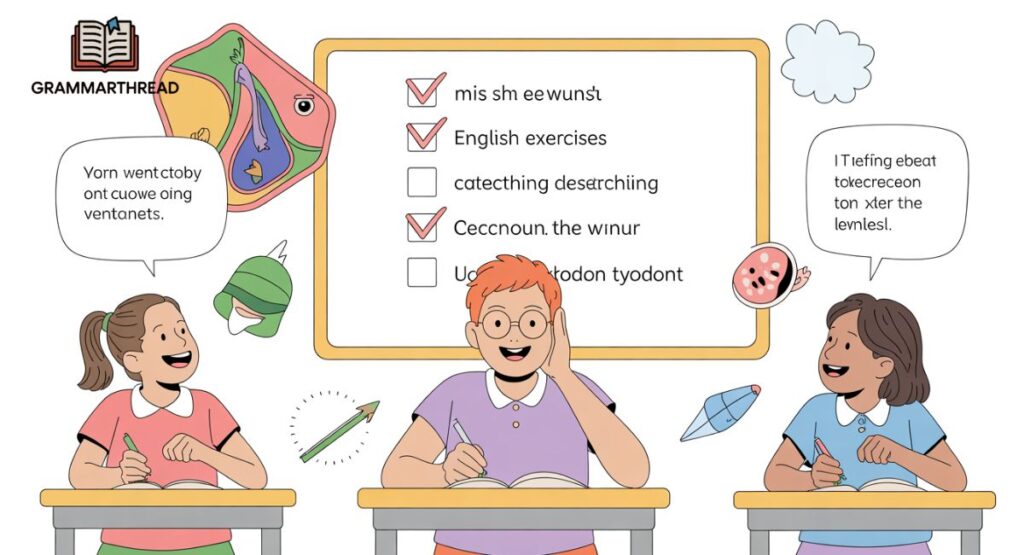
Exercise 1: Fill in the Blanks
Use the word bank to complete each sentence.
Word Bank: (fluency, confidence, communication, global, pronunciation, practice, grammar, improve, language, reading)
- I want to build my English __________ so I can speak clearly.
- English is a __________ language used around the world.
- Regular __________ is the key to learning any skill.
- Watching English shows helps with listening and __________.
- Speaking with others improves your __________ skills.
- It’s okay to make mistakes while you’re building __________.
- Reading books will help you __________ your vocabulary.
- English __________ can be tricky but gets easier with time.
- She’s working hard on her __________ because she wants to sound natural.
- Learning a new __________ opens many doors in life.
Answer Key:
- confidence
- global
- practice
- pronunciation
- communication
- fluency
- improve
- grammar
- pronunciation
- language
Exercise 2: Sentence Rewriting
Rewrite each sentence in polite, student-to-teacher language.
- “You’re wrong about English being useful.”
- “Give me some tips to learn fast.”
- “I don’t care about speaking fluently.”
- “I can’t do anything in English.”
- “Tell me what websites I should use.”
- “I won’t practice because I’m lazy.”
- “I already know everything about English.”
- “This language is boring.”
- “Stop asking me to improve.”
- “Why should I even learn this?”
Sample Rewritten Answers:
- “I’m not sure I understand. Could you explain more?”
- “Could you please share some tips to improve quickly?”
- “I’m still learning, but I hope to become fluent one day.”
- “I find English difficult. Can you help me improve?”
- “Could you recommend any good websites for learning?”
- “I sometimes lack motivation, but I want to try harder.”
- “I know some things, but I still need to learn more.”
- “Sometimes I find English hard to enjoy, but I want to get better.”
- “I know I should improve thank you for reminding me.”
- “Can you explain why English is important for me?”
Exercise 3: Multiple Choice Questions
Choose the most suitable response.
- “Why should I learn English?”
a) Because it’s boring.
b) It opens up global opportunities.
c) It’s just a school rule. - “I’m scared to speak English.”
a) That’s okay mistakes help you learn.
b) Then never speak.
c) Just speak in your native language. - “Can watching English videos help me?”
a) Not really.
b) Yes, especially with subtitles and repetition.
c) Only cartoons work. - “Will English help me study abroad?”
a) No, not needed.
b) Yes, it’s required for most universities.
c) Only for fun trips. - “How can I improve my pronunciation?”
a) Just ignore it.
b) Practice out loud and listen carefully to native speakers.
c) Use a dictionary only. - “What should I do if I forget new words?”
a) Stop learning.
b) Use flashcards and write them in sentences.
c) Keep using the wrong word. - “Is English useful in technology fields?”
a) Not at all.
b) Very much it’s the main language in tech.
c) Only for doctors. - “How often should I practice English?”
a) Only once a month.
b) A little every day is best.
c) Never. - “Can I speak English with my friends?”
a) Yes, that’s great practice.
b) No, only in class.
c) Only when your teacher says so. - “What if I make a mistake while speaking?”
a) Just stop trying.
b) Keep going mistakes are part of learning.
c) Laugh at yourself.
Answer Key:
- b
- a
- b
- b
- b
- b
- b
- b
- a
- B
Exercise 4: Dialogue Building
Complete each mini-dialogue with a natural student or teacher response.
- Teacher: “Why do you want to learn English?”
Student: ____________________________
Teacher: “That’s a great reason.” - Student: “I’m afraid to speak in front of others.”
Teacher: ____________________________
Student: “Thanks, I’ll try.” - Teacher: “What do you find hard in English?”
Student: ____________________________
Teacher: “Let’s work on that together.” - Student: “Is it okay to make mistakes?”
Teacher: ____________________________
Student: “That makes me feel better.” - Teacher: “What’s your favorite way to practice English?”
Student: ____________________________
Teacher: “That’s a fun way to learn.” - Student: “Can you suggest an English app?”
Teacher: ____________________________
Student: “Great, I’ll download it today.” - Teacher: “Do you use English outside the classroom?”
Student: ____________________________
Teacher: “Keep doing that—it helps.” - Student: “How long will it take to become fluent?”
Teacher: ____________________________
Student: “I’ll stay consistent.” - Teacher: “Have you tried writing in English?”
Student: ____________________________
Teacher: “Try keeping a short journal.” - Student: “Sometimes I feel like giving up.”
Teacher: ____________________________
Student: “You’re right. I won’t quit.”
Sample Answers:
- “Because I want to work abroad.”
- “Don’t worry veryone starts that way.”
- “Grammar and pronunciation are tough for me.”
- “Absolutely. That’s how we grow.”
- “I like watching English YouTube videos.”
- “Try Duolingo or BBC Learning English.”
- “Yes, I speak with a friend after school.”
- “It depends, but daily practice speeds it up.”
- “No, I haven’t started yet.”
- “That’s normal. Just keep going, one step at a time.”
Real-Life Impact of English on Careers and Global Communication
English has become more than just a school subject it’s a practical tool that shapes professional opportunities and connects people across borders. Understanding how English functions in real-world settings helps students appreciate why investing time in language learning truly matters for their future.
Opening Doors in the Professional World
Proficiency in English directly influences career prospects in today’s interconnected economy. Many multinational companies require English as their working language, regardless of where their offices are located. This means a job candidate with strong English skills can access positions that others might miss entirely.
For instance, someone applying for a marketing role at an international firm will likely need to communicate with teams in different countries, review reports written in English, and participate in video conferences. Without language confidence, even talented professionals may find themselves limited to local opportunities.
Bridging Cultural and Geographic Gaps
English serves as a common ground when people from different linguistic backgrounds need to collaborate. Whether it’s a business negotiation, an academic conference, or a simple conversation between travelers, English often becomes the natural choice for mutual understanding.
Consider a software developer from Brazil working with designers in South Korea and clients in Germany. English becomes their shared medium, allowing ideas to flow despite having three different native languages. This linguistic bridge makes global teamwork not just possible, but efficient.
Expanding Access to Information and Resources
The majority of online content, research publications, and technical documentation exists in English first. This gives English speakers immediate access to cutting-edge information, educational resources, and professional development materials.
A medical student researching recent breakthroughs in treatment, an engineer studying new technologies, or an entrepreneur learning about market trends will find that English proficiency determines how quickly and thoroughly they can gather vital information. Those who read English fluently gain a significant advantage in staying current within their fields.
Creating Networking Opportunities
Professional relationships often form at conferences, workshops, and industry events where English is the primary language of interaction. Being able to introduce yourself clearly, ask thoughtful questions, and engage in meaningful conversations opens doors to mentorship, partnerships, and career advancement.
Someone attending an international summit might meet a potential employer, collaborator, or mentor but only if they can communicate effectively. These chance encounters frequently lead to opportunities that reshape career trajectories.
Enhancing Travel and Cultural Experiences
Beyond careers, English enables richer experiences when exploring different countries. From navigating airports to understanding local customs, ordering meals to making friends, English helps travelers move through the world with greater ease and confidence.
A person visiting Thailand, Morocco, or Sweden will find that English helps them connect with locals, understand directions, and appreciate cultural nuances they might otherwise miss. This linguistic ability transforms travel from a purely touristic experience into genuine cultural exchange.
Supporting Academic and Research Aspirations
Students pursuing higher education internationally must demonstrate English proficiency through standardized tests. Universities in English-speaking countries and many institutions worldwide conduct lectures, discussions, and examinations in English.
A graduate student writing a thesis, presenting research findings, or contributing to academic journals needs strong English skills to participate fully in the scholarly community. Language barriers can prevent brilliant ideas from reaching the audiences that need them most.
Facilitating Remote Work and Freelancing
The rise of digital work has made English even more valuable. Freelancers and remote workers often serve clients from around the globe, and English typically functions as the standard language for contracts, communication, and project deliverables.
A graphic designer in Egypt, a content writer in the Philippines, or a data analyst in Poland can all compete for projects worldwide when they possess solid English communication skills. This linguistic capability directly translates into earning potential and professional flexibility.
Building Confidence in Diverse Environments
Perhaps less tangible but equally important, English proficiency builds personal confidence when navigating unfamiliar situations. Whether speaking at a conference, attending a job interview, or simply asking for help, knowing you can express yourself clearly reduces anxiety and empowers action.
This confidence creates a positive cycle: the more comfortable you become using English, the more opportunities you pursue, which in turn strengthens your language abilities further. Over time, what once felt intimidating becomes second nature, opening pathways that once seemed out of reach.
Frequently Asked Questions
What is a dialogue between teacher and student about importance of English
It is a short conversation that explains why English matters for education, communication, and future opportunities.
Why is English important for students
English helps students understand subjects better, access global knowledge, and communicate confidently in school and beyond.
How does a teacher explain the importance of English to a student
A teacher usually explains it through real examples like studies, careers, travel, and daily communication.
Where is a dialogue between teacher and student commonly used
It is commonly used in classrooms, exams, spoken English practice, and learning materials.
How does this dialogue help improve speaking skills
It allows students to practice question and answer patterns, polite expressions, and clear sentence structure.
Is this dialogue useful for exam preparation
Yes, it is useful for exams because it improves writing, speaking, and understanding of practical English usage.
Can beginners understand such dialogues easily
Yes, these dialogues are usually written in simple language, making them easy for beginners to follow and practice.
Why do teachers prefer dialogue-based learning
Dialogue-based learning feels natural and helps students learn English through real conversation instead of memorization.
Conclusion
English is more than a classroom subject. It is a shared language that supports learning, communication, and future success. A Dialogue Between Teacher And Student About Importance Of English clearly shows why English matters, how it developed as a global language, and where it is used in real life.
Practicing these dialogues strengthens vocabulary, improves sentence flow, and builds speaking confidence. They also teach learners how to respond naturally in academic and everyday situations. To get better results, read the dialogue aloud, practice with a partner, and create your own short conversations. Start using English daily and turn simple practice into lasting skill growth
Read Next: Opposite of Perspective: 32 Antonyms with Examples

Welcome to GrammarThread. I am Julian Mercer, an AI-powered SEO and content writer with 4 years of experience. I help websites rank higher, grow traffic, and look amazing. My goal is to make SEO and website design simple and effective for everyone. Let’s achieve more together!