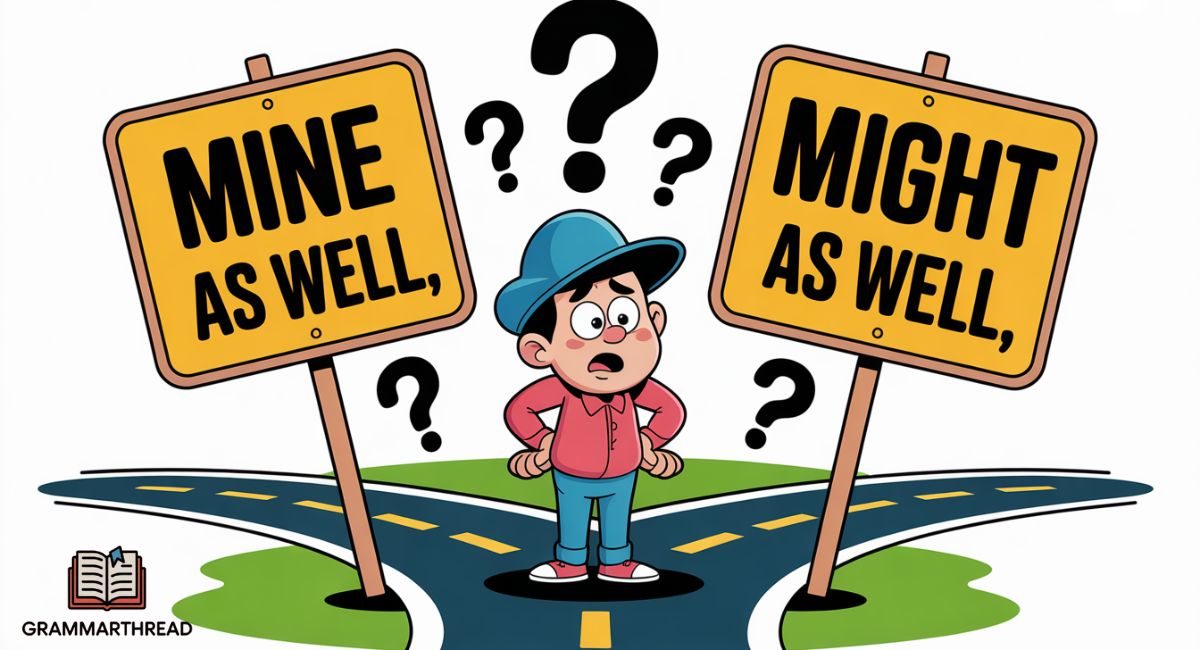
In everyday conversation, many people get stuck choosing between Mine as Well or Might as Well, and that hesitation often leads to the wrong phrase slipping out. Because these expressions sound similar in fast, casual speech, even fluent speakers mishear them and repeat the mistake without realizing it.
Knowing which one actually works matters more than it seems. The right choice helps your sentence sound natural, clear, and confident, whether you are chatting with friends, writing an email, or speaking at work. Once you understand the meaning behind the correct phrase and how it fits real situations, the confusion fades quickly. Small language fixes like this make a big difference in how polished your English feels.
Understanding the Confusion: Why These Phrases Trip Us Up
When similar-sounding words float through everyday conversation, mix-ups happen naturally. “Mine,” “might,” and “mind” overlap in pronunciation and usage patterns. When you’re typing quickly or speaking casually, selecting the wrong term becomes surprisingly easy. These mistakes appear everywhere: college papers, professional correspondence, text messages, and workplace communications. Precision with these phrases actually matters quite a bit. It demonstrates attention to detail and respect for your reader, plus correct usage reinforces proper patterns in your own thinking and writing habits.
A Quick Answer: Which Phrase Actually Works?
Let’s cut straight to the point: “Might as well” is the only version that’s both grammatically sound and idiomatically acceptable. “Mine as well” and “Mind as well”? Those are simply common mishearings that sound plausible but aren’t correct in standard English usage.
Here’s the key takeaway in clear terms so you can remember it instantly:
“Might as well” is the correct phrase. “Mine as well” and “Mind as well” are errors.
What “Might as Well” Actually Means
The phrase “might as well” serves several practical purposes in everyday communication:
- Making a suggestion: You recommend an action when alternatives seem limited. “We might as well grab dinner here.”
- Expressing acceptance or resignation: You proceed with something because there’s no strong reason not to. “I might as well stay and help.”
- Reaching a pragmatic decision: When no superior option exists, you simply choose to act. “She might as well apply for the position.”
To make this even clearer, here’s a helpful breakdown showing different contexts:
| Context | Example Phrase | Meaning |
| Suggestion | “We might as well get started.” | Let’s proceed since we’re ready |
| Resignation | “I might as well handle it alone.” | Nobody else is available |
| Casual decision | “You might as well join us.” | There’s no reason not to participate |
Why “Mine as Well” Gets Used (But Is Incorrect)
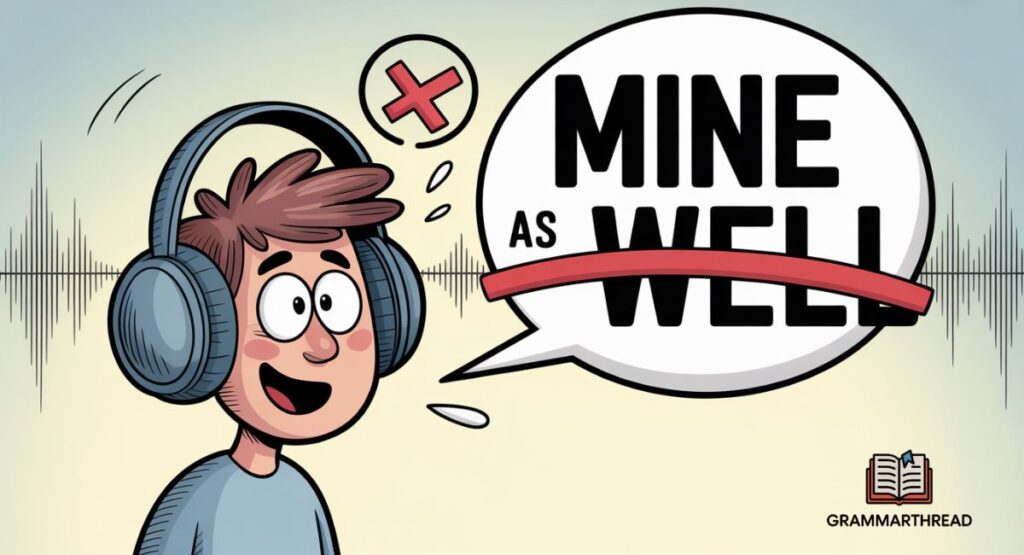
What Happens
Rapid speech causes “might” to blend into “mine.” This phonetic similarity leads to confusion in informal conversations and written messages. Writers often transcribe what they hear spoken aloud, and proper spelling gets left behind in the process.
Why It Doesn’t Work
“Mine” indicates ownership or possession. It can’t convey possibility, suggestion, or resigned acceptance. From a grammatical standpoint, using “mine as well” in place of “might as well” creates a nonsensical phrase.
When It Can Be Right
Only in genuine ownership contexts never as a substitute for “might as well.” For instance: “Her proposal succeeded, and mine as well.” In this case, “mine” means “my proposal,” while means “also.” That’s the sole legitimate usage. However, this construction appears infrequently in normal conversation and writing.
Why “Mind as Well” Is Also Wrong
How It Sneaks In
“Mind” appears from misinterpreting “might,” particularly during quick or casual speech. Writers reproduce this error when they spell out what they believe they’ve heard rather than the actual correct phrase.
The Problem
“Mind” simply doesn’t belong here. This word functions as either a verb or noun related to thinking, awareness, or mental processes not about suggesting actions or expressing resignation. Constructions like “Mind as well leave” are grammatically meaningless.
A Real-World Oops
In an online discussion, a user wrote: “Mind as well save our money for next month.” That’s incorrect. The proper version: “Might as well save our money for next month.”
Mine as Well vs. Might as Well vs. Mind as Well — Side by Side
Here’s a clear comparison table showing how these three phrases stack up:
| Phrase | Correct? | Meaning | Typical Misuse Scenario |
| Might as well | Yes | Expressing suggestion/resigned acceptance | Used correctly in standard English |
| Mine as well | No | (Literally “mine” + “also”) | Phonetic confusion in informal speech |
| Mind as well | No | (Mental activity verb/noun) | Mishearing modal verb in conversation/writing |
Real-Life Examples: When to Use “Might as Well”
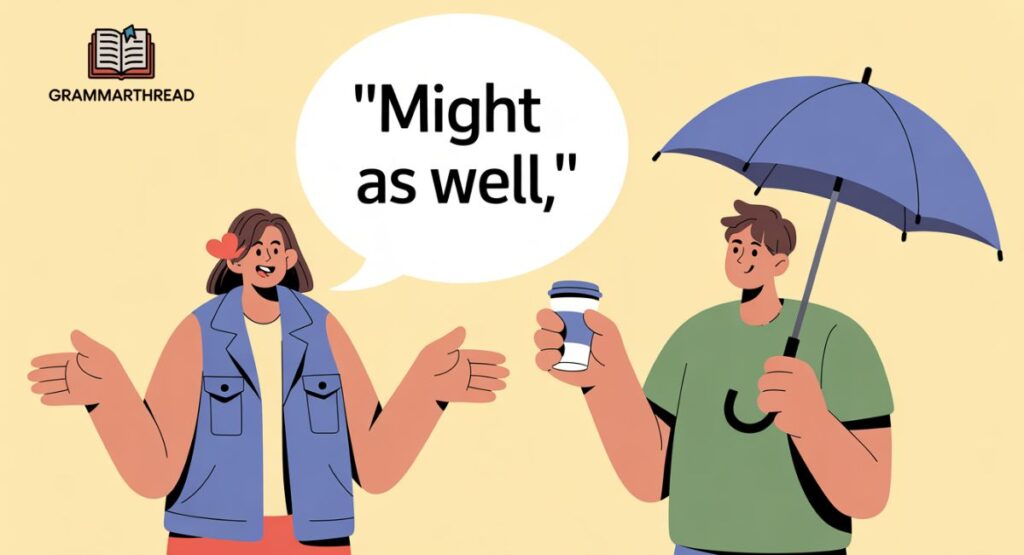
Here are practical situations where “might as well” fits naturally:
- In class: “Since the presentation equipment is ready, we might as well begin early.”
- At work: “The meeting got canceled, so I might as well finish these reports now.”
- At home: “I’ve already got the tools out, so I might as well fix that shelf too.”
Classroom Case Study
Scenario: An English professor reviews term papers and notices several students writing “mine as well” repeatedly.
Instructor Feedback:
“The correct phrase is ‘might as well.’ You’re not indicating possession or ownership you’re suggesting a practical action or expressing acceptance of a situation.”
Through this targeted correction, students quickly grasp the distinction and eliminate this common error from their academic writing.
Why This Matters in Academic and Professional Settings
Getting “might as well” right carries real weight in formal contexts:
- Precision demonstrates professionalism. Using the correct phrase shows you pay attention to language details that others notice.
- It eliminates confusion in workplace communication. Proper usage keeps your emails, reports, and presentations clear and polished.
- Accuracy strengthens your professional reputation particularly important during job interviews, client meetings, or educational settings.
- Educators who model proper grammar help students develop stronger writing skills and better language awareness across all their work.
How to Remember the Right Phrase
Helpful Mnemonics:
- Connect “might” with possibility: Think of this word as expressing potential actions or choices.
- Question the meaning: “Is this about possession (‘mine’) or thinking (‘mind’)? If neither fits, you’re probably suggesting an action so use “might as well.”
Practice Tips:
- Absorb natural usage from fluent speakers through podcasts, television programs, or news broadcasts.
- Create your own practice sentences:
- “Might as well try,”
- “Might as well respond,”
- “Might as well admit it.”
- Say them aloud repeatedly. Vocal practice reinforces correct usage more effectively than silent reading.
The Psychology Behind Sound-Alike Errors in Everyday English
Our brains process spoken language faster than we realize, and this speed creates predictable patterns of confusion. When words share similar pronunciations, the mind sometimes prioritizes what sounds familiar over what’s grammatically accurate. This phenomenon, known as phonetic interference, happens across all age groups and education levels.
Why These Mistakes Persist:
- Auditory memory dominates: We learn language primarily through listening, so phonetic patterns get stored more deeply than spelling rules.
- Casual speech compresses sounds: In everyday conversation, “might as well” often gets pronounced rapidly, blurring the distinct sounds of each word.
- Visual reinforcement matters: When we repeatedly see incorrect versions online or in texts, our brains start accepting them as valid alternatives.
- Context doesn’t always correct: Even when a phrase doesn’t make logical sense, familiar-sounding patterns can override our grammatical instincts.
Understanding these cognitive factors helps explain why sound-alike errors feel so natural and why conscious attention to correctness requires deliberate effort and practice.
Frequently Asked Questions
What is the correct phrase: mine as well or might as well?
The correct phrase is “might as well.” “Mine as well” is a mishearing and has no real meaning in standard English.
Why do people confuse mine as well or might as well?
They sound very similar in fast, casual speech, so many people repeat what they think they hear.
Is “mine as well” ever grammatically correct?
No, “mine as well” is not considered correct in normal English usage.
What does “might as well” actually mean?
It means doing something because there is no better option or it makes practical sense.
Can I use “might as well” in formal writing?
Yes, it is acceptable in formal writing when used correctly and in the right context.
Is “mind as well” a real phrase?
No, “mind as well” is also incorrect and usually comes from mishearing “might as well.”
How do I remember mine as well or might as well easily?
Link “might” with possibility or logic, since the phrase is about choosing a sensible option.
Conclusion
Mixing up Mine as Well or Might as Well happens because our ears often hear sounds, not meanings. In standard English, only “might as well” works when you are suggesting a sensible or practical option. The other versions come from mishearing the phrase in quick, informal speech. The fix is simple.
Focus on what you want to express, listen closely to how fluent speakers use it, and connect the phrase with real situations. With a little practice, the correct form will feel automatic. Try using “might as well” in your next conversation or sentence and notice how much clearer it sounds.
Read Next: Any Problem or Any Problems – Which Is Correct?

Welcome to GrammarThread. I am Julian Mercer, an AI-powered SEO and content writer with 4 years of experience. I help websites rank higher, grow traffic, and look amazing. My goal is to make SEO and website design simple and effective for everyone. Let’s achieve more together!