Have you ever come across the word Natzi or Nazi and wondered why it sounds so familiar yet shocking? Maybe you’ve been curious about its origins or why it’s such a powerful term in history. It’s easy to get confused, especially when people misspell it as Natzi, leaving you questioning what’s real and what’s not. Understanding this word matters if you want to make sense of historical discussions or current references.
In this blog post, we’ll explain Natzi or Nazi in simple terms and answer the question: where did the word Nazi come from. You’ll learn the real meaning of Natzi, its history, and why it became so significant. By the end, you’ll have a clear understanding and be able to use the term accurately in conversations or research.
Natzi or Nazi – Quick Answer
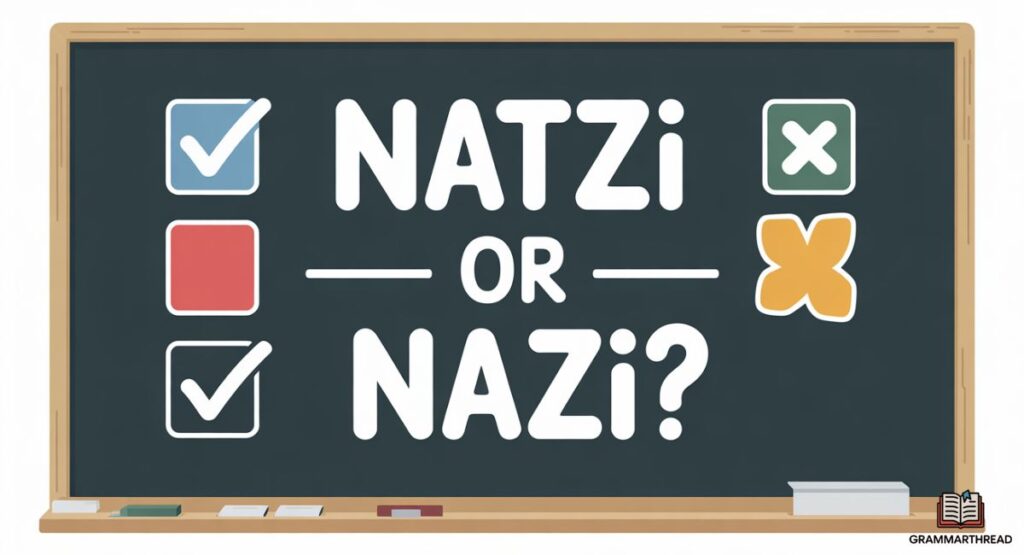
The term Natzi or Nazi refers to members of the National Socialist German Workers’ Party, a political group that ruled Germany from 1933 to 1945. Today, the word often appears in historical discussions, educational content, and sometimes in social media or casual conversation, though spelling mistakes like Natzi are common.
Quick Context:
- Origin: The word “Nazi” comes from the German nickname for Ignatz, a common name in Bavaria, and later became associated with the Nationalsozialist movement.
- Modern use: Besides historical references, it occasionally appears in phrases like “Grammar Nazi,” where it describes someone strict about rules, not politics.
Key Points:
- Correct spelling: Nazi (Natzi is a misspelling)
- Plural form: Nazis
- Tone: Can be serious, historical, or casual depending on context
Example in conversation:
- Historical discussion: “The Nazi regime in Germany had a profound impact on World War II history.”
- Casual use: “Stop being such a grammar Nazi when I type fast!”
This quick answer helps clarify the meaning, spelling, and context for Natzi or Nazi, giving you a clear reference for both historical and modern usage.
What Does “Nazi” Mean?
The term Nazi primarily refers to a member of the National Socialist German Workers’ Party (NSDAP), which ruled Germany under Adolf Hitler. Beyond its historical use, it’s sometimes used in modern language in expressions like “Grammar Nazi,” describing someone strict about rules rather than politics.
Key Meanings:
- Historical: Member of the Nazi party involved in politics, WWII history, or the Nazi regime in Germany.
- Modern/casual: Used metaphorically to describe someone enforcing rules strictly, e.g., grammar or behavior.
Example:
- “During my history class, we studied how the Nazi ideology shaped WWII events.”
- “My coworker is such a grammar Nazi; she corrected every typo I made.”
Origin & History of the Word “Nazi”
The word Nazi originated as a nickname in the Bavarian dialect for the name Ignatz, a common first name in southern Germany. Over time, it became shorthand for Nationalsozialist, referring to members of the National Socialist German Workers’ Party (NSDAP).
Brief Historical Context:
- The Nazi party formed in the early 1920s in Germany.
- Adolf Hitler led the NSDAP to power, establishing the Nazi regime in 1933.
- The party’s policies led to World War II and the Holocaust, making the term historically significant.
Interesting Fact:
- The term “Nazi” was originally just a nickname; it wasn’t intended as a political label but quickly became associated with the party’s ideology and actions.
Correct Spelling and Common Mistakes
The correct spelling is Nazi. A common misspelling is Natzi, which often appears online, in casual typing, or social media posts. Using the correct spelling is important for historical accuracy and clear communication.
Tips to Remember:
- Plural: Nazis
- Adjective usage: Nazi ideology, Nazi regime
- Pronunciation: /ˈnɑː.tsi/ (British English and American English)
- Avoid mixing: Natzi vs Nazi — Natzi is not recognized in dictionaries like Oxford or Merriam-Webster
Do’s and Don’ts:
- ✅ Use Nazi when referring to historical facts or parties.
- ✅ Use “Grammar Nazi” carefully in informal contexts.
- ❌ Avoid Natzi in academic, journalistic, or educational writing.
Example:
- Correct: “The Nazi regime in Germany ended in 1945.”
- Incorrect: “The Natzi regime in Germany ended in 1945.”
How to Pronounce “Nazi”
The word Nazi is pronounced /ˈnɑː.tsi/ in both British and American English. It has two syllables: “Nah” and “tzee.” Correct pronunciation helps avoid confusion, especially when discussing historical topics or teaching about WWII.
Tips for Pronunciation:
- Stress the first syllable: NA-zi
- Avoid saying “Nat-zee” or “Natt-zee,” which are common misspellings and mispronunciations
- Remember that plural form “Nazis” adds an “s” at the end: /ˈnɑː.tsiːz/
Example in context:
- “In history class, the teacher explained the Nazi regime’s impact on Germany.”
Proper pronunciation ensures clarity in both academic and casual discussions about history or modern references.
Modern Usage and Sensitivity
While Nazi originally referred to the NSDAP party in Germany, today it appears in modern contexts, often metaphorically or informally. One well-known example is “Grammar Nazi”, describing someone who strictly enforces grammar rules rather than politics.
Key Points on Modern Usage:
- Online platforms: Social media, forums, and texting often use “Grammar Nazi” or similar expressions.
- Sensitivity: Because of its historical association with atrocities like the Holocaust, misuse or casual joking can offend.
- Do’s and Don’ts:
- ✅ Use “Grammar Nazi” in informal settings carefully
- ✅ Use Nazi when referring to historical facts
- ❌ Avoid joking about Nazis in serious historical discussions
Understanding both historical and modern usage helps readers navigate conversations respectfully while keeping content accurate.
Related Terms & Historical Context
The term Nazi connects to several related terms and concepts that are essential for understanding history:
Key Related Terms:
- NSDAP: National Socialist German Workers’ Party, the official name of the Nazi party
- Nationalsozialist: German term for members of the party
- Nazi regime Germany: Refers to the period 1933–1945 under Adolf Hitler’s rule
- WWII history & Holocaust terminology: Highlights the impact of Nazi ideology on global events
Context Explanation:
- Using terms like Nazi ideology or Nazi party meaning helps clarify discussions about totalitarianism, racial supremacism, and authoritarianism.
- For modern references, phrases like “Grammar Nazi” or “Nazi in social media” are linked metaphorically and must be contextualized carefully.
Example:
- “The Nazi ideology promoted extreme nationalism and racial supremacy, shaping events in World War II.”
- “Online, people sometimes call strict moderators a ‘Grammar Nazi,’ which is a casual, metaphorical usage.”
Common Questions About “Nazi / Natzi” (FAQ)
People often have questions about Natzi or Nazi because the term is historically significant and sometimes misspelled. Here are a few common queries:
Q1: Is “Natzi” correct?
- No, Natzi is a common misspelling. The correct spelling is Nazi, recognized in dictionaries like Oxford and Merriam-Webster.
Q2: Where did the word Nazi come from?
- “Nazi” originated as a Bavarian nickname for the name Ignatz and later became shorthand for Nationalsozialist, the members of the National Socialist German Workers’ Party (NSDAP).
Q3: Can I use “Nazi” in casual phrases?
- Yes, but cautiously. Phrases like “Grammar Nazi” are informal and metaphorical, but joking about Nazis in historical contexts can be offensive.
Examples of Correct Usage in Sentences
Using Nazi correctly ensures clarity in writing and conversation. Here are some examples:
- Historical context: “The Nazi regime in Germany controlled the country from 1933 to 1945.”
- Metaphorical / modern context: “My friend is a grammar Nazi, always pointing out punctuation mistakes.”
- Educational usage: “Teachers explain the Nazi ideology to help students understand WWII history.”
Tips:
- Always use Nazi in historical writing or research.
- Avoid Natzi in any professional or academic content.
- Consider tone when using metaphorical phrases.
Etymology & Evolution of the Term (What Competitors Often Missed)
The term Nazi has an interesting linguistic evolution. Originally a nickname in southern Germany for the name Ignatz, it became widely associated with the National Socialist movement in the 1920s and 1930s.
Key Points on Evolution:
- Early nickname: Ignatz → Nazy → Nazi
- Political association: Shortened form of Nationalsozialist, referring to NSDAP members
- Modern adaptation: Phrases like “Grammar Nazi” show how the term has evolved metaphorically in casual language, though its serious historical meaning remains.
Why this matters:
- Understanding the etymology clarifies why misspellings like Natzi appear.
- Knowing the evolution of the term helps readers navigate both historical and modern contexts accurately.
- It highlights the difference between formal historical discussion and casual metaphorical usage in social media or everyday conversation.
Why Using “Natzi or Nazi” Correctly Matters (And Why This Article Matters)
Using the correct term, Nazi, is important for accuracy, clarity, and respect. Misspelling it as Natzi can confuse readers, undermine historical accuracy, and even appear unprofessional in academic, journalistic, or educational content.
Key Reasons:
- Historical accuracy: Referring to the NSDAP or Nazi regime with the correct spelling ensures your information is credible.
- Cultural sensitivity: The term is linked to significant atrocities, so accuracy shows respect for history and those affected.
- Modern clarity: Casual uses, like “Grammar Nazi,” are widely recognized, but proper spelling avoids misunderstandings in writing and online.
By understanding and using Natzi or Nazi correctly, readers and writers can communicate clearly, whether discussing history or using metaphorical modern expressions.
British English vs American English Spelling 🇬🇧🇺🇸
The spelling of Nazi is consistent in both British and American English. There are no variations like “Natzi” in dictionaries or academic references, so it’s universally accepted as Nazi.
Tips for clarity:
- Use Nazi in all contexts, including articles, essays, social media, and professional writing.
- Plural form: Nazis in both British and American English.
- Avoid spelling confusion: Typing errors, phonetic mistakes, or casual misuses like Natzi can appear in informal online posts, but they are incorrect.
Consistency in spelling avoids misunderstandings and ensures content is professional and historically accurate.
Which Spelling Should You Use?
Always use Nazi, never Natzi, unless quoting someone who typed it incorrectly. Correct spelling matters for:
- Education: Teachers, students, and textbooks need accurate terms.
- Writing and journalism: Ensures credibility and readability.
- Online content & SEO: Correct spelling helps search engines identify your content accurately.
Quick Reminder:
- ✅ Correct: Nazi, Nazis (plural)
- ❌ Incorrect: Natzi, Nazy, Natsi
Using Nazi consistently ensures your content is clear, professional, and searchable, while respecting historical and modern contexts.
Common Mistakes with Natzi or Nazi
Many people confuse Natzi with Nazi, which leads to spelling errors and misinformation. Some common mistakes include:
- Typo vs correct spelling: Writing Natzi instead of Nazi
- Plural confusion: Using “Nazi’s” incorrectly instead of Nazis
- Mispronunciation: Saying “Nat-zee” instead of /ˈnɑː.tsi/
- Misuse in casual language: Overusing phrases like “Grammar Nazi” without context, which can be insensitive
Tip: Always double-check spelling, especially in historical or academic writing. Using the correct term demonstrates both accuracy and respect.
Nazi in Everyday Examples
The word Nazi appears in both historical and modern contexts. Here are some everyday examples:
- Historical discussion: “The Nazi regime in Germany implemented policies that changed the course of WWII.”
- Casual/metaphorical use: “She’s such a grammar Nazi; she corrected my email twice!”
- Educational context: “Students learn about Nazi ideology and its impact during World War II.”
These examples show that while the historical meaning is serious, modern metaphorical uses exist—but they must be handled carefully to avoid offense.
Natzi or Nazi – Google Trends & Usage Data
Search trends reveal that people often type Natzi by mistake when searching for historical or modern references. Data from platforms like Google Trends shows:
- High search volume for “Nazi” compared to “Natzi”
- Natzi mostly appears in casual typing, social media, or typos
- Interest spikes during educational periods, documentaries, or historical anniversaries
Takeaway: Using the correct spelling, Nazi, improves search visibility, ensures accurate historical context, and prevents confusion online.
Why Do People Confuse Natzi or Nazi So Often?
Several factors contribute to the confusion between Natzi and Nazi:
- Phonetic similarity: The “t” sound can slip in when typing quickly.
- Non-native speakers: People unfamiliar with German spelling may assume “Natzi” is correct.
- Casual online typing: Social media, texting, and chat platforms often lead to typos.
- Historical distance: Many younger readers encounter the word first in informal or modern references, like “Grammar Nazi,” making it easier to misspell.
Understanding why confusion happens helps writers and educators correct mistakes and teach accurate historical terms.
Why Correct Spelling Matters in Education and Media
Using Nazi instead of Natzi is crucial for clarity, professionalism, and respect. Spelling errors in educational or media content can:
- Mislead students or readers about historical events
- Reduce credibility in journalism or academic writing
- Impact SEO and search visibility because search engines recognize “Nazi,” not “Natzi”
Tips for educators and writers:
- Always verify spelling using reputable sources like Oxford Dictionary or Merriam-Webster
- Teach students the difference between historical usage and casual metaphors like “Grammar Nazi”
- Encourage careful proofreading to avoid confusion in media or online content
Correct spelling ensures content is accurate, professional, and respectful, whether in classrooms, textbooks, or online articles.
How Search Engines Interpret Natzi or Nazi
Search engines like Google prioritize Nazi over Natzi because it is the correct, widely recognized spelling. Using Natzi can reduce visibility in search results, while Nazi ensures your content appears in historical, educational, and modern contexts accurately.
Key Points for SEO:
- Natzi is considered a typo or misspelling, so search engines may redirect users to “Nazi.”
- Including LSI/NLP keywords like Nazi spelling, Natzi vs Nazi, National Socialist German Workers’ Party, and WWII history improves topical relevance.
- Correct spelling increases credibility for educational content, journalism, and online guides.
Example:
- ✅ Search-friendly: “Learn about the Nazi regime in Germany and its impact on World War II.”
- ❌ Poor SEO: “Learn about the Natzi regime in Germany…”
Using Nazi consistently ensures your content is both search-engine optimized and historically accurate.
How to Teach Children About This Topic Safely
Teaching about Nazi history or the term Natzi or Nazi requires sensitivity and clarity. Children need accurate information without being exposed to unnecessary distress.
Tips for Educators and Parents:
- Use age-appropriate language and focus on historical facts rather than graphic details.
- Emphasize that Nazi refers to a political group and ideology, not a general insult.
- Explain common modern uses, like “Grammar Nazi,” to show metaphorical context but clarify it’s not related to real history.
- Encourage questions and discussion to build understanding, respect, and critical thinking.
Example Approach:
- “During history class, we learn about the Nazi party in Germany and why it’s important to understand history so we don’t repeat mistakes.”
- Avoid casual jokes or insensitive phrases that could confuse children.
Teaching safely ensures children grasp historical significance while understanding why correct spelling and terminology matter.
Frequently Asked Questions
What is the correct spelling for natzi?
The correct spelling is Nazi, while Natzi is a common misspelling. Using Natzi or Nazi correctly ensures accuracy in history, education, online content, and general communication.
What does it mean to call someone a Natzi?
Calling someone a Natzi usually refers to being strict, like a grammar Nazi. Using Natzi or Nazi this way is metaphorical and not connected to the historical Nazi party.
Why do people say natzi?
People often type Natzi by mistake when they mean Nazi. Confusion occurs because Natzi or Nazi looks and sounds similar, especially during casual online writing, texting, or social media posts.
How do Germans pronounce Nazi?
Germans pronounce Nazi as NAH-tsee, with stress on the first syllable. Correctly saying Natzi or Nazi is important for historical discussions, education, and accurate references to the term.
Is the word Nazi offensive?
The word Nazi is offensive in historical contexts due to the atrocities committed under Hitler. Using Natzi or Nazi casually can upset people, so careful usage of Natzi or Nazi matters.
What was Hitler’s view on Jesus?
Hitler viewed Jesus politically, seeing him aligned with German nationalism. Historical discussions often mention Natzi or Nazi ideology to show how the party interpreted religion for their agenda.
Conclusion
Understanding the difference between Natzi or Nazi is important for history, education, and online writing. Many people wonder where did the word Nazi come from, and it actually started as a nickname for Ignatz in Bavaria.
Over time, it became associated with the National Socialist German Workers’ Party. People often type Natzi by mistake, but the correct spelling is always Nazi. Using Natzi or Nazi correctly shows respect for history and improves clarity in writing.
Even today, Natzi or Nazi appears in modern phrases like Grammar Nazi, but it is still linked to serious historical events. Knowing the origin, correct spelling, and context of Natzi or Nazi helps avoid mistakes and ensures accurate communication.
Read Next: Opposite of Growth: 33 Antonyms Like Decline Explained

Welcome to GrammarThread. I am Julian Mercer, an AI-powered SEO and content writer with 4 years of experience. I help websites rank higher, grow traffic, and look amazing. My goal is to make SEO and website design simple and effective for everyone. Let’s achieve more together!