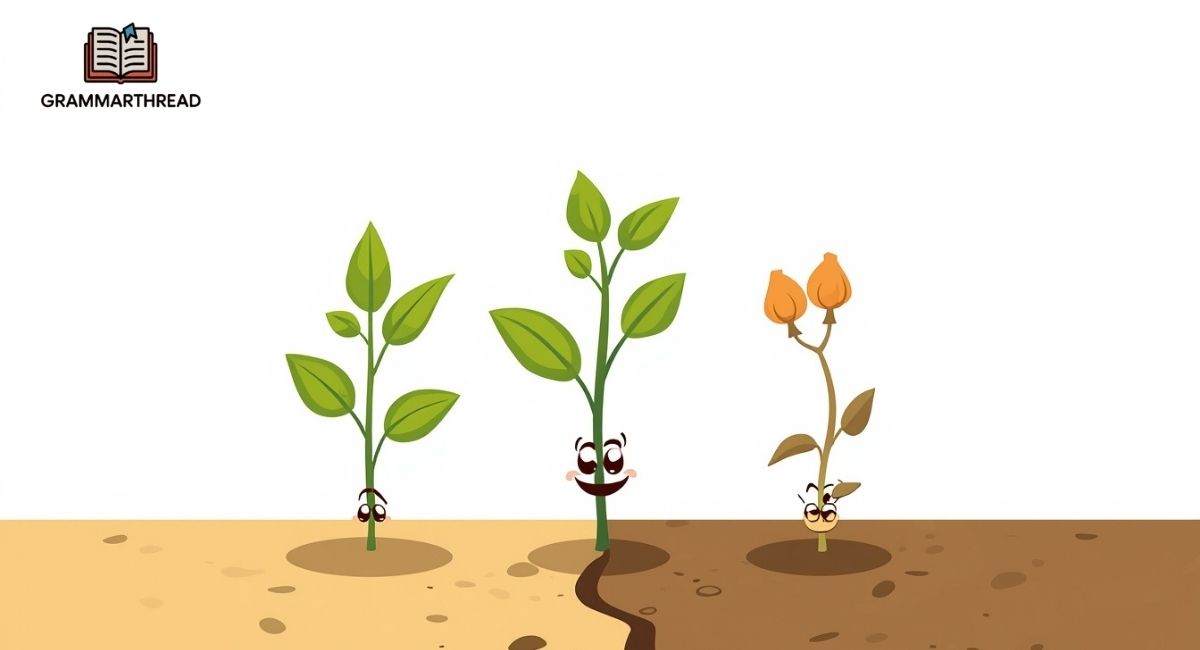
Growth usually points to progress, expansion, or steady improvement in areas like business, nature, mindset, or population. But real life does not always move upward. That is where the Opposite of Growth becomes important to understand. When things slow down, stop improving, or start moving backward, we describe them using terms that reflect decline or reduction.
The opposite of growth includes words such as decline, shrinkage, recession, stagnation, and decay. Decline and recession often appear in economic or business contexts, while stagnation shows a lack of progress, and decay suggests gradual deterioration over time. These terms are commonly used in discussions about health, personal development, environmental change, and financial performance, making them useful in everyday language and analysis.
Definition of Growth
Growth, at its core, means an expansion in scale, quantity, worth, or intensity. It represents forward movement and positive evolution across time. Depending on the setting, “growth” might describe biological development (like a tree becoming taller), financial prosperity (such as rising national income), self-improvement (like learning fresh abilities), or even intangible elements such as the expansion of a concept.
The term “growth” operates mainly as a noun, though it appears in verb constructions too (for instance, “expanding quickly”). People commonly link it with progress, enhancement, and moving forward.
Grasping its favorable meanings helps you understand its opposites, which signal the lack or opposite direction of these positive traits.
Structural Breakdown
The term“growth” functions as a noun that comes from the verb “grow.” Its formation is straightforward, built from a base word (“grow”) plus a suffix (“-th”) that converts the verb into its noun form. This“th” ending typically signals a state, quality, or ongoing process.
Take “strength” as an example, which describes the quality of being strong, or “depth,” which measures how deep something is. In the same way, “growth” captures the state or process of growing.
Knowing this word formation helps you spot related terms and grasp their connections. Words like “growing,” “grown,” and “grower” all stem from the same base and carry linked meanings.
Breaking down the structure of “growth” gives you clearer perspective on how it works and what it means in English.
Opposite of Growth
The antonyms for “growth” cover various ideas, each carrying its own distinct shade of meaning. These opposing terms can be grouped into stagnation, decline, decay, regression, atrophy, and deterioration.
Each group captures a different dimension of what happens when growth stops or reverses.
Stagnation
Stagnation describes a condition of motionlessness, where no advancement or evolution takes place. It points to an absence of forward momentum or improvement, typically caused by poor circumstances or insufficient stimulation. Stagnation appears in many situations, like economic stagnation, where a nation’s economy stops expanding, or personal stagnation, where someone feels trapped and unable to move forward in life.
Decline
Decline indicates a steady reduction in quality, size, or significance. It represents a downward trajectory, usually from a previously elevated position. Decline shows up in scenarios such as workforce decline, where employee numbers drop, or a decline in wellness, where someone’s physical state becomes weaker over time.
Decay
Decay refers to the breakdown or decomposition process. It suggests gradual erosion caused by natural factors or lack of care. Decay typically connects with biological materials, like spoiling fruit or rotting timber, though it works metaphorically too when describing crumbling organizations or fading connections.
Regression
Regression means reverting to an earlier, less advanced condition. It signals backward motion, usually following a phase of advancement. Regression emerges in contexts like childhood development, where a kid might slip back into previous habits, or business cycles, where an economy might slide into a downturn.
Atrophy
Atrophy characterizes the shrinking or weakening of bodily tissue or organs, usually from disuse or poor nutrition. It points to a steady reduction in dimension or capability. Atrophy most often relates to muscle tissue, but also applies figuratively to diminishing talents or competencies that aren’t practiced.
Deterioration
Deterioration represents the gradual worsening process. It signals a drop in standard, state, or worth over time. Deterioration appears in situations like aging buildings, where structures and systems fall apart, or cognitive deterioration, where someone’s mental sharpness gradually fades.
Examples
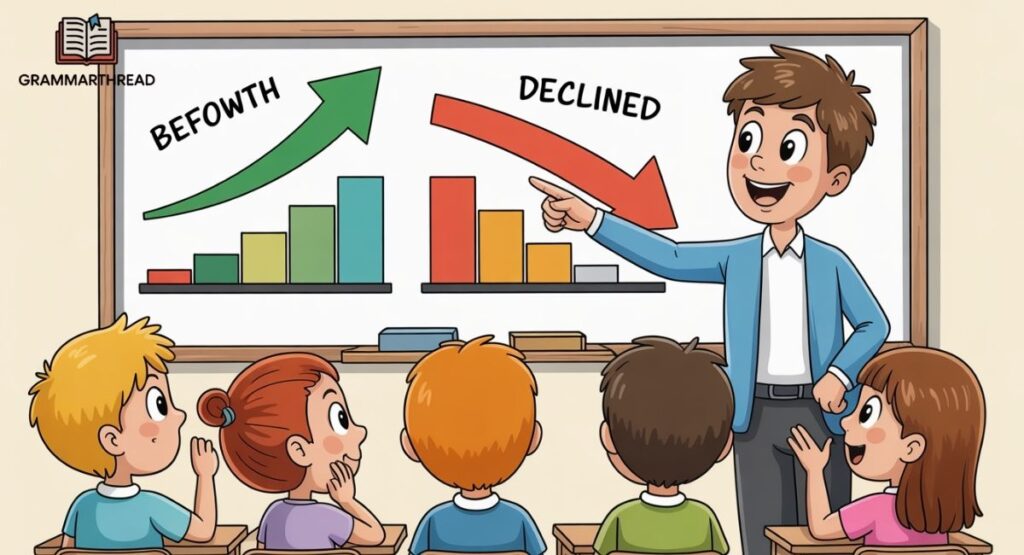
To demonstrate the various antonyms for “growth,” the tables below offer practical examples showing how these terms appear in different situations. These illustrations reveal the nuanced distinctions in meaning and usage across these words.
Stagnation Examples
The table below shows how “stagnation” and its variations work in real sentences.
| Sentence | Context |
| The business hit a plateau of stagnation following the introduction of stricter policies. | Business |
| Algae bloomed excessively due to the pond’s stagnation. | Environment |
| Lack of advancement opportunities caused his career to stagnate. | Career |
| Citizens grew anxious about the stagnation gripping the national economy. | Economics |
| Meaningful reforms couldn’t happen because of political stagnation. | Politics |
| The initiative stalled completely, with no forward momentum in sight. | Project Management |
| Feeling personally stagnant, she chose to pursue new directions. | Personal Development |
| Property prices dropped as the housing market entered stagnation. | Real Estate |
| Innovation and artistic expression suffered under cultural stagnation. | Culture |
| The flowers drooped because the water in the vase had stagnated. | Gardening |
| Lacking fresh inspiration, the painter’s output fell into stagnation. | Art |
| Outdated teaching approaches created stagnation in the school system. | Education |
| After early improvements, the player’s abilities hit a period of stagnation. | Sports |
| Industries relocated, leaving the small town in economic stagnation. | Urban Planning |
| Share prices remained flat for months, showing clear stagnation. | Finance |
| Progress in the research area had stagnated, worrying the lab director. | Science |
| Their bond reached stagnation, lacking fresh shared experiences or evolution. | Relationships |
| The discussion stagnated without reaching any agreement. | Politics |
| Investors became concerned as tech advancement entered stagnation. | Technology |
| Nutrient-poor soil stagnation hampered crop development. | Agriculture |
| Competitive advantage eroded as innovation stagnated. | Business Strategy |
| Diplomats felt frustrated by the stagnation of negotiations. | International Relations |
| Employee satisfaction declined during the prolonged wage stagnation. | Labor Economics |
Decline Examples
The table below shows how “decline” and its variations work in real sentences.
| Sentence | Context |
| Revenue dropped dramatically in the latest financial quarter. | Business |
| Scientists documented a concerning decline among pollinator species. | Environment |
| His physical condition deteriorated following the medical procedure. | Health |
| The ancient empire endured centuries of gradual decline. | History |
| Teaching standards have steadily declined over recent years. | Education |
| Roads and bridges throughout the metro area are declining. | Urban Planning |
| She politely declined their dinner invitation. | Social |
| The nation’s currency value continues its decline. | Economics |
| Enrollment figures are dropping across the academic program. | Education |
| The historic structure stands in visible decline. | Architecture |
| Public support for the official began declining after the controversy. | Politics |
| Wildlife numbers are dropping quickly in their native environment. | Ecology |
| Medical treatments couldn’t stop the patient’s declining state. | Medicine |
| International competition caused the sector to decline sharply. | Industry |
| Multiple contributing factors led to the society’s decline. | Archaeology |
| Emerging rivals caused the firm’s market position to decline. | Marketing |
| The creator’s productivity declined during their final phase. | Art |
| Educational quality noticeably declined at the institution. | Education |
| Heightened emissions caused the city’s air quality to decline. | Environmental Science |
| Physical capabilities naturally declined as the competitor aged. | Sports Science |
| Neighborhood bonds weakened as social unity declined. | Sociology |
| Low participation rates in elections troubled researchers. | Political Science |
| Ethical standards declining troubled community leaders. | Ethics |
Decay Examples
The table below shows how “decay” and its variations work in real sentences.
| Sentence | Context |
| High temperatures accelerated the fruit’s decay process. | Science |
| Regular oral hygiene helps stop tooth decay. | Health |
| The historic structure displayed obvious structural decay. | Architecture |
| Ethical standards decaying troubled community members. | Social Issues |
| Fallen foliage started decaying in the fall season. | Nature |
| Moisture caused the timber to rot and decay. | Construction |
| The candidate discussed eroding cultural principles. | Politics |
| The researcher examined how organic materials decay. | Biology |
| Public systems deteriorated through years of decay. | Urban Planning |
| The painter illustrated themes of decay in their work. | Art |
| Poor preservation conditions led to document decay. | History |
| Excessive cultivation caused the farmland to decay. | Agriculture |
| The player’s fitness began decaying post-injury. | Sports |
| Rising criminal activity signaled social decay in the area. | Sociology |
| Systemic corruption caused economic decay. | Economics |
| Professional standards decayed gradually in the sector. | Business Ethics |
| Poor dialogue led to the partnership’s decay. | Relationship |
| The justice framework’s decay resulted in unfairness. | Law |
| Planetary health faced threats from environmental decay. | Environmentalism |
| Researchers worried about decaying household structures. | Sociology |
| Educational neglect resulted in intellectual decay. | Education |
| Empty properties showed visible signs of urban decay. | Urban Studies |
Regression Examples
The table below shows how “regression” and its variations work in real sentences.
| Sentence | Context |
| The individual’s psychological state showed regression. | Psychology |
| Economic downturn triggered regression in financial indicators. | Economics |
| The young one displayed behavioral regression following the incident. | Child Development |
| Technical challenges caused the venture to regress. | Project Management |
| Democratic advancements suffered regression in the nation. | Politics |
| Post-injury, the competitor’s output regressed noticeably. | Sports |
| Academic results regressed for the learner. | Education |
| Treatment focused on stopping additional regression. | Therapy |
| The software patch introduced functional regression. | Technology |
| Neighborhood solidarity experienced regression. | Sociology |
| Limited funding caused the firm’s creativity to regress. | Business |
| Species variety regressed within the habitat. | Ecology |
| Ceasing medication led to the patient’s physical regression. | Medicine |
| Shifting buyer habits caused the sector to regress. | Marketing |
| The creator sensed their imaginative powers regressing. | Art |
| Funding reductions triggered regression in schooling quality. | Education |
| Ignored maintenance caused city systems to regress. | Urban Planning |
| Modified workouts aimed to stop performance regression. | Sports Science |
| Moral principles regressed across the population. | Ethics |
| Dishonest practices caused the judicial system to regress. | Law |
| Policy shifts led to regression in conservation work. | Environmentalism |
Atrophy Examples
The table below shows how “atrophy” and its variations work in real sentences.
| Sentence | Context |
| Extended immobility led to muscle atrophy. | Medicine |
| Unused abilities began to atrophy over time. | Skills Development |
| Cognitive tissue can atrophy as people age. | Neuroscience |
| The firm’s creative capacity started atrophying. | Business |
| The partnership experienced emotional atrophy. | Relationships |
| Researchers investigated what causes muscle tissue to atrophy. | Biology |
| The metro’s arts community began atrophying. | Culture |
| Post-injury inactivity caused the player’s strength to atrophy. | Sports |
| Intellectual capacity atrophied within the school system. | Education |
| The group’s power started atrophying. | Organization Studies |
| Rehabilitation exercises prevented additional muscle atrophy. | Physical Therapy |
| Rival breakthroughs caused the company’s position to atrophy. | Marketing |
| The creative worried their abilities would atrophy without regular work. | Art |
| Stale coursework led to intellectual atrophy in the degree program. | Education |
| Neglected upkeep caused public infrastructure to atrophy. | Urban Planning |
| The competitor’s fitness atrophied between competitive seasons. | Sports Science |
| Community values experienced moral atrophy through the years. | Ethics |
| Administrative slowdowns caused the legal framework to atrophy. | Law |
| Insufficient resources led conservation initiatives to atrophy. | Environmentalism |
| Household dialogue abilities atrophied gradually. | Family Studies |
| Regional traditions atrophied through rapid development. | Cultural Studies |
Deterioration Examples
The table below shows how “deterioration” and its variations work in real sentences.
| Sentence | Context |
| The structure’s deterioration became obvious. | Architecture |
| Medical signs indicated the patient’s deterioration. | Medicine |
| Natural surroundings suffered swift deterioration. | Environment |
| The organization’s fiscal health started deteriorating. | Business |
| The partnership underwent slow deterioration. | Relationships |
| Public systems experienced major deterioration. | Urban Planning |
| Production quality began deteriorating noticeably. | Manufacturing |
| The competitor’s results displayed deterioration. | Sports |
| Teaching materials underwent deterioration. | Education |
| Public perception of the group began deteriorating. | Public Relations |
| The individual’s psychological wellness continued deteriorating. | Psychology |
| Rival pressure caused the firm’s standing to deteriorate. | Marketing |
| The creator’s vision suffered gradual deterioration. | Art |
| Educational benchmarks showed clear deterioration. | Education |
| Pollution caused the city’s atmosphere to deteriorate. | Environmental Science |
| Physical fitness deteriorated as the athlete grew older. | Sports Science |
| Inequality caused community bonds to deteriorate. | Sociology |
| Dishonest practices led the justice system to deteriorate. | Law |
| Neglect caused environmental efforts to deteriorate. | Environmentalism |
| Family interaction styles deteriorated across time. | Family Studies |
| Development pressures caused regional customs to deteriorate. | Cultural Studies |
Usage Rules
The antonyms of “growth” follow particular usage guidelines that determine when each term fits best. Here are essential points to remember:
- Stagnation works well when referring to an absence of advancement or forward motion. It signals a plateau instead of a drop. For instance, “Rising joblessness has caused the national economy to stagnate.”
- Decline fits when you’re describing a steady reduction in standard, amount, or value. It indicates a downward direction. For instance, “Revenue figures have been declining throughout the fiscal year.”
- Decay applies to breakdown or decomposition processes. While commonly linked to biological materials, it also functions metaphorically. For instance, “The abandoned structure exhibited clear signs of decay.”
- Regression makes sense when depicting a reversion to an earlier, less sophisticated condition. It conveys backward motion. For instance, “The young child showed regression in communication abilities.”
- Atrophy suits situations describing the weakening of bodily tissues or organs, or figuratively, diminishing talents or capabilities. It conveys a gradual reduction in scale or power. For instance, “Extended periods without activity can cause muscles to atrophy.”
- Deterioration applies when portraying something becoming steadily worse. It signals declining quality, state, or worth. For instance, “The individual’s medical condition deteriorated quickly.”
Selecting the antonym that best matches your intended meaning and situation matters. Recognizing the subtle differences between these terms will sharpen the accuracy and effectiveness of your expression.
Common Mistakes
Misapplying antonyms for “growth” creates confusion and unclear communication. Here are frequent errors to watch out for when choosing these opposing terms:
| Incorrect | Correct | Explanation |
| The business saw decay in its revenue. | The business saw a decline in its revenue. | “Decay” suggests decomposition or rotting, which doesn’t suit financial contexts. “Decline” accurately describes dropping revenue. |
| Her abilities experienced stagnation from being unused. | Her abilities experienced atrophy from being unused. | “Stagnation” means lack of progress, whereas “atrophy” means gradual weakening. Here, “atrophy” captures the idea better. |
| The student displayed deterioration in academic habits. | The student displayed regression in academic habits. | “Deterioration” means getting progressively worse, while “regression” means slipping back to earlier patterns. “Regression” fits this situation. |
| The pond showed decline, causing algae blooms. | The pond showed stagnation, causing algae blooms. | “Decline” indicates reduction, but “stagnation” indicates motionlessness. Static water conditions are better described as “stagnation.” |
| The facility experienced atrophy, becoming hazardous. | The facility experienced deterioration, becoming hazardous. | “Atrophy” typically describes living tissue or organic decline. “Deterioration” properly describes structural worsening in buildings |
Practice Exercises
Check your grasp of the antonyms for “growth” by working through these exercises.
Exercise 1: Fill in the Blanks
Fill each sentence with the best-fitting antonym for “growth” from this list: stagnation, decline, decay, regression, atrophy, deterioration.
| Question | Answer |
| 1. Following the banking collapse, the national economy entered a phase of __________. | stagnation |
| 2. The firm’s competitive position experienced a notable __________. | decline |
| 3. Hot temperatures caused the produce to __________ quickly. | decay |
| 4. Following the distressing event, the individual exhibited __________ symptoms. | regression |
| 5. Extended periods without movement can result in muscle __________. | atrophy |
| 6. The overpass’s structural __________ created a dangerous situation. | deterioration |
| 7. Limited resources and insufficient financing caused the initiative to face __________. | stagnation |
| 8. Pollinator numbers are experiencing __________ because of environmental destruction and chemical exposure. | decline |
| 9. The timber fencing started to __________ following prolonged weather exposure. | decay |
| 10. The learner’s grades demonstrated __________ following the school change. | regression |
Exercise 2: Synonym or Antonym
Identify whether each word serves as a synonym or antonym for “growth.”
| Word | Synonym/Antonym |
| Advancement | Synonym |
| Decline | Antonym |
| Proliferation | Synonym |
| Stagnation | Antonym |
| Evolution | Synonym |
| Decay | Antonym |
| Enhancement | Synonym |
| Regression | Antonym |
| Rise | Synonym |
| Atrophy | Antonym |
Exercise 3: Sentence Completion
Select the word that completes each sentence most effectively from the choices given.
| Question | Options | Answer |
| 1. The metro area’s financial sector faced __________ when the manufacturing plant shut down. | (a) expansion (b) decline (c) prosperity | (b) decline |
| 2. Following several weeks of bed rest, the individual’s muscle tissue started to __________. | (a) strengthen (b) atrophy (c) expand | (b) atrophy |
| 3. The vacant property displayed __________ through cracked walls and crumbling timber. | (a) improvement (b) decay (c) development | (b) decay |
| 4. Without proper guidance, the venture experienced __________. | (a) advancement (b) stagnation (c) evolution | (b) stagnation |
| 5. After educational interruptions, the young learner’s verbal abilities exhibited __________. | (a) improvement (b) regression (c) progress | (b) regression |
| 6. Constant traffic wear and poor maintenance caused the pavement to undergo __________. | (a) enhancement (b) deterioration (c) growth | (b) deterioration |
| 7. As rival businesses emerged, the organization’s earnings started to __________. | (a) increase (b) flourish (c) decline | (c) decline |
| 8. Economic struggles left the formerly thriving town dealing with pervasive __________. | (a) prosperity (b) stagnation (c) advancement | (b) stagnation |
| 9. Without adequate preservation, the picked vegetables will start to __________. | (a) prosper (b) decay (c) develop | (b) decay |
| 10. Extended recovery time caused the competitor’s capabilities to experience __________. | (a) enhancement (b) regression (c) improvement | (b) regression |
Advanced Topics
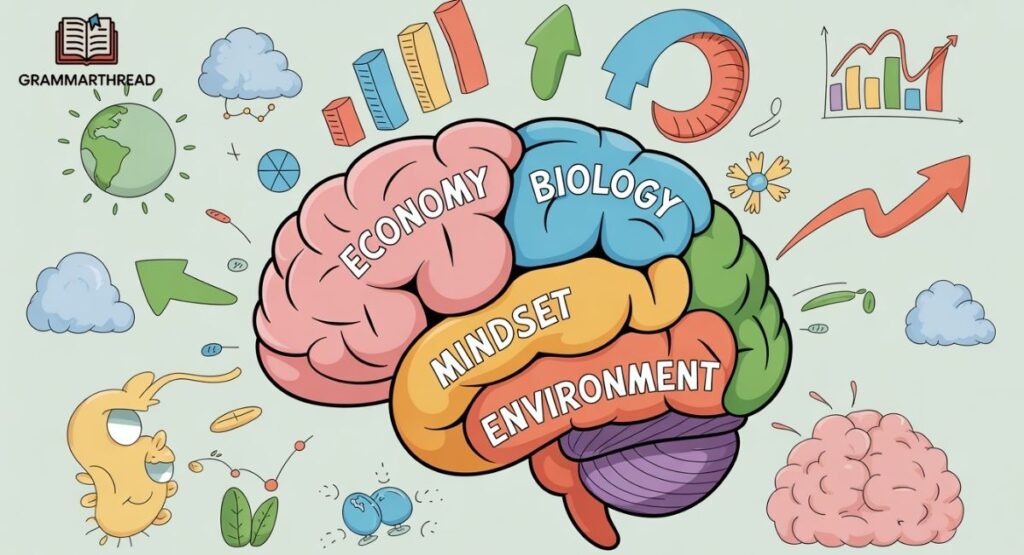
For those seeking deeper knowledge, examining how these antonyms for “growth” function within specialized disciplines offers rich learning opportunities. Take economics, where the “degrowth” movement questions the traditional emphasis on perpetual economic expansion, promoting instead intentional reductions in output and resource use to support environmental balance.
Within medical science, grasping how tissue atrophy develops proves essential for creating successful therapies targeting muscle deterioration conditions. In psychological practice, investigating what triggers regression and its effects helps shape meaningful treatment approaches.
Additionally, tracing how these opposing terms have been used throughout history reveals fascinating patterns in how societies have viewed advancement versus deterioration across different eras. The notion of “ethical decline,” for example, appears repeatedly across literary works and philosophical writings, capturing concerns about weakening core principles and the apparent breakdown of cultural foundations.
Factors That Influence Growth
Multiple factors shape how and when someone develops or displays a nonchalant attitude. These influences range from personal experiences and environmental conditions to biological predispositions and social circumstances. Understanding what drives nonchalant behavior helps explain why some people naturally appear unbothered while others consciously adopt this demeanor.
Personal and Developmental Factors:
Upbringing and Family Environment:
- Children raised in households where emotional expression was discouraged often develop nonchalant tendencies as adults
- Parents who modeled calm, detached responses teach similar coping patterns to their children
- Lack of emotional validation during formative years can lead to suppressed feelings that manifest as indifference
Life Experience and Maturity:
- Repeated exposure to stressful situations can desensitize people, making them appear genuinely unbothered over time
- Aging and accumulated life experience often bring perspective that reduces anxiety about minor concerns
- Chronic stress or burnout can create emotional exhaustion that looks like indifference
Personality and Temperament:
- Naturally low-reactive nervous systems make some individuals biologically predisposed to calmness and detachment
- Introverted personality types process emotions internally, which can appear nonchalant to external observers
- Secure attachment styles foster confidence that enables genuine nonchalance about outcomes
Social and Environmental Influences:
Cultural Norms and Expectations:
- Cultures that value stoicism and emotional restraint encourage nonchalant behavior as socially appropriate
- Professional environments often reward those who appear calm under pressure, reinforcing nonchalant displays
- Social media culture glamorizes effortless achievement and casual attitudes, influencing behavioral norms
Peer Groups and Social Circles:
- Adolescents and young adults adopt nonchalance to fit in with peers who value appearing unbothered
- Friend groups that mock excessive enthusiasm or worry create pressure to seem more indifferent
- Competitive environments may push people to hide their true investment to maintain psychological advantage
Situational and Emotional Context:
Immediate Circumstances:
- High-stakes situations where showing concern feels risky prompt temporary nonchalant facades
- Overwhelming circumstances sometimes trigger shutdown responses that manifest as apparent indifference
Mental and Emotional Health:
- Depression frequently dulls emotional responses, creating genuine apathy that appears nonchalant
- Anxiety sometimes paradoxically produces performative nonchalance as a coping mechanism
- Healthy emotional regulation allows appropriate nonchalance when situations genuinely don’t warrant concern
Understanding these diverse influences reveals that nonchalance exists on a spectrum from adaptive and healthy to problematic and concerning. The same behavior might reflect emotional maturity in one context and psychological distress in another.
Frequently Asked Questions
What is the opposite of growth in simple words?
The opposite of growth refers to decline or reduction, meaning something is becoming smaller, weaker, or less developed over time.
What word best describes the opposite of growth?
Common words for the opposite of growth include decline, stagnation, decay, and regression, depending on the context.
Is stagnation the opposite of growth?
Yes, stagnation is considered an opposite of growth because it describes a state where progress or improvement stops.
What is the opposite of growth in economics?
In economics, the opposite of growth is often called recession or economic decline, where production and income fall.
Can decay be used as the opposite of growth?
Yes, decay fits as an opposite of growth when something slowly deteriorates or breaks down instead of developing.
What is the opposite of growth in personal development?
In personal development, the opposite of growth can be stagnation or regression, where learning and improvement slow down or reverse.
Is decline stronger than stagnation?
Yes, decline suggests an active decrease, while stagnation means no progress but not necessarily a loss.
What is the opposite of growth in biology?
In biology, the opposite of growth may be atrophy, where tissues or organs reduce in size or strength.
Conclusion
Understanding the Opposite of Growth helps you express ideas with greater accuracy and confidence in English. By learning how terms like stagnation, decline, decay, regression, atrophy, and deterioration differ in meaning and usage, you can describe setbacks, slowdowns, and reversals with clarity.
This guide has walked through definitions, real examples, usage rules, and practice exercises to support learners at every level. Whether you are studying for an exam, writing academically, or improving everyday communication, these antonyms add depth to your vocabulary. Try using them in sentences today and notice how much sharper and more precise your expression becomes.
Read Next: Opposite of Skeptical: 28 Antonyms Like Trusting Explained

Welcome to GrammarThread. I am Julian Mercer, an AI-powered SEO and content writer with 4 years of experience. I help websites rank higher, grow traffic, and look amazing. My goal is to make SEO and website design simple and effective for everyone. Let’s achieve more together!