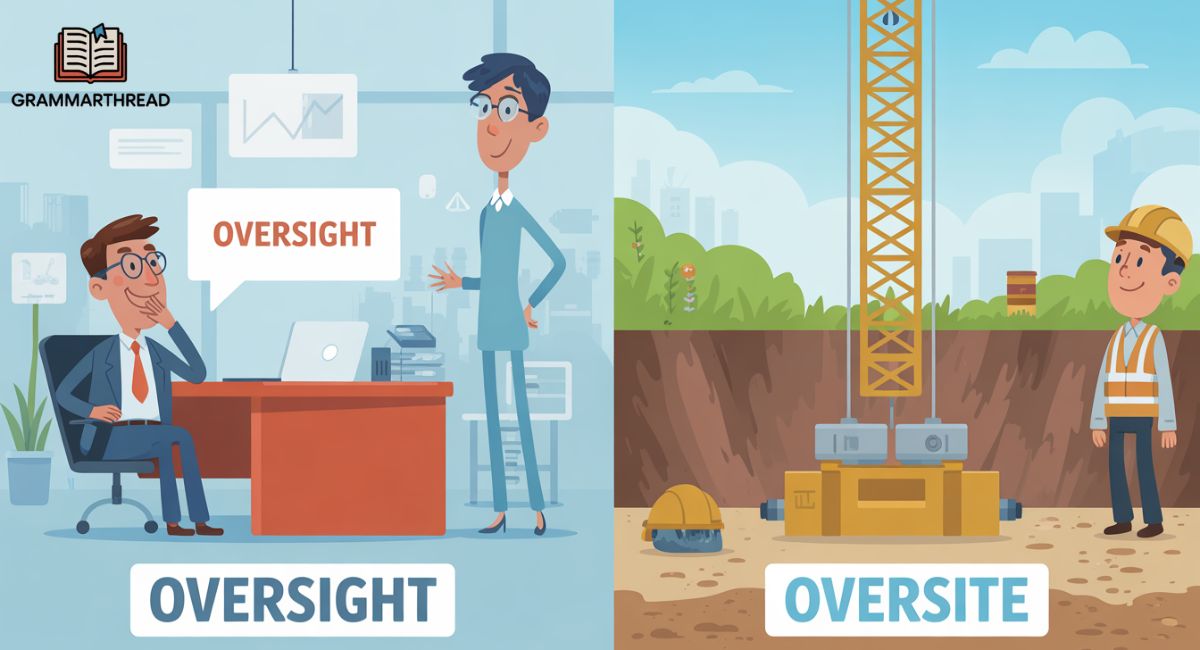
Oversight vs Oversite can be confusing at first because they sound identical, yet their meanings live in very different worlds. You might see one in an office email or report, and the other on a construction site, which makes knowing the difference more important than it seems.
Oversight usually relates to supervision, responsibility, or a mistake that slipped through unnoticed. It shows up in workplaces, academics, and everyday communication. Oversite, on the other hand, is a technical construction term. It refers to the base layer beneath concrete floors that helps control moisture and stability.
Understanding Oversight vs Oversite helps you write clearly, speak confidently, and avoid awkward errors. Once you link oversight to management or errors and oversite to building foundations, the distinction becomes easy to remember and practical to use.
What Does Oversight Really Mean?
The word “oversight” can be tricky because it has two completely different meanings. It can refer to watching over something carefully, or it can mean accidentally missing a detail. You’ll hear it in meetings, emails, and reports where people talk about managing projects or owning up to small errors.
Leaders use oversight to monitor progress, support their teams, and ensure quality stays on track. Catching an oversight early prevents bigger issues down the road. When you use this term correctly, it shows you’re thoughtful and communicate with clarity.
Examples:
Scenario A – Supervision
- This scenario highlights oversight as active management. Supervisors track ongoing work, provide direction to their teams, and verify that quality benchmarks are being met throughout the process.
- Effective oversight creates accountability and prevents slip-ups before they escalate. Teams work more efficiently when there’s transparent, consistent guidance. Using the term this way demonstrates professionalism and organizational awareness.
Scenario B – Error
- Here, oversight refers to an unintentional mistake. Someone might skip a step, overlook a figure, or miss a deadline. Spotting these errors quickly allows you to fix them before they cause larger problems.
- Acknowledging an oversight reflects integrity and attention to detail. Correcting mistakes strengthens your work and keeps communication transparent. Using the word appropriately in this context helps avoid misunderstandings in emails, reports, or team discussions.
What Is Oversite in Construction?
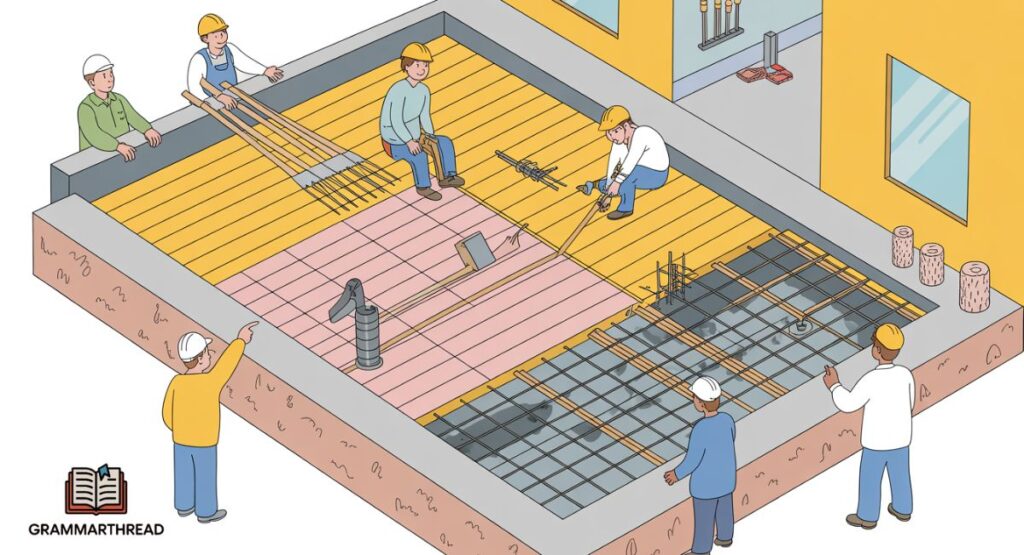
When you hear “oversite” in building terms, it refers to the base layer or sub-floor that sits beneath the main concrete slab. Construction teams use oversite as the groundwork before pouring the final floor surface, creating a stable and moisture-resistant foundation. Getting the oversite right is essential for long-lasting, secure structures.
A well-prepared oversite protects buildings from ground moisture and keeps everything level and sturdy. When contractors pay attention to this layer, they ensure the project follows specifications and meets safety standards. Knowing what oversite means helps prevent costly errors during construction and keeps documentation accurate.
Examples:
- “The builder laid the oversite concrete first, then added a moisture barrier before the final flooring went down.”
- “We checked the oversite thickness to make sure it met the structural requirements for the new extension.”
Oversight vs Oversite: Key Differences Explained
The terms oversight vs oversite are easy to mix up, but they mean completely different things. Oversight deals with monitoring work or refers to an accidental error, while oversite describes the foundational concrete layer used in building projects. Understanding this distinction helps you communicate accurately and professionally.
Using the correct term matters in context. You’ll encounter oversight in business settings, schools, and official documents, whereas oversite appears mainly in construction blueprints and architectural plans. Choosing the right word demonstrates attention to detail and a solid grasp of terminology.
| Feature | Oversight | Oversite |
| Meaning | Monitoring or unintentional mistake | Base layer or sub-floor foundation |
| Context / Industry | Business, legal, government, academic | Building, architecture, civil engineering |
| Modern Usage | Widely used across sectors | Rarely used, technical term |
| Synonyms | Management, slip-up, omission, error | Concrete base, sub-flooring, groundwork |
Real-World Examples That Clear Up the Confusion
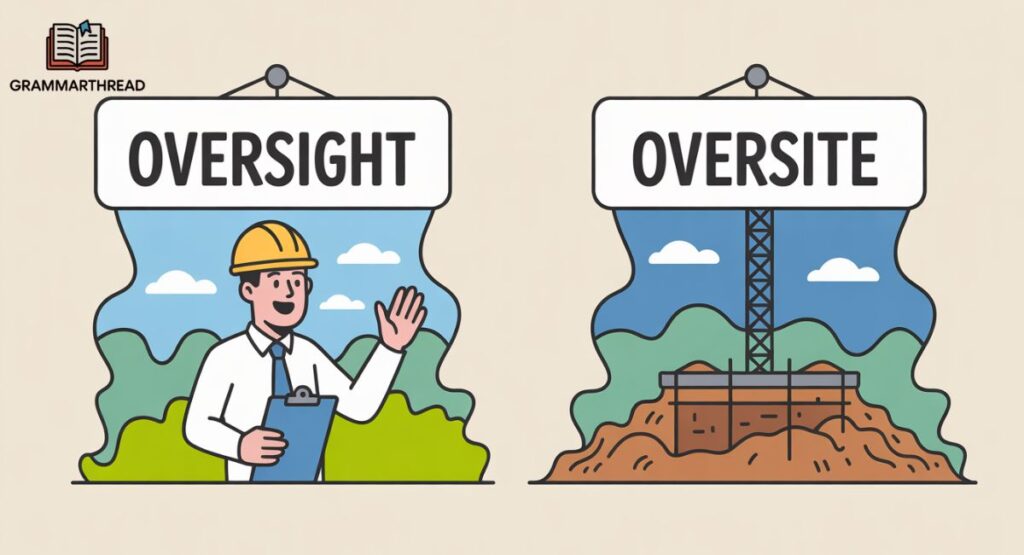
Looking at scenario examples to clarify the difference between oversight and oversite makes everything easier to grasp. When you use oversight in workplace communication or documents, you’re talking about monitoring tasks or acknowledging a minor mistake. On the other hand, oversite is strictly a construction term for the foundational layer beneath floors.
Practical examples stop mix-ups before they happen. Saying “The team needs better oversight” clearly refers to management, while “Inspect the oversite before pouring concrete” is about building foundations. Using each word properly keeps your writing professional and eliminates unnecessary confusion.
Misused in Academic Writing
Wrong: “The department chair assigned oversite responsibilities for the thesis committee.” Right: “The department chair assigned oversight responsibilities for the thesis committee.”
Technology Context
Wrong: “The IT manager requires oversight on all network infrastructure installations.”
Right: “The IT manager requires oversite on all network infrastructure installations.”
Picking the correct term keeps your communication precise, whether you’re writing academic papers, business emails, or technical documentation.
Simple Tips to Avoid Mixing Them Up
- These tips to avoid confusion start with a basic rule: oversight relates to managing work or catching an accidental error, while oversite refers specifically to the foundational concrete layer in building work.
- Memory tricks and straightforward examples make the distinction stick in your mind.
- Regular practice really helps. Try creating mental associations, labeling diagrams, or writing sample sentences using oversight or oversite to reinforce what each term actually means.
- When you use these words correctly, your communication becomes clearer and you avoid embarrassing mix-ups in professional or construction-related contexts.
Useful Synonyms You Can Swap In
Finding helpful synonyms to use can simplify your writing and eliminate ambiguity. When oversight means monitoring or managing, consider alternatives like supervision, governance, or direction. If you’re referring to oversight as an accidental mistake, words like slip-up, error, or miss work perfectly.
For oversite in construction contexts, try terms like base layer, groundwork, or concrete subfloor. Picking the appropriate synonym ensures your message stays sharp, professional, and easily understood whether you’re writing reports or discussing building plans.
When you’re unsure which word fits best, try these alternatives:
- For oversight (management): supervision, monitoring, governance
- For oversight (mistake): slip-up, blunder, error
- For oversite: base layer, subfloor, ground concrete
Why People Keep Misspelling It as “Oversite”
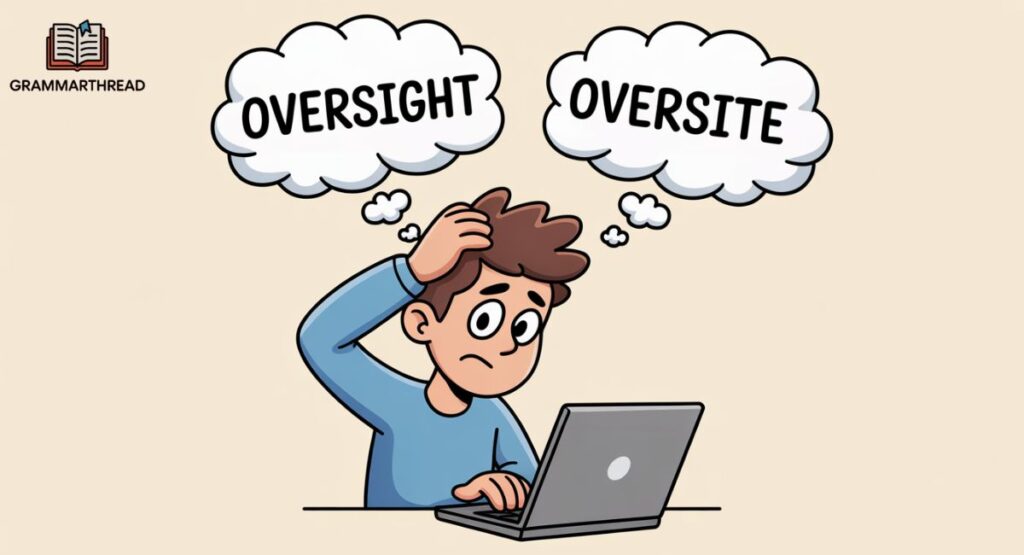
The misspelling “oversite” happens frequently because it sounds logical when you say it out loud. People naturally assume that watching “over” something creates “oversite,” following common English word patterns. This phonetic similarity makes the error feel correct, even though oversight is the proper spelling for supervision or mistakes.
Autocorrect doesn’t always catch this mistake since “oversite” is a real word in construction terminology. The confusion deepens because both terms exist in English but serve completely different purposes. Understanding why this mix-up occurs helps you avoid it in your own writing and catch it when proofreading professional documents.
Common Reasons for the Mix-Up:
- Sound-alike patterns: When spoken, “oversight” and “oversite” are nearly identical, making it easy to write the wrong version without noticing.
- Word construction logic: Many English words combine “over” with another word (overlook, overhaul), so “oversite” seems like it should work the same way.
- Spell-check limitations: Since “oversite” exists as a technical construction term, software won’t flag it as incorrect, allowing the error to slip through in business or academic writing.
Recognizing these patterns makes you more aware when typing quickly or drafting emails, helping you choose the correct term every time.
Frequently Asked Questions
What is the difference between oversight and oversite?
Oversight refers to supervision or an unintentional mistake, while oversite is a construction term for the base layer under concrete floors.
Is oversite a real word in English?
Yes, oversite is a valid technical term, mainly used in construction to describe a foundation or sub-floor layer.
When should I use oversight in a sentence?
Use oversight when talking about management, supervision, or a small error that was missed.
Does oversight always mean a mistake?
No, oversight can mean careful supervision or an error, depending on the context.
Where is the word oversite commonly used?
Oversite is mostly used in building and construction contexts, especially when discussing flooring foundations.
Can oversight and oversite be used interchangeably?
No, they have completely different meanings and should not be swapped.
Why do people confuse oversight and oversite?
They sound exactly the same when spoken, which makes them easy to mix up in writing.
Conclusion
Choosing the right synonyms can make Oversight vs Oversite much easier to handle in real writing. When oversight means supervision, words like supervision, control, or authority fit naturally. If it points to a mistake, terms such as error, lapse, or omission communicate the idea more clearly. For oversite, stick to construction-specific language like foundation layer, sub-flooring, or concrete base.
Using accurate alternatives improves clarity, reflects subject knowledge, and prevents misunderstandings in both professional and technical settings. Before writing, pause and match the word to the context. Try swapping in a synonym and see if the sentence still makes sense. Practice this habit, and your communication will quickly become sharper and more confident.
Read Next: Combating or Combatting: Correct Spelling Explained

Welcome to GrammarThread. I am Julian Mercer, an AI-powered SEO and content writer with 4 years of experience. I help websites rank higher, grow traffic, and look amazing. My goal is to make SEO and website design simple and effective for everyone. Let’s achieve more together!