You’re not alone if you’ve ever paused mid-search, wondering why this topic feels so confusing and oddly important at the same time. Many people stumble into Silicone vs Silicon after seeing conflicting advice online or realizing they might have misunderstood something that seems basic but really isn’t.
In this post, we’ll break down Silicone vs Silicon in a clear, no-nonsense way, so everything finally clicks. You’ll learn how Silicon vs silicone vs silica are different, why terms like silicone vs silicon breast implant matter in real life, and where people usually get tripped up with silicon vs silicone. By the end, you’ll feel confident you’ve got the right facts, and that you’re exactly where you need to be.
Why People Confuse Silicon and Silicone
People often mix up Silicone vs Silicon because the words look and sound almost identical. They’re related by chemistry and history, but they refer to very different materials used in very different ways.
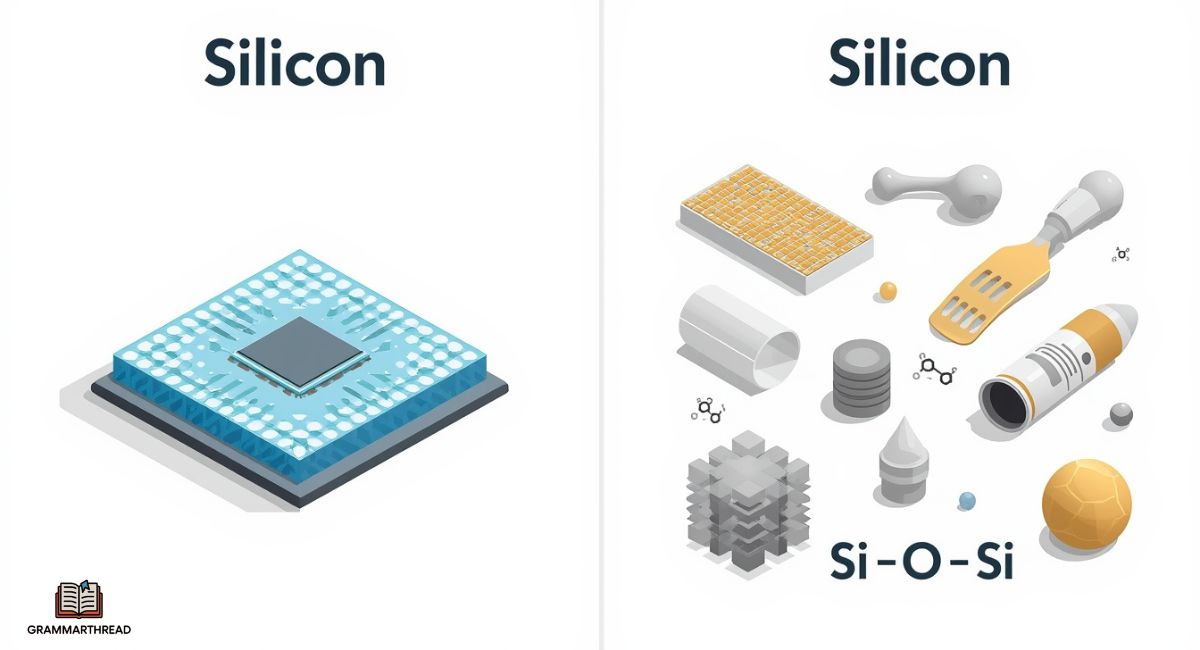
The confusion mostly comes from naming, not function. Silicon is a chemical element found on the periodic table, while silicone is a family of synthetic polymers made using silicon, oxygen, carbon, and hydrogen. Because both names share the same root and appear in tech, industry, and everyday products, many people assume they’re interchangeable, even though they’re not.
| Aspect | Silicon | Silicone |
| Basic nature | Chemical element (metalloid) | Synthetic polymer (polysiloxane) |
| Structure | Crystal lattice | Flexible Si–O–Si polymer backbone |
| Common association | Semiconductors, silicon wafers | Rubber-like materials, sealants |
| Typical use | Electronics, solar cells | Cookware, medical devices |
This mix-up is also reinforced by modern language and media. Terms like silicon chips, silicone rubber, and even Silicon Valley appear everywhere, often without explanation. As a result, people rely on sound rather than material science, which makes the difference harder to remember unless it’s clearly explained.
What is Silicon?
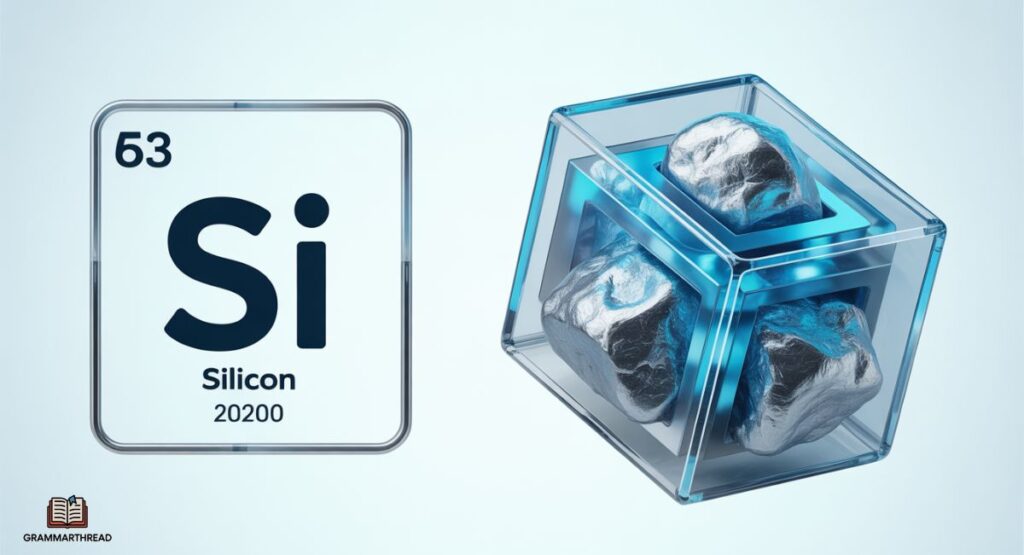
Silicon is a chemical element with the symbol Si and atomic number 14 on the periodic table. It’s a hard, brittle metalloid found abundantly in Earth’s crust, mainly in the form of silicon dioxide (silica) and silicate minerals.
Unlike flexible polymers or plastics, silicon is rigid and crystalline. That structure is exactly why it plays such a critical role in electronics, construction materials, and high-tech manufacturing.
Composition and Chemical Structure
At its core, silicon is made of individual silicon atoms arranged in a highly ordered crystal lattice. Each atom forms four strong covalent bonds in a tetrahedral pattern, giving silicon its stable crystalline structure.
This arrangement allows silicon to exist in several forms, including single-crystal silicon, polycrystalline silicon, and amorphous silicon. The ability to control purity and crystallinity is what makes silicon wafers suitable for semiconductor materials, microchips, and integrated circuits.
Physical and Chemical Properties
Silicon has a unique mix of metallic and nonmetallic traits. It’s solid at room temperature, has high thermal resistance, and remains stable under extreme conditions.
Key properties include:
- Moderate electrical conductivity, which can be precisely controlled through doping
- High thermal stability and resistance to heat
- Low flexibility due to its rigid crystal structure
- Strong silicon–oxygen bonds, especially in silica-based compounds
These characteristics make silicon ideal for applications where durability, precision, and performance matter more than flexibility.
Common Uses of Silicon in Technology and Industry
Silicon is best known for its role in electronics and semiconductors. Thin silicon wafers form the foundation of microprocessors, memory chips, sensors, and transistors used in nearly every modern device.
Beyond electronics, silicon is widely used in:
- Solar cells for renewable energy systems
- Glass and ceramics, through silicon dioxide
- Metal alloys, such as aluminum–silicon alloys for lightweight strength
- Construction materials, including concrete and bricks
In short, silicon is the backbone material of modern technology. Its structural stability and tunable electrical properties make it indispensable across industries that demand precision and reliability.
What is Silicone?
Silicone is a group of synthetic polymers made using silicon, oxygen, carbon, and hydrogen. Unlike silicon the element, silicone is flexible, rubber-like, and engineered for durability, making it common in everyday products you use without thinking twice.
It’s best described as a hybrid material. Silicone combines the stability of inorganic materials with the flexibility of organic polymers, which is why it behaves so differently from rigid silicon crystals.
Composition and Chemical Structure
Silicone is built around a Si–O–Si backbone, known as a siloxane polymer chain. Attached to this backbone are organic side groups, such as methyl or phenyl groups, which control flexibility, viscosity, and heat resistance.
This polymer structure allows for chain branching and cross-linking, creating materials that range from oils and greases to solid silicone elastomers and resins. Because of this modular structure, manufacturers can tailor silicone’s properties far more easily than crystalline materials like silicon.
Physical and Chemical Properties
Silicone is known for being soft, stable, and chemically inert. It doesn’t become brittle in cold temperatures or degrade easily under heat and UV exposure.
Key properties include:
- High flexibility and elastic recovery
- Excellent heat resistance and thermal stability
- Electrical insulation and low thermal conductivity
- Hydrophobic and non-reactive surface
- Low toxicity and biocompatibility
These traits explain why silicone performs well in demanding environments where plastics or rubbers would fail.
Common Uses of Silicone in Everyday Life
Silicone shows up everywhere because it’s safe, durable, and versatile. You’ll find it in both consumer products and specialized applications.
Common uses include:
- Kitchenware like baking mats, spatulas, and cookware
- Medical devices such as catheters, implants, and tubing
- Personal care products, including shampoos and cosmetics
- Sealants and adhesives used in plumbing, construction, and aquariums
- Electrical insulation and protective encapsulation materials
In daily life, silicone is valued less for conductivity or strength and more for comfort, safety, and long-term reliability. That’s what truly separates it from silicon in practical use.
Scientific Differences Between Silicon and Silicone
The core scientific difference comes down to structure and bonding. Silicon is a single chemical element with atoms arranged in a rigid, crystalline lattice, while silicone is a polymer made from repeating siloxane units with organic side groups.
Because of this, silicon behaves like a solid semiconductor with predictable electrical and thermal properties. Silicone, on the other hand, behaves like a flexible material whose properties depend on polymer chain length, cross-linking, and additives rather than atomic arrangement.
Differences in Practical Use: Industry vs Daily Life
These scientific differences directly shape how each material is used in the real world. Silicon dominates high-precision, high-performance industries, while silicone is designed for safety, flexibility, and durability in everyday settings.
In industry, silicon is essential for microchips, solar cells, and electronic circuits where electrical conductivity and crystallinity matter. In daily life, silicone appears in cookware, medical devices, sealants, and insulation, where heat resistance, softness, and chemical inertness are more important than conductivity.
Why Silicone Properties Differ So Much from Silicon
Silicone’s unique behavior comes from its Si–O–Si polymer backbone combined with organic side groups. This structure allows the polymer chains to rotate and bend, giving silicone its flexibility and elasticity.
Silicon lacks this freedom of movement. Its tightly bonded crystal lattice makes it hard and brittle, which is ideal for wafers and semiconductors but unsuitable for products that need to bend, stretch, or seal. The presence of oxygen and carbon in silicone completely changes how the material responds to heat, stress, and the environment.
Tailoring the Properties of Silicon and Silicone
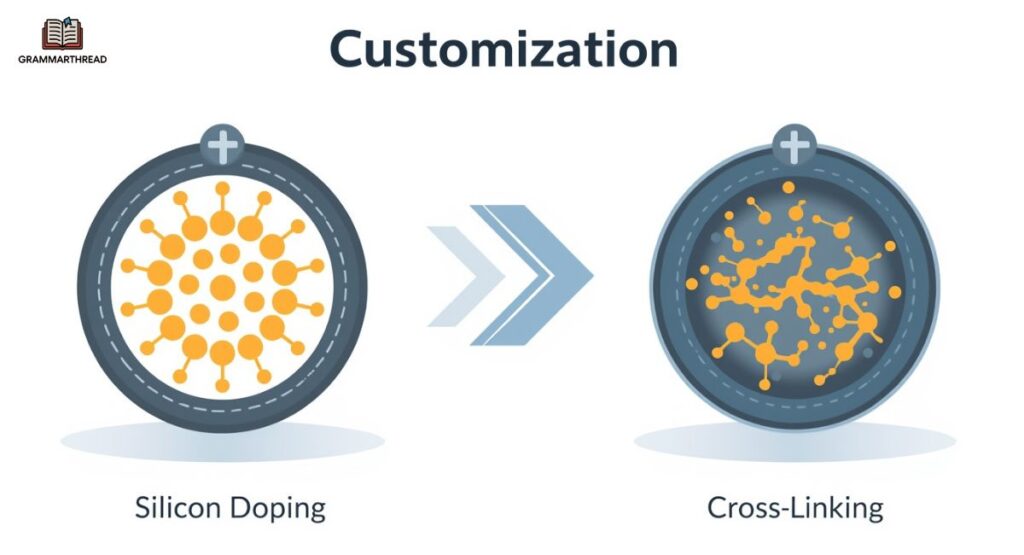
Both materials can be engineered, but in very different ways. Silicon is tailored mainly through doping, where tiny amounts of other elements are added to control electrical conductivity in semiconductor materials.
Silicone is customized through polymer chemistry. Manufacturers adjust molecular weight, cross-linking density, and fillers to control viscosity, hardness, heat resistance, or chemical stability. This flexibility in design is why silicone can exist as oils, greases, elastomers, or rigid resins, while silicon remains a rigid solid with narrowly defined physical properties.
Applications of Silicon
Silicon plays a foundational role in modern technology because of its controlled electrical behavior and structural stability. Its ability to exist in highly pure, crystalline forms makes it essential for industries that rely on precision and reliability.
From microelectronics to heavy manufacturing, silicon’s applications are driven by its semiconductor properties, thermal resistance, and compatibility with advanced fabrication processes.
Electronics and Semiconductors
Silicon is the backbone of the semiconductor industry. Ultra-pure silicon is processed into thin wafers that serve as the base material for microchips, transistors, sensors, and integrated circuits.
This is where the Silicone vs Silicon distinction matters most. Silicon conducts electricity in a controllable way when doped, which makes modern computers, smartphones, and data centers possible. Silicone, by contrast, is used around these components for insulation and protection, not for signal processing.
Solar Panels and Energy Storage
Silicon is also central to renewable energy technologies. Most solar panels rely on crystalline silicon to convert sunlight into electricity through the photovoltaic effect.
Both single-crystal and polycrystalline silicon are used in solar cells, chosen based on efficiency and cost. Beyond solar panels, silicon is involved in lithium-ion battery technology, where silicon-based materials help improve energy density and storage performance.
Other Industrial Applications
Outside electronics and energy, silicon supports a wide range of industrial uses. It’s a key ingredient in glass, ceramics, and concrete through silicon dioxide, contributing strength and heat resistance.
Silicon is also used in:
- Metal alloys, such as aluminum–silicon alloys for automotive and aerospace parts
- Chemical processing, where silicon compounds provide thermal and chemical stability
- Manufacturing equipment, exposed to high temperatures and mechanical stress
In all these cases, silicon’s rigid structure and predictable behavior make it a material that industries can depend on when failure isn’t an option.
Applications of Silicone
Silicone is widely used because it stays stable under heat, resists chemicals, and remains flexible over time. These qualities make it especially valuable in applications where safety, durability, and comfort matter more than electrical performance.
Unlike rigid materials, silicone can be molded, stretched, and engineered into many forms. That adaptability explains why it appears across medical, consumer, and industrial products.
Medical and Healthcare Products
Silicone is a preferred material in healthcare due to its biocompatibility and low toxicity. It doesn’t easily react with the body, which makes it suitable for long-term contact.
Common medical uses include:
- Implants and prosthetics
- Catheters, tubing, and seals
- Wound dressings and bandages
- Medical-grade adhesives and coatings
Its flexibility and resistance to microbial growth help improve patient comfort and device reliability.
Kitchenware and Consumer Goods
In everyday life, silicone is best known for its role in kitchen and household products. It’s heat-resistant, non-stick, and easy to clean, which makes it ideal for repeated use.
You’ll often see silicone in:
- Bakeware, spatulas, and food containers
- Baby products, such as bottle nipples and pacifiers
- Personal care items, including brushes and grooming tools
Unlike plastics, silicone maintains its shape and performance even after exposure to high temperatures.
Automotive and Industrial Uses
Silicone performs well in harsh environments where rubber or plastic would degrade. Its resistance to heat, oils, UV radiation, and chemicals makes it a go-to material for demanding industrial settings.
Key applications include:
- Gaskets, hoses, and seals in engines
- Electrical insulation for cables and connectors
- Sealants and adhesives used in construction and manufacturing
In these uses, silicone provides long-term reliability, helping systems maintain performance under stress.
Common Misconceptions About Silicon and Silicone
One of the biggest misconceptions is that silicon and silicone are the same material with different spellings. In reality, they’re fundamentally different in composition, structure, and purpose, even though their names are closely related.
Another common misunderstanding is assuming flexibility or softness comes from silicon itself. Silicon is actually hard and brittle. The flexible, rubber-like feel people recognize comes from silicone polymers, not the silicon element. This confusion often shows up in conversations about electronics, cookware, or medical products, where the wrong term gets used casually.
Quick Tip to Remember: Silicon vs Silicone
Here’s an easy way to keep Silicon vs Silicone straight in your mind.
Think silicon as solid and smart. It’s the rigid material inside chips, solar panels, and electronics. Now think silicone as soft and stretchy. It’s used for seals, bakeware, medical devices, and insulation.
- If it conducts or controls electricity, it’s silicon.
- If it bends, seals, or cushions, it’s silicone.
That simple mental shortcut helps avoid mix-ups and makes the difference stick.
Frequently Asked Questions
Is silicone the same as silicon?
No, they’re completely different materials. Silicon is a chemical element used in electronics, while silicone is a synthetic polymer designed to be flexible, heat-resistant, and safe for everyday use.
Why do people avoid silicone?
Some people avoid silicone because they assume it’s the same as plastic or worry about synthetic materials in food or personal care products. In reality, most concerns come from confusion or misinformation rather than proven health risks.
How much silicon is in silicone?
Silicone contains silicon as part of its structure, but it’s chemically bonded with oxygen, carbon, and hydrogen. This means silicone doesn’t behave like pure silicon at all.
Is silicone still a plastic?
Silicone isn’t technically a plastic, although it’s often grouped with them. It’s a distinct type of polymer with a silicon–oxygen backbone, which gives it different properties from petroleum-based plastics.
Is silicone harmful to humans?
Silicone is generally considered safe and non-toxic for human use. That’s why it’s widely used in medical devices, implants, and food-grade products.
Is silicone really healthier than plastic?
In many cases, yes. Silicone is more heat-resistant, less likely to release harmful chemicals, and more stable over time compared to many common plastics, especially when used for cooking or food storage.
Conclusion: Choosing Between Silicon and Silicone
Silicone vs Silicon sounds confusing, but the difference is simple once you see it clearly. Silicone vs Silicon is not about spelling. It’s about purpose. Silicon is a hard element used in chips and electronics. Silicone is a soft polymer used in daily products. People also confuse silicon vs silicone because both come from similar chemistry. You may even hear terms like Silicon vs silicone vs silica, which adds more confusion.
When people search about silicone vs silicon breast implant, they usually mean silicone, not silicon. Silicone vs Silicon matters because using the wrong word changes the meaning. Remember this rule. If it bends, it’s silicone. If it powers devices, it’s silicon. This simple trick makes Silicone vs Silicon easy to remember.
Read Next: Natzi or Nazi – Correct Spelling, Meaning, History & Usage Explained

Welcome to GrammarThread. I am Julian Mercer, an AI-powered SEO and content writer with 4 years of experience. I help websites rank higher, grow traffic, and look amazing. My goal is to make SEO and website design simple and effective for everyone. Let’s achieve more together!