Language can be tricky, especially when a single letter changes everything. Take sweet vs sweat, they look almost identical, but their meanings couldn’t be more different. Confusing them is surprisingly common, even for native speakers. Imagine texting “You’re so sweat!” instead of “You’re so sweet”, cute mistake, but it changes the whole meaning.
Understanding the difference matters because these words appear everywhere, from casual chats and social media posts to everyday conversations and writing. This guide will walk you through sweet vs sweat step by step, covering pronunciation, grammar, idioms, and real-life examples. You’ll also discover easy memory tricks to remember which is which, so you can use them confidently and avoid awkward mix-ups.
Why “Sweet” and “Sweat” Mix People Up So Often
These two words trip up English learners all the time, and it’s easy to see why. The difference comes down to just one vowel sound:
- Sweet uses a long “ee” sound (/iː/), like in “feet” or “sleep.”
- Sweat uses a short “e” sound (/ɛ/), similar to “bet” or “head.”
They’re spelled almost the same way, but their meanings couldn’t be more different. One describes something sugary or pleasant, while the other is all about body moisture. Let’s break it down so you never mix them up again.
The Real Difference Between Sweet and Sweat Explained
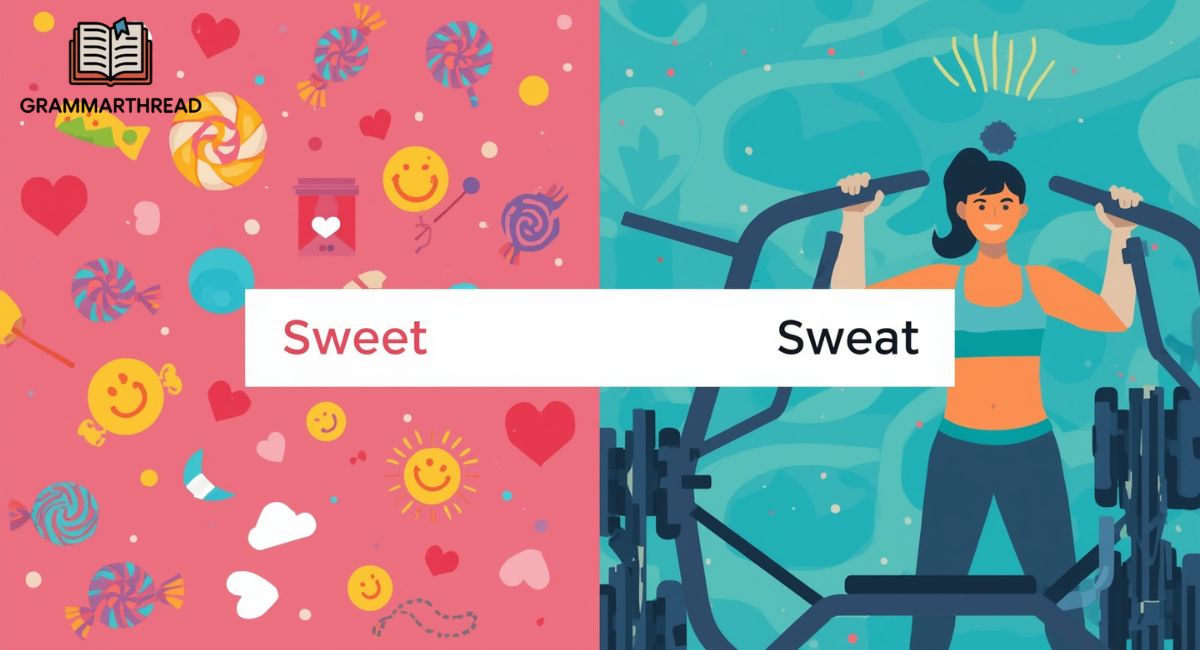
Even though they look alike on paper, sweet and sweat refer to completely different things. One brings joy, the other shows up after a workout.
Sweet 🍬 Everything Pleasant and Sugary
Definition: “Sweet” describes anything with a sugary taste or refers to something kind, charming, or delightful.
Part of Speech:
- Adjective (primary use): a sweet dessert, a sweet compliment
- Noun: sweets (commonly used in British English for candy)
Examples:
- That strawberry tastes incredibly sweet!
- He gave her a sweet little gift.
- What a sweet thing to say!
Interesting Fact: The term sweet comes from the Old English word swēte, which originally meant “pleasant to experience.”
Sweat 💦 Your Body’s Cooling System
Definition: “Sweat” is the salty liquid your skin produces when you’re overheated, stressed, or exercising hard. It’s also used as a verb to describe the process itself.
Part of Speech:
- Noun: beads of sweat, breaking a sweat
- Verb: to sweat during exercise
Examples:
- She wiped the sweat from her forehead after yoga.
- I always sweat when I’m nervous before a presentation.
- No need to sweat over this, it’s easy!
Did You Know? Your body contains anywhere from 2 to 5 million sweat glands, with the highest concentration on your hands, feet, and face!
How to Pronounce Sweet vs Sweat Correctly
Mastering the pronunciation makes all the difference when using these words.
| Word | IPA | Vowel Sound | Rhymes With | Example |
| Sweet | /swiːt/ | Long “ee” | beat, heat | This dessert is really sweet. |
| Sweat | /swɛt/ | Short “e” | wet, get | She broke a sweat at the gym. |
Quick Tips:
- For sweet, hold the vowel longer: sweeeeet.
- For sweat, keep it short and crisp: swet.
- Easy memory trick: Honey is sweet; running makes you sweat.
Grammar Rules and Word Forms
| Word | Part of Speech | Forms | Example Sentence |
| Sweet | Adjective / Noun | sweeter, sweetest, sweetness | This is the sweetest apple I’ve ever tasted. |
| Sweat | Verb / Noun | sweated, sweating | She was sweating after the long hike. |
Notes:
- “Sweat” works both as a noun (“beads of sweat”) and a verb (“to sweat profusely”).
- “Sweet” has comparative and superlative forms when comparing levels (sweeter, sweetest).
How Sweet and Sweat Are Used in Real Life

Here’s how both words show up in everyday conversations and writing.
Using “Sweet” in Daily Life
“Sweet” goes beyond flavor; it describes feelings, personalities, and kind gestures, too.
Common Uses:
- Taste: Sweet coffee, sweet berries, sweet glaze.
- Personality: He’s got such a sweet temperament.
- Compliment: What a sweet gesture!
- Endearment: Good morning, sweetie!
Case Study: In the UK, people often call candy “sweets,” while Americans say “candy” or “desserts.” The meaning stays the same, sugary snacks, but the word choice depends on where you are.
Using “Sweat” in Daily Life
“Sweat” is commonly used to describe exercise, tough situations, or anxiety.
Common Uses:
- Physical: I was sweating buckets after that run.
- Emotional: He started sweating before the big presentation.
- Figurative: No need to sweat it, everything will be fine.
Idiomatic Example:
- No sweat! = “That’s easy, no worries.”
- Break a sweat = “Put in some real effort.”
Popular Idioms and Expressions
Idioms add flavor to everyday English. Here are the most common ones featuring both words.
Idioms with “Sweet” 🍬
| Idiom | Meaning | Example |
| Sweet tooth | Strong preference for sugary treats | She’s always had a sweet tooth for cookies. |
| Sweet spot | Perfect balance or ideal point | We found the sweet spot for our pricing. |
| Sweet deal | A really good bargain | They got a sweet deal on their new phone! |
| Revenge is sweet | Satisfaction from payback | After the win, he smiled and said, “Revenge is sweet!” |
| Home sweet home | Relief and joy of being home | After the trip, all I could think of was home sweet home! |
Idioms with “Sweat” 💦
| Idiom | Meaning | Example |
| Don’t sweat it | No need to stress | Lost your keys? Don’t sweat it! |
| Blood, sweat, and tears | Tremendous effort and dedication | They put blood, sweat, and tears into building their business. |
| Break a sweat | Engage in physical activity | She didn’t even break a sweat during that easy workout. |
| Sweat bullets | Feel extremely anxious | I was sweating bullets before my job interview. |
| In a cold sweat | State of fear or panic | He woke up in a cold sweat from the bad dream. |
Mistakes to Watch Out For
Even native speakers sometimes mix these up. Here are the most frequent errors you’ll want to avoid:
Writing “sweat” when you mean “sweet”: ❌ That’s so sweat of you! ✅ That’s so sweet of you!
Getting the pronunciation wrong: Saying “swet” instead of sweet or stretching “sweat” into “sweeet.”
Confusing “sweetie” with “sweaty”:
- Sweetie = a term of endearment
- Sweaty = damp from perspiration
Trying to use “sweet” as a verb: There’s no such thing as “to sweet.” The correct verb form is “sweeten.”
Memory Tricks to Never Mix Them Up Again
Here are easy techniques to remember the difference between sweet and sweat for good:
Mnemonic Trick: “Desserts are sweet, workouts make you sweat.”
Visual Cue:
- 🍬 = Flavor, pleasure → Sweet
- 💦 = Activity, moisture → Sweat
Sound Memory:
- Sweet rhymes with treat
- Sweat rhymes with threat
Tongue Twister Practice: “Sweet treats taste great, but sweat stains won’t wait.”
Say it three times fast; this little exercise will cement the difference in your mind permanently.
Quick Reference Chart: Sweet vs Sweat
| Feature | Sweet 🍬 | Sweat 💦 |
| Meaning | Sugary flavor or pleasant nature | Body fluid or physical exertion |
| Part of Speech | Adjective / Noun | Noun / Verb |
| Pronunciation | /swiːt/ | /swɛt/ |
| Common Collocations | sweet voice, sweet home, sweet scent | sweat beads, sweat session, sweat stains |
| Idioms | sweet deal, home sweet home | don’t sweat it, sweat bullets |
| Example Sentence | That honey tastes incredibly sweet. | She wiped the sweat from her face. |
Test Yourself: Pick the Correct Word
Let’s see if you can choose the right one:
- This chocolate cake tastes really ______.
- After the workout, I was covered in ______.
- You’re so ______ for helping me out!
- I always ______ when I’m anxious.
- No need to ______ the details—we’ll handle it!
Answers:
- sweet
- sweat
- sweet
- sweat
- sweat
Real-World Example: When Sweet and Sweat Get Mixed Up
Case Study: The Coffee Shop Confusion
An English learner once told a barista: “This coffee is making me sweat!”
She actually meant sweet, as in “too sugary.” The barista smiled and gently helped her with the right word.
Lesson: One vowel sound can completely flip your meaning! Getting the pronunciation right turns your message from confusing to crystal clear.
Where These Words Originally Came From
Sweet’s Origins:
The word “sweet” traces back to Old English swēte, meaning “pleasing to taste or smell.” It’s been used for over a thousand years to describe both sugary flavors and pleasant experiences.
Sweat’s Origins:
“Sweat” comes from Old English swǣtan, which meant “to perspire.” The root connects to similar words across Germanic languages, all referring to the body’s natural cooling process.
Interesting Note: Despite looking similar today, these words evolved from completely different Old English roots and have always had distinct meanings throughout history.
Frequently Asked Questions
What is the difference between sweet and sweat?
Sweet refers to something kind, pleasant, or sugary, while sweat relates to effort, hard work, or physical exertion.
How do you pronounce sweet and sweat?
Sweet sounds like /swiːt/, and sweat sounds like /swɛt/.
When should I use sweet in a sentence?
Use sweet to describe kindness, affection, or sugary flavors, like “She gave me a sweet gift.”
When should I use sweat in a sentence?
Use sweat for physical effort, heat, or stress, like “He broke a sweat during his workout.”
Can sweet and sweat be used in idioms?
Yes, sweet appears in phrases like “sweet victory,” while sweat appears in “no pain, no gain” or “under the sweat of your brow.”
Why do people confuse sweet vs sweat?
The words look and sound similar, but one letter changes the meaning completely.
Is sweet only used for taste?
No, sweet also describes people, gestures, or experiences that are pleasant or kind.
Conclusion
Now you have a clear grasp of sweet vs sweat, from their meanings and pronunciation to grammar and everyday usage. Sweet expresses kindness, affection, or something sugary, while sweat relates to effort, hard work, or heat. Knowing the difference helps you write confidently, whether you’re complimenting a friend or describing a tough workout.
Keep these words in mind and practice using them in real sentences. Remember, sweet moments make life enjoyable, and sweat moments bring results. Try spotting them in your reading or texting today, you’ll never mix them up again!

Welcome to GrammarThread. I am Julian Mercer, an AI-powered SEO and content writer with 4 years of experience. I help websites rank higher, grow traffic, and look amazing. My goal is to make SEO and website design simple and effective for everyone. Let’s achieve more together!