When working with English learners and professionals, one confusion comes up again and again: Tear vs. Tare. These two words sound almost the same, yet they live in completely different worlds of meaning. Mixing them up can quietly change what you are trying to say, whether you are writing an email, grading papers, or preparing a report.
Imagine reading a moving paragraph about tears in someone’s eyes, only to realize the writer meant tare weight on a scale. Small spelling choices can shift emotion, accuracy, and credibility in seconds. That is why understanding Tear vs. Tare matters in everyday life, from storytelling and academic writing to shopping, shipping, and business records.
This guide breaks down their meanings, uses, and real-world examples, helping you choose the right word with confidence every time.
What Are Homophones and Why Do They Matter?
Homophones are words that sound identical when spoken but differ in spelling and meaning. Think of “flower” and “flour,” or “write” and “right.”
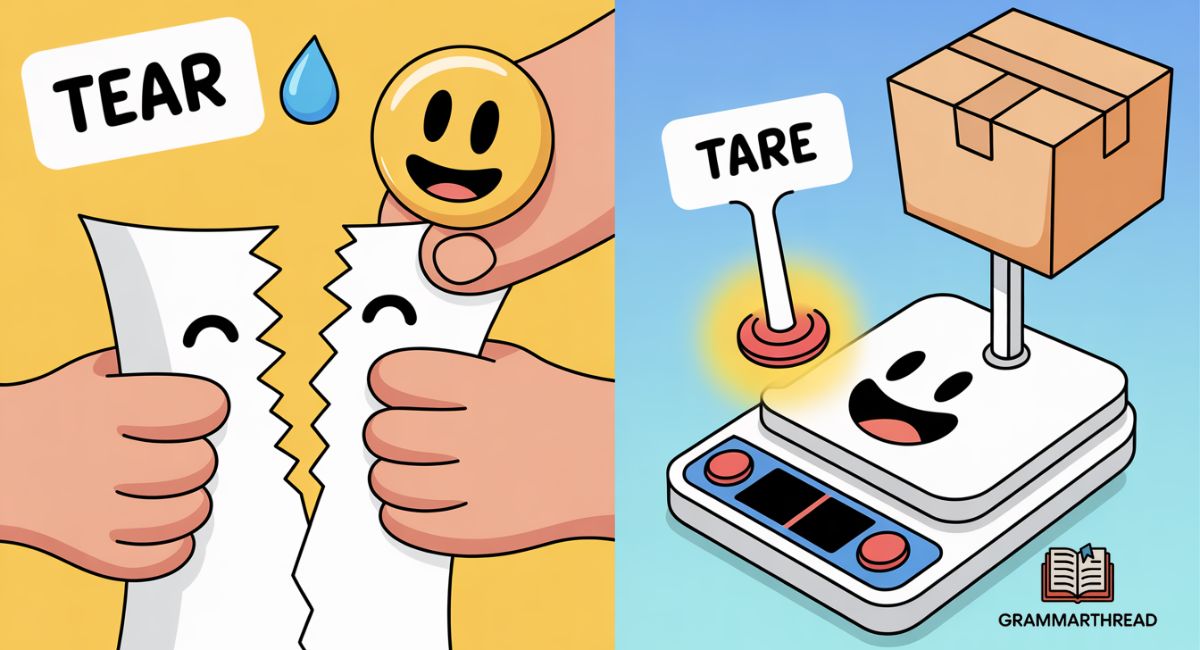
Tear and tare fall into this category because they’re both pronounced /tɛər/, yet they carry completely different meanings and serve different purposes. The secret to using them correctly lies in paying attention to the surrounding context.
- When someone mentions ripping something like paper, cloth, or a document, you’re almost certainly dealing with tear.
- When the conversation involves packages, weight measurements, or farming terminology, tare is typically the right choice.
Mastering these small but important distinctions helps you communicate more clearly and maintain credibility in your writing.
Breaking Down the Word “Tear”: Meanings and Uses
What It Means and How to Say It
The word tear carries several meanings based on context, but the pronunciation stays consistent across all uses: /tɛər/.
At its core, tear typically means:
- Something that’s been ripped or split apart (can function as either a verb or noun).
- A liquid droplet that comes from your eye (used as a noun).
Using Tear as a Verb
When functioning as a verb, tear describes the action of ripping or damaging something by pulling it forcefully. You’ll encounter this usage in casual conversations and formal settings alike.
Here’s how it appears in various situations:
- Daily life: My dog tore up the couch cushions while I was at work.
- School setting: The teacher tore out the damaged pages before binding the class project.
- Workplace: The renovation crew tore apart the ceiling to fix the water leak.
Each example demonstrates tear representing physical damage or separation of materials.
Using Tear as a Noun
As a noun, tear most commonly describes a small drop of fluid that falls from your eye, whether from feelings or physical irritation.
See how it works in practice:
- Personal moment: A single tear rolled down his face when he opened the birthday surprise.
- Healthcare context: The MRI revealed a significant tear in the athlete’s rotator cuff muscle.
There are also less frequent uses referring to small rips in cloth, documents, or other materials, which connect back to the verb meaning.
Understanding “Tare”: Definition and Practical Applications
What It Means and How to Say It
Tare shares the same pronunciation as tear (/tɛər/), but the meanings are entirely distinct. This word finds its home in shipping, packaging, and farming industries.
Tare typically refers to:
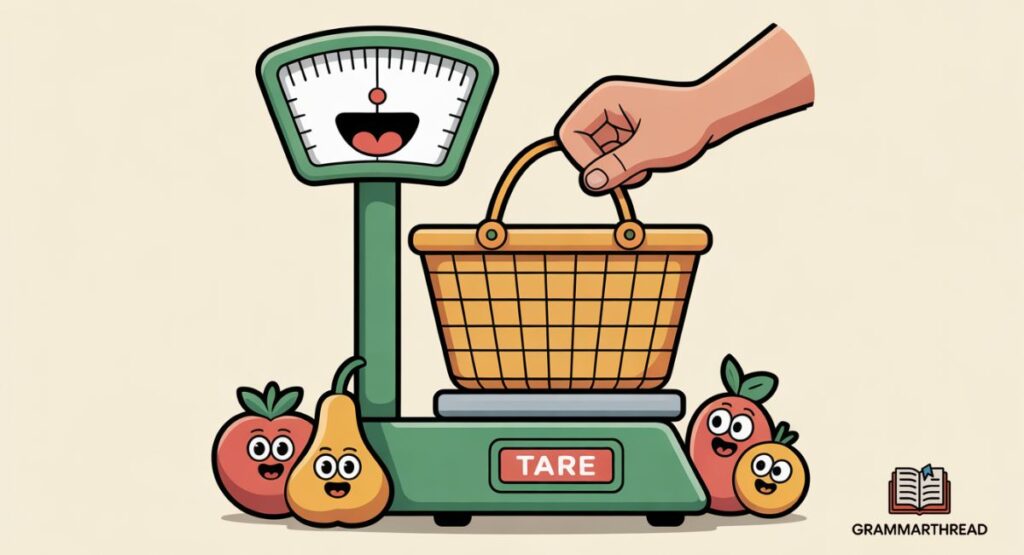
- The weight of packaging or containers, which gets subtracted to find the actual weight of contents.
- An unwanted plant or weed, particularly found growing among grain crops like wheat or barley.
Using Tare as a Noun
As a noun, tare frequently shows up in supply chain operations and farming terminology.
Here are some examples:
- Logistics context: The shipping container has a tare weight of 8 pounds, making the actual product weight 52 pounds.
- Farming context: The agricultural inspector identified tare growing throughout the barley harvest.
Getting tare right in business documents, shipping manifests, or agricultural records helps prevent confusion and maintains accuracy.
Using Tare as a Verb
When functioning as a verb, tare means to subtract the container’s weight so you can calculate the true weight of the goods inside.
See it used in real situations:
- Business setting: The warehouse team tared each pallet before recording the shipment weights for customs.
- Agricultural setting: Workers tared the harvest bins to get an accurate measurement of the corn yield.
This specialized meaning makes tare especially valuable in transportation, warehousing, and farming industries where precise measurements matter.
Tear vs. Tare: Quick Comparison Chart

For easier understanding, here’s a straightforward comparison between tear and tare:
| Feature | Tear | Tare |
| Pronunciation | /tɛər/ | /tɛər/ |
| Part of Speech | Noun, Verb | Noun, Verb |
| Primary Meanings | To rip something, a split, liquid from eyes | Container weight subtraction, unwanted crop plant |
| Typical Usage Areas | Daily conversations, emotional situations, school, repair work | Freight operations, product packaging, farming |
| Example Sentence | He tore the wrapping paper off the gift. | The machine tared the box before weighing the contents. |
Simple Memory Tricks to Never Confuse Tear and Tare Again
Keeping tear and tare straight in your mind will help you avoid awkward writing errors.
Memory Devices That Work
- Tear: Associate it with ripping or emotions. “I tear open the envelope or cry a tear.”
- Tare: Connect it to measurements or logistics. “Tare tells you how much the package weighs.”
Mental Images to Help
- Visualize a shipping scale displaying “tare weight” when thinking about business or freight situations.
- Picture torn fabric or someone crying for everyday scenarios or emotional moments.
Fast Reference Guide
| Word | Memory Helper |
| Tear | Ripping action or liquid from eyes |
| Tare | Packaging weight or unwanted plant |
These simple strategies help students, educators, and working professionals remember which word fits each situation.
Typical Errors People Make With Tear and Tare (And How to Fix Them)
Even fluent English speakers regularly mix up tear and tare. Here are some typical slip-ups:
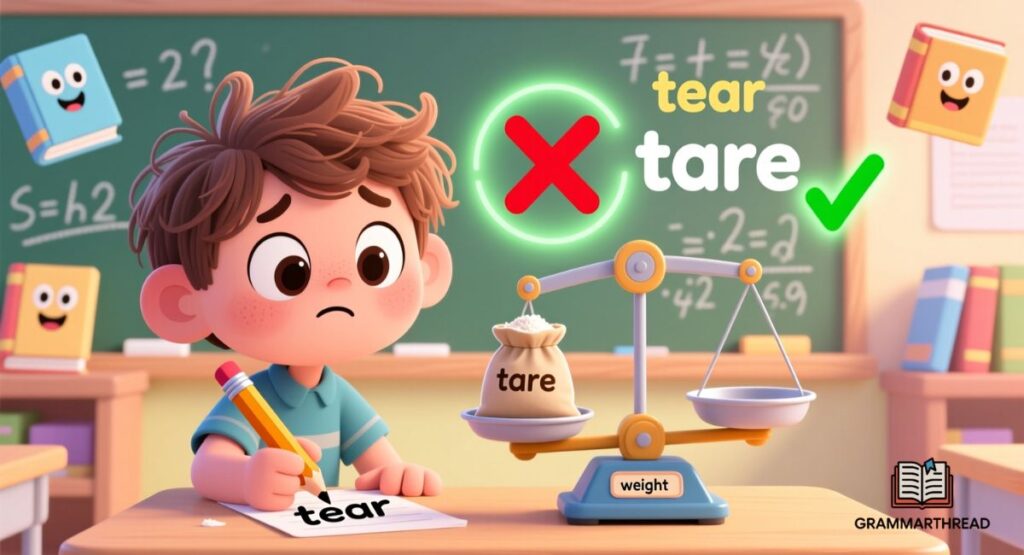
- Wrong: The shipping clerk tore the package before weighing it.
- Right: The shipping clerk tared the package before weighing it.
- Wrong: She had to tare out the damaged pages from her journal.
- Right: She had to tear out the damaged pages from her journal.
Strategies to prevent these errors:
- Focus on context first: Are you discussing ripping/emotions or measurements/containers?
- Apply the memory tricks and mental pictures we covered earlier.
- Double-check business correspondence thoroughly, especially when dealing with weights or deliveries.
Taking an extra moment to verify which word belongs in your sentence can save you from looking unprofessional or causing confusion.
Real-World Uses of Tear and Tare Across Different Fields
For Students:
- Apply tear in your writing assignments or book reports when describing feelings or something getting ripped.
- Study tare if your coursework involves farming, supply chain management, or science labs with precise weighing.
For Teachers:
- Highlight surrounding context as the key to understanding homophones like tear and tare.
- Use pictures, diagrams, and practice activities to help students retain the differences.
For Professionals:
- In transportation, warehousing, and farming industries, tare guarantees precise records and correct invoicing.
- Applying tear appropriately in workplace writing keeps your message clear and prevents misunderstandings.
Real Example: A freight forwarding business once overcharged clients because invoices reflected total weight rather than actual product weight (minus tare). Fixing this error avoided conflicts with customers and saved the company from revenue losses.
Where Do “Tear” and “Tare” Come From? A Look at Their Origins
The History Behind Tear
The word tear has ancient roots stretching back to Old English. The verb form comes from “teran,” which meant to pull apart or rend something. This connects to similar words in other Germanic languages, showing its long history across Europe.
The noun meaning a droplet from the eye traces back to Old English “tear” or “tēar,” related to crying or weeping. Interestingly, despite sharing the same spelling in modern English, these two meanings developed along separate paths through history.
Both versions have been part of English for over a thousand years, making tear one of the language’s oldest and most enduring words.
The History Behind Tare
Tare entered English much later through different channels. The agricultural meaning (referring to weeds) came from Middle English in the 1300s, borrowed from an older term for unwanted plants growing among grain.
The shipping and measurement sense arrived even later, during the 1400s. It came through Middle French “tare,” which itself originated from Arabic “ṭarḥa,” meaning “that which is thrown away” or subtracted. This reflects the historic importance of Middle Eastern trade routes in shaping commercial vocabulary.
Understanding these origins shows why tare remains specialized in technical fields, while tear became part of everyday language centuries earlier.
Frequently Asked Questions
What is the difference between tear and tare?
Tear refers to ripping or drops from the eye, while tare is a measurement term used to subtract container weight.
How do you use tear in a sentence?
Use tear when talking about something ripped or crying, like a tear in paper or a tear from the eye.
How do you use tare in everyday life?
Tare is commonly used on weighing scales to remove the container’s weight and show the true product weight.
Are tear and tare pronounced the same?
Yes, tear and tare sound almost identical, which is why they are often confused in speech and writing.
Is tare used in school or business?
Tare is mostly used in math, science, shipping, retail, and business where accurate weight matters.
Can tear mean more than one thing?
Yes, tear can mean to rip something or a drop of liquid from the eye, depending on context.
Why is tare important in weighing items?
Tare ensures you measure only the product’s weight, not the box, bag, or container holding it.
Conclusion
Knowing the difference between Tear vs. Tare helps you write with accuracy and confidence. Tear connects to ripping or moisture from the eyes, while tare belongs to measurement, containers, and finding a product’s true weight.
These words come from different origins, serve different purposes, and appear in very different contexts, yet a small spelling slip can change meaning fast. By watching context, double-checking usage, and practicing with real examples, you avoid confusion and sound more professional. Before your next email, assignment, or report, pause for a second and ask which word truly fits. That simple habit can sharpen your writing immediately.
Read Next: Flavor vs Flavour: Which Spelling Should You Use?

Welcome to GrammarThread. I am Julian Mercer, an AI-powered SEO and content writer with 4 years of experience. I help websites rank higher, grow traffic, and look amazing. My goal is to make SEO and website design simple and effective for everyone. Let’s achieve more together!